
15 Questions to Ask Your Supplier Before Placing a Wholesale Footwear Order

Reduce risks in wholesale footwear purchasing by asking the right questions. Practical advice on inquiring about materials, shoe last, size run, MOQ, and delivery to understand their impact on your business.
Making a purchasing decision in wholesale footwear based solely on a product photo and unit price can lead to items reaching your store shelves that differ greatly from your expectations. A successful purchasing process begins with asking the right questions. These questions help you assess not only the product quality but also the supplier’s operational competency, commercial flexibility, and reliability. Building a solid foundation in your relationship with the supplier is a critical investment for your long-term profitability and customer satisfaction. This guide elaborates on essential questions every buyer should ask before confirming an order and explains why these questions are important.
Product Quality and Technical Specifications
The physical characteristics of a product form the basis for customers leaving your store satisfied. A visually appealing shoe made from poor-quality materials or with an uncomfortable shoe last increases return rates and damages your brand image. Therefore, clarifying technical details from the outset is necessary.
1. What is the primary material used (leather, synthetic leather, textile, etc.) and its origin?
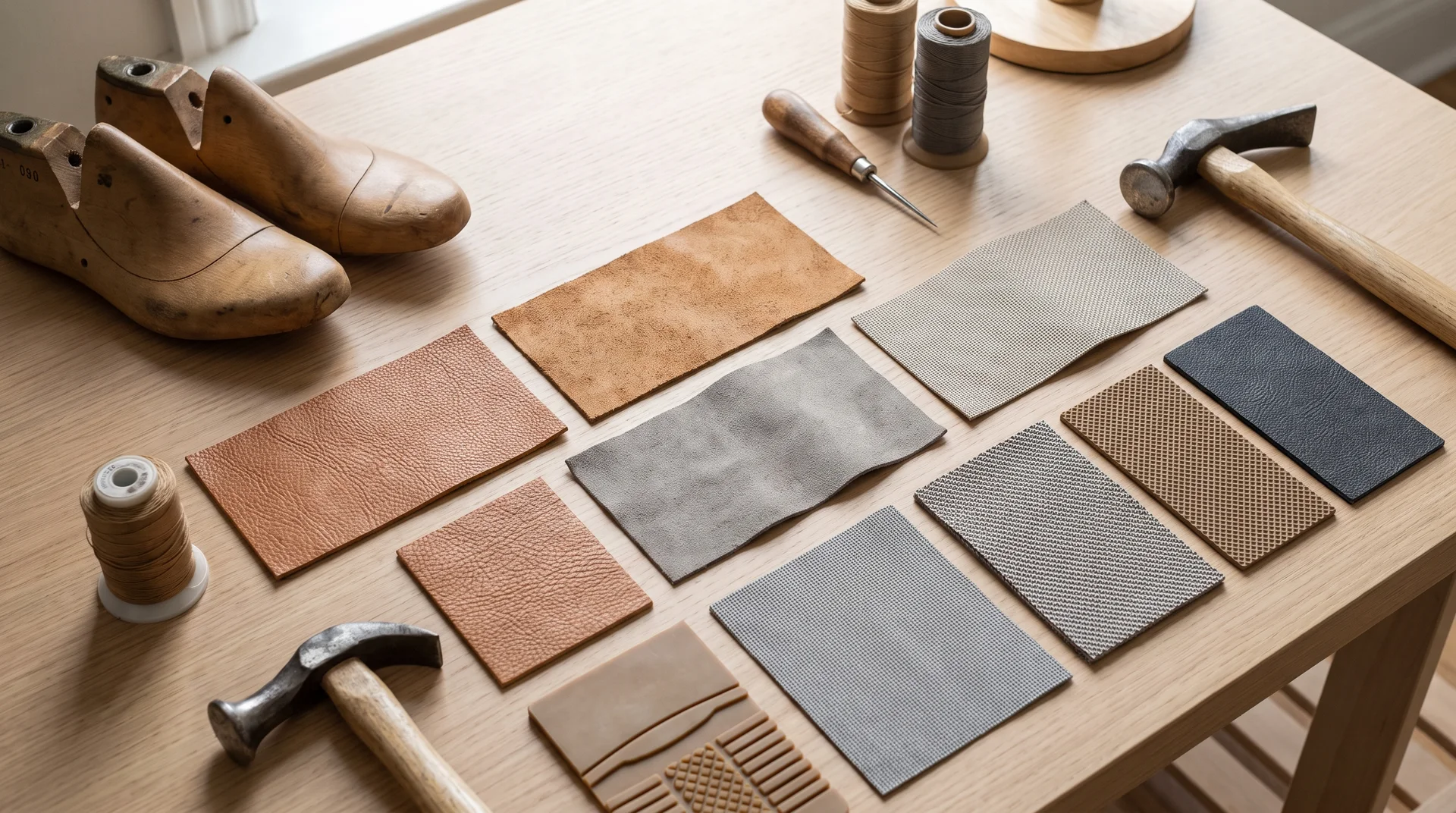
The shoe’s durability, comfort, and price depend directly on the materials used. It is important to ask your supplier about the type of material (for example, genuine cowhide leather or polyurethane-based synthetic leather), its quality, and, if possible, its origin. This information allows you to analyze the product cost more accurately and provide transparent details to your customers. For example, if you sell in a warm climate, breathable textile or genuine leather women's sports shoe models might be a better choice.
2. What are the sole structure (e.g., TPU, EVA, Neolit) and inner lining features?
The sole is among the most important components that determine a shoe's lifespan and comfort level. Thermoplastic polyurethane (TPU) soles offer flexibility and wear resistance, while Ethylene Vinyl Acetate (EVA) is known for its lightness. Neolit, resembling leather in appearance, is used in more elegant models. It is beneficial to learn if the inner lining is made from sweat-absorbing, antibacterial materials, especially increasing your sales potential in categories designed for daily use such as men's sports shoe.
Impact on Stock and Sales Strategy
Finding the right product is only part of the equation. To stock and sell these products effectively according to your commercial goals, you need to understand the supplier’s production and stocking model. This matter becomes even more critical for number-based products such as shoes.
3. Is the size distribution inside the carton (size run) standard or flexible?
One of the fundamental aspects in footwear wholesale is the size run. A standard women’s size run generally distributes sizes 36-40 as 1-2-2-1-1. However, if your customer base clusters on specific sizes (for example, 38-39), standard size runs can lead to accumulation of unsold sizes. Asking if the supplier accommodates special size run requests or is flexible in modifying the existing size run is vital for your stock efficiency. Incorrect size run planning directly leads to dead stock, reducing profitability.
4. What is the stock turnover rate for seasonal models and is there a possibility for reorder (reproduction)?
Timing is everything for seasonal products like summer sandals or winter boots. If you notice a model selling well and want to reorder, you need to know how quickly the supplier can respond. Some suppliers only conduct one-time production at the start of a season. Entering a season without this knowledge might cause you to miss sales opportunities when your most popular model sells out. Learning about the supplier's production planning and reorder capacity for fast-selling models such as high-heeled sandals helps maximize your seasonal revenue.
Order and Logistics Processes
Every step from placing the order to the products arriving at your store affects operational efficiency. Uncertainties at this stage may cause unexpected costs and delays. For this reason, understanding the process transparently from the start is important.
5. What is the Minimum Order Quantity (MOQ)?
The Minimum Order Quantity (MOQ) is the lowest amount of product you must purchase from a supplier in a single order. High MOQs can tie up capital in one model and reduce variety, especially for small and medium boutiques. Knowing the MOQ per model or color helps you plan your budget and product assortment correctly. A low MOQ gives flexibility to try more models and spread risk.
6. How long is the shipment time after order confirmation?
Knowing when the products will arrive lets you plan marketing campaigns, window displays, and cash flow. Ask your supplier clearly about the time it takes to ship products after order confirmation. Platforms like Bulkoon standardize this process by ensuring orders generally ship within 1-2 business days, making delivery times predictable for buyers. This information is critical during peak periods, such as special days or season openings.
Commercial Terms and Financial Flexibility
Commercial terms are as important as product and logistics. Pricing, payment conditions, and policies designed for potential issues directly affect the health of your business relationship with the supplier and your profitability.
7. What is your pricing policy and discount rates for bulk purchases?
Beyond the unit price, it is crucial to understand the supplier’s pricing structure. Is there a tiered discount if you exceed certain order volumes? This allows reducing unit costs by placing larger orders. Also, knowing if prices fluctuate seasonally or based on raw material costs helps long-term budget planning.
8. How is your return/exchange procedure for defective or faulty products handled?
Even the best suppliers can have production defects. What matters is having a clear procedure in such cases. What happens when defective products arrive? Are they returned, exchanged, or credited? Who covers shipping costs? Getting written confirmation of answers to these questions before ordering prevents conflicts and financial losses later.
Supplier Reliability and Communication
A supplier may offer excellent products, but if communication is weak or operational reliability is lacking, partnership can become problematic. The supplier’s working style and transparency are as valuable as their products.
9. How frequently are your stocks updated and how can I access this information?
It is frustrating to prepare an order and reach the payment stage only to learn a product is out of stock. Professional suppliers update their stock regularly. Bulkoon ensures all products on the platform operate on a ready stock basis, removing this problem. Knowing which channels (website, email, digital platforms) the supplier uses and how often they update stock helps you plan based on accurate, up-to-date data.
10. Can I get more information about your company and production capacity?
Asking how long the supplier has operated in the industry, the location of their production facility, and monthly production capacity gives insight into the company’s scale and stability. A strong production infrastructure means a higher chance of meeting your demands, especially during peak seasons or large orders. Bulkoon’s approved supplier system provides buyers reliable access to such essential information from the start because every seller on the platform undergoes a verification process.
Minimize Risks in Wholesale Trade by Asking the Right Questions
Wholesale footwear purchasing is a complex process requiring careful preparation and clear communication. The questions listed above are just a starting point. Every business can expand this list according to its priorities and customer profile. The important part is to clarify every detail instead of relying on assumptions. A supplier providing transparent, consistent, and reliable answers has the potential to be a valuable long-term business partner. Digital wholesale platforms like Bulkoon significantly simplify this research and communication process by gathering thousands of models and hundreds of approved suppliers under one roof. You can explore products, examine details, and safely manage your orders from a single panel.