When Is the Right Time to Place Footwear Orders by Season?
The key to profitability in footwear retail lies in perfect timing. Discover when to place wholesale orders for summer, winter, and mid-season products, along with supply chain dynamics and inventory management strategies in this comprehensive guide.
The secret to success in footwear retail is placing the right product on the shelf at the right time. The season’s most popular sandals are ordered when no one is yet thinking about the beach, while winter boots are ordered while warm weather still prevails. This timing draws the fine line between concluding a season profitably or liquidating inventory at a loss. Understanding the wholesale footwear purchasing calendar means not only following trends but also anticipating production, logistics, and consumer demand cycles. This guide offers a practical roadmap on when to order summer, winter, and mid-season styles for your store.
Understanding the Wholesale Footwear Supply Cycle
To achieve correct timing in wholesale footwear orders, you first need to understand how the supply chain operates. Behind every pair of shoes arriving in your storefront lies a production, planning, and logistics process that lasts several months. Grasping these processes allows you to place orders strategically and safeguards you from potential delays.
Production and Logistics Processes
The production of a shoe model generally takes 4 to 8 weeks after the design is approved. This duration varies depending on the materials used, model complexity, and the manufacturer’s workload. Once production is complete, products undergo quality control, are packaged, and prepared for shipment. Domestic logistics usually take a few days; however, international supply can extend to weeks. Therefore, it is realistic to consider at least a 2-3 month window for a product to reach your store. As a result, you need to act well before the season begins.
Supplier Capacity and Seasonal Peak Periods
Shoe manufacturers reach peak capacity during specific periods. Especially during major season transitions (summer and winter), production lines become congested as all retailers place orders simultaneously. Buyers who order early enjoy the advantage of receiving their products on time, unaffected by this congestion. Those who order late may face longer wait times or risk popular models being out of stock. Working with reliable and approved suppliers increases predictability throughout this process and minimizes surprises.
Properly understanding the supply cycle directly affects your cash flow and inventory planning. Early orders help you gain scheduling priority with manufacturers and prepare you for seasonal demand fluctuations.
Ordering Calendar for the Summer Season
The summer season is one of the busiest times for footwear retailers. Sales of lightweight models such as sandals, slippers, ballet flats, and espadrilles peak. Preparation for this dynamic season begins in the middle of winter. Accurate timing enables you to present your best-selling models to customers ahead of competitors.
Sandals, Slippers, and Open Footwear
The main ordering season for summer products is typically January and February. Orders placed during this window enter manufacturers’ schedules and are ready for delivery in April or May. This timeline allows you to showcase products just as customers start their summer shopping. Taking early action is particularly critical in high-demand categories like women’s ballet flats and men’s slippers. Orders delayed until March run the risk of delivery delays and popular models selling out.
Benefits and Risks of Early Ordering
Ordering early offers numerous advantages. First, you gain access to a wider selection of models and colors. Second, as you place orders during less busy periods for manufacturers, you may negotiate better prices or payment terms. Most importantly, your products enter the season on schedule. However, risks include investing in uncertain trends, which might leave you with unsold stock. Balancing timeless classic models with trend items in your orders is a smart strategy to mitigate this risk.
Summer season planning begins in winter and, when executed well, drives high profitability during warm months. Adhering to your ordering calendar is crucial.
Ordering Calendar for the Winter Season
The winter season highlights durability and functionality for boots, high boots, and waterproof footwear. Preparation for cold and wet weather starts during the hottest days of summer. Building your winter collection on time ensures that customers find the products they want as soon as the chill sets in.
Boots, High Boots, and Closed Models
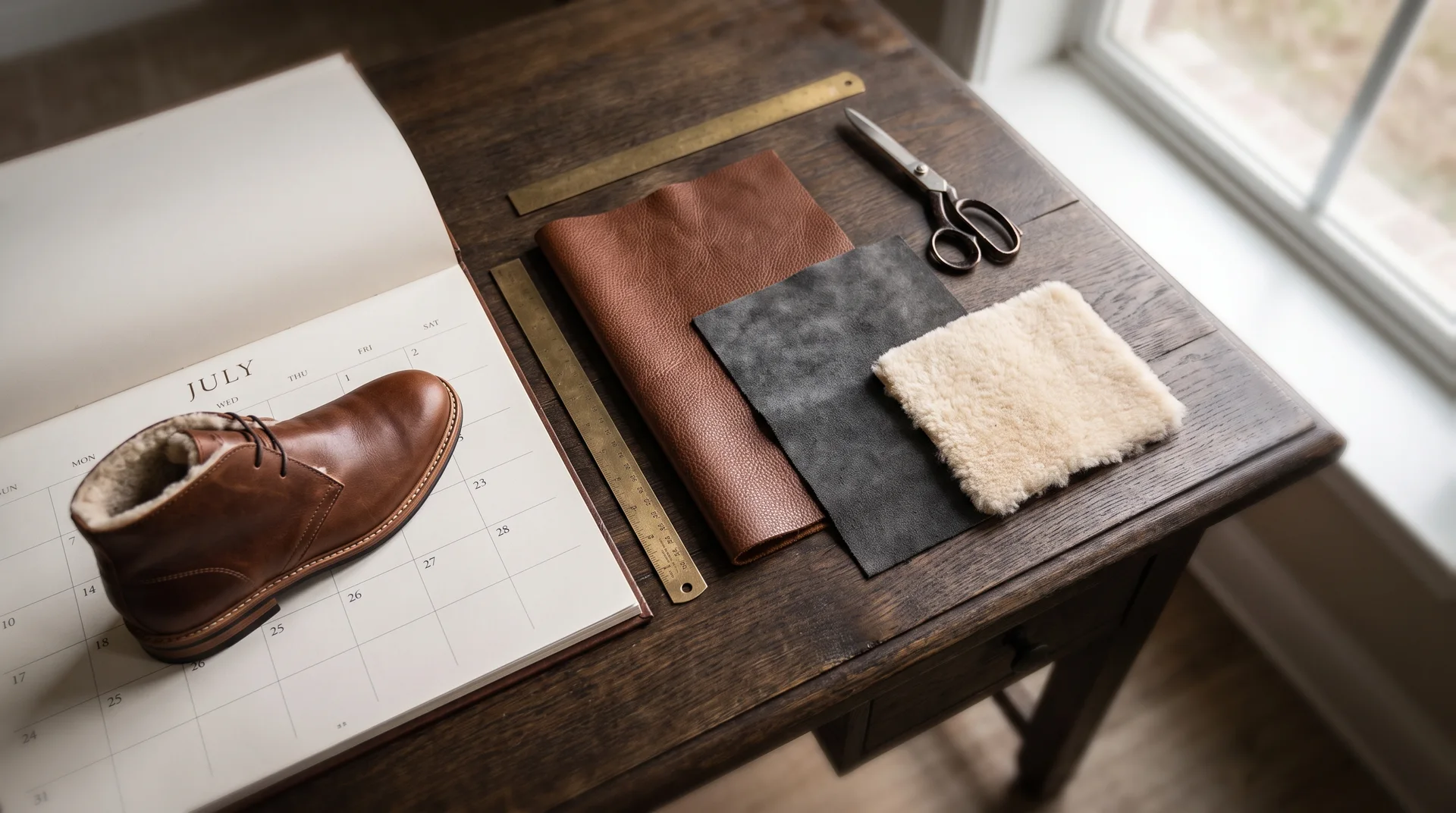
The ideal time to place wholesale orders for winter footwear is June and July. Orders during this period enter manufacturers’ post-summer production plans and are typically delivered by late September or early October. This timing aligns perfectly with the school season start and increasing demand as temperatures drop. Since leather boots and waterproof models can take longer to produce, ordering these categories even earlier may be necessary.

Potential Drawbacks of Late Ordering
Delaying orders until August or September has serious drawbacks. By this time, most manufacturers have filled their winter production capacities. This may result in being unable to source your desired models or facing much longer delivery times. Additionally, the season’s most popular and trend-driven products may already be sold out. Being late leaves you trailing behind competitors and forces you to settle for less popular or leftover inventory. Platforms like Bulkoon offer ready stock products to meet urgent demand in such cases, but main collection planning must always be done months in advance.
Winter season orders require strategic foresight. Proper planning during summer ensures steady sales and satisfied customers through winter.
Planning for Mid-Season and Special Occasions
Footwear retail is not limited to summer and winter. Transition periods like spring and autumn, along with special occasions such as holidays and school openings, offer important sales opportunities. Timing orders for these periods is critical to maintaining steady turnover year-round.
Sneakers, Loafers, and Seasonal Models
Planning is important for versatile models like sneakers and loafers, which can be worn year-round but especially see demand rise in spring. Orders for spring collections should be placed in November or December of the previous year. This ensures products are available on shelves by February or March. For autumn collections, ordering in May or June guarantees products in-store by late August. Despite continuous demand for categories such as women’s sports footwear, timely introduction of new season colors and models gives a competitive edge.
School Opening, Holiday, and New Year Opportunities
Special occasions create sudden demand spikes in specific categories. For back-to-school, sports and casual shoe orders should be completed by June at the latest. For increased demand in formal and classic footwear during Ramadan and Eid, orders should be placed at least 2-3 months ahead. Orders for sparkling, heeled, and elegant models for New Year and special celebrations should be submitted in October for delivery by late November. Missing these occasions means losing significant revenue opportunities.
Mid-season and special occasions require as much careful planning as the main seasons. Scheduling these in your calendar and timing orders accordingly maximizes your sales potential.
Inventory and Assortment Management for Profitability
Ordering at the right time is only one part of the equation. The order content-that is, assortment and size distribution-and how fast stock turns over directly determine your profitability. Incorrect assortment selection or slow stock turnover on seasonal products quickly erode profit margins.
Optimizing Seasonal Assortment and Size Distribution
Assortment refers to a series of different colors and sizes of a model. Wholesale purchases typically offer standard assortments (e.g., sizes 36-40). However, each region’s and customer base’s size demands differ. You should analyze your sales data to identify best-selling sizes and negotiate custom assortment options with your supplier. For example, if sizes 37 and 38 sell best, ordering assortments with more units of these sizes reduces the risk of leftover single-size products at season’s end. When ordering seasonal products, such as summer sandals, emphasize trendy colors while maintaining classic color options to spread risk.
Impact of Stock Turnover on Cash Flow
Stock turnover rate shows how often your inventory is completely sold and replenished within a given period. A high turnover indicates your capital is not tied in products but quickly converted into cash. This rate is vital for seasonal products. An item purchased at season start that remains unsold by season end might require significant discounting or remain in storage until next year, incurring costs. Therefore, when determining order quantities, carefully analyze past sales and current market trends. Avoiding excess stock reduces discounting and preserves profit margins. Bulkoon offers over 10,000 ready stock models, allowing you to respond swiftly to sudden seasonal demand with small batches, helping maintain balance.
Effective assortment management and high stock turnover are the two key operational factors translating seasonal order strategies into profitability. Monitoring these metrics closely is essential for your financial health.
Gaining Competitive Advantage Through Proper Timing
Seasonal order timing in footwear retail is not merely an operational task but a strategic competitive tool. Reading the market rhythm correctly and adjusting your supply processes accordingly lets you stay ahead of competitors and offer your customers the newest, most sought-after products.
The Role of Digital Platforms
Traditional wholesale purchasing involved limitations such as travel and limited supplier networks. Today, digital B2B platforms like Bulkoon fundamentally change this process. Access to thousands of models from hundreds of approved suppliers on a single screen accelerates market research and model selection. Thanks to ready stock products and detailed filters, you can plan your seasonal inventory more flexibly and data-driven. These platforms simplify finding and ordering the right product at the right time, saving you both time and costs.
Your Next Steps
Begin your planning now for a successful season. Outline the next season’s calendar, analyze past sales data, and review customer expectations. Contact your suppliers to learn about production timelines. Explore new models and brands on digital wholesale platforms. Remember, the correct planning step you take today lays the foundation for profitable sales tomorrow. Start benefiting from the advantages of digital wholesale by exploring how Bulkoon works.
Managing seasonal orders requires a proactive approach. Correct timing, the right assortment, and working with the right partners are critical factors directly impacting your store’s success.