You might also like

 4 colors
More Color Options
 7 colors
More Color Options

 2 colors
More Color Options
 3 colors
More Color Options
 9 colors
More Color Options


Increase stock turnover and profitability by selecting wholesale footwear products suitable for the climate, demographics, and consumption habits of your store's location.
One of the most common strategic mistakes in retail footwear trading is assuming that the same product models will sell at the same rate in every city and location. Lightweight models popular in cities with mild climates and high tourism activity like Antalya or Izmir may remain on shelves for a long time in provinces experiencing harsh winter conditions such as Erzurum or Kars. Similarly, budget-friendly comfortable models stand out in university towns with a high student population, while more formal designs are preferred in city centers with dense finance and public institution presence. It is vital to develop a customer profile specific to the region where your store is located to ensure correct wholesale footwear supply and avoid tying up capital in dead stock.
The target audience of the street or shopping mall where a store is located directly determines the type of footwear to be sold. The average age group, household income, and main employment sectors must be analyzed. For example, in retail points near industrial zones, durable designs suitable for long hours of standing are preferred, while dynamic trends sell faster in neighborhoods with a young population. In stores catering to high-income groups, leather quality and craftsmanship take precedence, whereas stores in student cities should focus on products with a high price-performance balance.
Climate is the fundamental factor determining season durations and product types in footwear retail. In the Black Sea Region, where precipitation levels are high, waterproof outsoles and closed upper models are sold year-round, whereas in the South and Aegean coasts, the long-lasting warm weather extends the sales window for women's flat sandals and ventilated models. The geographic terrain also plays a critical role in outsole selection; flexible rubber soles are the primary choice for customers in rocky or hilly areas.
Examine annual average temperature and precipitation charts of your region to clarify winter and summer season durations.
Observe the daily routines of the main customer groups around you (office workers, students, field personnel).
Adjust your pricing strategy according to the disposable income level of the region.
Accurate analysis of regional demographics and climate conditions minimizes the risk of placing incorrect products on retailers' shelves. Footwear groups selected to match consumers' daily lifestyle habits directly increase sales conversion rates.
4 colorsMore Color Options
7 colorsMore Color Options
2 colorsMore Color Options
3 colorsMore Color Options
9 colorsMore Color Options
Regional footwear demand can change over time. Digital search trends are a powerful source of data showing which product groups local consumers have started to show interest in. By analyzing province-based searches on Google Trends, you can monitor the search volumes of terms such as "makosent," "sneaker," or "heeled mule" in your region. Additionally, reviewing comments under posts of local social media accounts and competitor stores in your area can reveal models or pricing that customers find hard to locate or criticize.
Besides digital data, physical field observation is an indispensable part of retail management. You can observe how often competitor stores in your region change their window displays, the categories they highlight, and the product accumulation in their discount sections. Product types concentrated in discount sections provide important clues about items that are difficult to sell or incorrectly priced in that region. For instance, if formal style products remain on display for a long time across three different local stores, it might indicate a regional shift toward more casual options.
Monitor province-based digital search trends monthly to anticipate upcoming demand waves.
Examine competitor stores’ discount sections to detect saturated product groups in your region.
Follow customer feedback on shoe quality and comfort in local social media groups.
Combining digital data tracking with field observations allows you to identify local market demand gaps. Providing qualified products that consumers find difficult to acquire in the area gives your store a competitive advantage.

Foot structure and average size distribution may vary across regions in Turkey. In Central Anatolia and Eastern Anatolia, men's sizes between 42-44 sell faster, while in some coastal regions, sizes 40-42 are more prevalent. Similarly, women's sizes 37-38 form the standard center, but demand for sizes 39-40 can be higher in certain areas. Instead of purchasing standard assorted packages, working with suppliers offering size breakdowns aligned with your region’s past sales data helps maintain stock balance.
The biggest cost item in wholesale purchases is leftover edge sizes in the pack (for example, size 36 or 40 in women's groups or size 40 or 45 in men's groups). To prevent accumulation of slow-selling sizes in your region, you should turn to wholesale channels that provide flexible size distribution. For example, in areas with high daily usage, assortment combinations focused on mid-sizes (37-38-39) should be preferred in the women's sports shoe category. Campaign zones must be designed to quickly clear single leftover sizes in the store.
Analyze your past sales data by size to identify the unique foot size profile of your region.
Focus on assortment options weighted toward mid-sizes with high sales volume to reduce broken size risks.
Convert leftover single sizes at the end of the season into cash through regular discounts.
Correctly interpreting the size distribution of the local market solves dead stock problems caused by broken assortments. Optimizing the size breakdown of the store according to regional anatomy ensures that each pair on the shelf contributes to cash flow.
Temperature changes do not occur on the same calendar date across all regions of Turkey. While open shoes and sandals start selling in March in the Mediterranean region, closed and thick-soled models can be preferred until the end of April in Eastern Anatolia. Therefore, you should adjust your wholesale purchasing schedule according to your local climate calendar instead of the national calendar. Placing women’s loafers or transitional season products suitable for your region on shelves early in the season allows you to capture initial demand.
Committing your entire budget to a single category at the start of a new season carries high risk. Instead, test orders should be placed in small batches with various styles and models (minimum series quantities). After monitoring the sales performance of the first 2-3 weeks in the store, the stock depth of the fastest-selling categories in the region should be increased. Orders for slow-selling groups must be cut and the budget shifted to trend products with high turnover. This strategy maximizes stock turnover rate.
Set your spring-summer and autumn-winter wholesale order schedule according to climate transitions.
Test new models in your store with small batches to measure real consumer response.
Complete procurement for products with high sales velocity without delay to avoid running out of stock.
Increasing stock turnover is the most critical factor boosting capital efficiency in a store. Making test purchases aligned with regional climate calendars prevents wrong stock costs and sustains profitability.
Supplier delivery speed and stock availability are critical to quickly responding to regional demand. Waiting weeks for a requested model causes lost sales. Bulkoon, Turkey’s only B2B footwear wholesale platform, collaborates with over 100 approved manufacturers and suppliers to offer more than 10,000 model options in ready stock. The fact that the products on the site consist only of ready stock ensures that your orders are processed quickly in operational workflows.
Financial facilitation offered in wholesale purchases should be evaluated to ease capital management. Thanks to 3 and 6 installment options at cash prices, retailers can benefit from payment advantages by using their cash flow generated from product sales to cover stock costs. While niche groups such as women’s stilettos are procured in regions with frequent special events and invitations, you can create the most suitable mix for your store concept by leveraging a wide product range. Additionally, the free shipping advantage offered to all 81 provinces in Turkey completely eliminates city-to-city travel and transportation expenses. You can examine the order creation steps in detail on our How It Works page.
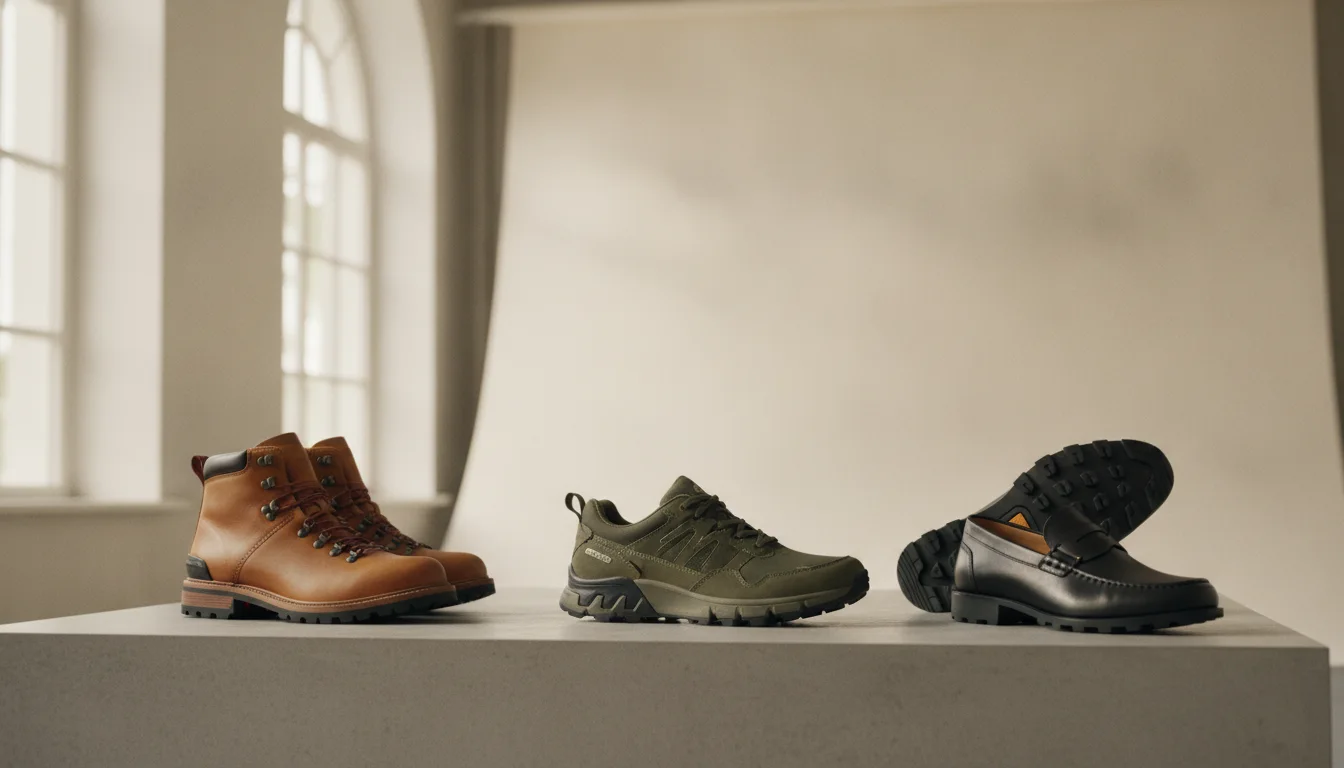
Work with platforms guaranteeing ready stock to prevent procurement delays.
Use installment payment options to protect your cash flow and working capital.
Minimize logistics costs through free shipping and digital catalog advantages.
Working with a reliable B2B supply network increases retailers’ regional flexibility. Ready stock and favorable financing terms make it easier to put the right product on shelves at the right time.
Successful footwear retailing is based not on passionate guesses but on tangible data. When you accurately read the demographics, climate rhythm, and consumer spending habits of your store’s location, the amount of dead stock on your shelves will decrease rapidly. Local demand detection supported by digital analysis tools and field observations eliminates uncertainties in the product selection process.
Placing test orders to resolve your region’s assortment and size balance is the safest way to protect your capital. Thanks to Bulkoon’s vast model catalog, approved manufacturer network, and fast shipment infrastructure, you can instantly adapt to the dynamics of your local market. For more practical information on wholesale footwear purchasing and store operations, you can visit our How-To guides and empower your regional advantage with data-driven strategies.
Update your regional data at the beginning of each season to map demand changes.
Keep your store concept fresh continuously by leveraging a wide supplier network.
Prioritize product categories with high stock turnover to increase profitability.
Data-driven regional product management strengthens the competitiveness of retail stores. Inventories managed with correct timing and flexible supply models are the key to sustainable commercial success.
Information in this article draws on the following sources.
Learn how to accurately calculate the reorder point (ROP) in shoe retail to avoid stockouts, manage assorted size distribution, and implement seasonal stock turnover strategies.
A guide to properly managing the inventory budget in shoe stores using ABC analysis, assorted size planning, inventory turnover, and wholesale ordering strategies.

Protect tied-up capital by preparing stock aging reports in footwear stores. Track stock groups by 0-30, 31-60, 61-90, and 90+ days, assortments, and cash flow strategies.

