Key Tips for Success in Kids Footwear Sales
Discover strategies for creating the right size assortment, managing seasonal stock, and meeting parents' expectations in wholesale kids footwear. Understand the importance of material quality, supplier selection, and product variety for a profitable collection.
Kids footwear sales require expertise with dynamics completely different from adult categories. Success is achieved not only by offering smaller-sized models but by earning parents' trust, understanding children's developmental needs, and managing rapidly changing seasonal and size demands. Establishing this delicate balance in wholesale purchasing directly impacts your store's profitability and customer loyalty. This guide offers a strategic roadmap for retailers aiming to take solid steps in the kids footwear category.
Understanding Parents' Expectations: Trust and Functionality
Parents make the final decision when buying kids footwear and their priorities go far beyond aesthetics. They put their children’s foot health, safety, and comfort first. Therefore, basing your product selections during wholesale purchases on these fundamental expectations strengthens your brand image and builds customer trust. A trusted store also gains new customers through recommendations.
Functionality is another critical factor for parents. Shoes are expected to be easy for children to put on and take off independently, simple to clean, and most importantly, durable enough to withstand intense play. Considering practical features like velcro fastenings, non-slip soles, and abrasion-resistant toe guards when sourcing wholesale helps your products stand out on shelves.
Health and Development-Focused Material Selection
Children's feet are continually developing, making the shoe materials critically important. Prioritize breathable, flexible, and non-toxic materials when selecting products from suppliers. Genuine leather, canvas, and high-tech synthetic fabrics prevent foot sweating and provide a healthy environment. Especially in the infant/bebe and first-step shoes, flexible and lightweight sole structures support natural foot movement and aid muscle development. These features will serve as strong sales arguments in your product descriptions and sales staff's communication.
Durability and Ease of Use Factors
Kids use their shoes in tough conditions: at the park, schoolyard, and home. Therefore, durability aspects such as stitching quality, adhesive strength, and material resistance determine a shoe’s lifespan. Parents do not want to invest in shoes that wear out in a few weeks. When wholesaling, prefer models with reinforced toes and heels and sturdy, flexible soles to prevent customer dissatisfaction and returns. Velcro straps or elastic laces designed for easy use are especially valuable for younger age groups, making life easier for parents.
Critical Variables for Profitability: Size Distribution and Season Management
Profitability in the kids footwear category requires not only finding the right product but also maintaining the correct size distribution and seasonally adjusted stock. Stock management rules standard for adult shoes are insufficient here. Since kids' feet grow very quickly, demand concentrates on certain sizes and seasonal needs change sharply. Managing these two variables correctly reduces dead stock risks and ensures efficient use of capital.
Season management becomes especially critical during back-to-school, summer holiday, and winter months. Being unprepared for these periods means missing significant sales potential. Similarly, leftover products at season’s end often require heavy discounting, eroding margins. A successful strategy involves data-driven forecasting to place the right quantity orders at the right times.
How to Create the Right Size Assortment
Wholesale kids shoes usually come in standard runs of 6 or 8 pairs (e.g., sizes 21-25 or 30-35). However, sales velocity differs by size. Typically, middle sizes (e.g., 23-24 or 32-33) sell fastest, while smallest and largest sizes tend to remain in stock. Analyze past sales data to identify the most demanded sizes. Some suppliers allow flexibility by breaking standard sets so you can order more of specific sizes. This flexibility is a major advantage for stock optimization. The demographic profile of your store’s region can also affect size demand.
Optimizing Stock Turnover
Stock turnover is key to profitability in the kids category. A model waiting on shelves for months ties up capital and creates storage costs. To speed stock movement:
Make Seasonal Purchases: Order winter boots at summer’s end and sandals at winter’s end to be prepared for the season. The peak period for school shoes is August and September.
Place Small, Frequent Orders: Instead of starting with large stock for a new model, order smaller quantities and monitor sales performance.
Use Platforms Offering Ready Stock: Platforms like Bulkoon provide only ready stock products, ensuring rapid order processing. This allows quick restocking of popular models without waiting for long production times.
Leverage Promotions: Run attractive campaigns near season end to clear slow-moving stock, freeing space and capital for new season products.
Strategically Planning Product Variety
Offering customers a wide range is important but uncontrolled variety can lead to confusion and stock management difficulties. A strategic product variety balances main categories meeting essential needs with niche products adding character to your store. Planning should consider your target audience’s expectations, budgets, and lifestyles. A successful collection can provide solutions for every situation and budget.
Consider the needs of different age groups when planning variety. The expected features of a kids shoe differ completely from those of a junior girls sport shoe. Segmenting your collection by age groups (infant/bebe, kids, junior girls, junior boys) facilitates both purchasing and in-store presentation.
Core Categories and Niche Products
Essential core categories for any kids footwear store include daily sneakers, winter boots, summer sandals, school shoes, and formal models for special occasions. Maintaining stock in these categories meets most customer needs. Additionally, adding niche products can enhance excitement in your collection. For example, light-up sneakers, licensed products featuring popular cartoon characters, or sport-specific shoes (e.g., for futsal) can attract more customers to your store.
Balancing Pricing and Quality
Parents are willing to spend on quality products for their children’s foot health but are price-sensitive due to rapid outgrowth. Therefore, it’s a smart strategy to offer options at different price points. Include economical everyday models as well as higher-priced alternatives offering orthopedic support or made from premium materials. This approach reaches a broad customer base with diverse budgets. Analyzing price-quality balance during wholesale sourcing helps protect your profit margin.
Reliable Supplier Selection and Supply Processes
Finding the right products is as important as securing reliable partners who can supply them on time and consistently in quality. Supplier relationships form the backbone of your retail operations. Poor supplier choice can cause delayed deliveries, quality issues, and unexpected costs. Careful supplier selection lays the foundation for long-term success.
In a digitalizing world, wholesale sourcing is transforming. Instead of traditional supplier search methods, digital platforms allow instant access to hundreds of manufacturers and models. This saves time and travel expenses while providing a broader market perspective.
Key Characteristics to Look for in Suppliers
The most important traits of a good supplier are consistency and transparency. Product quality should not vary between batches, specified materials must be used, and delivery deadlines honored. Transparency about compliance with child safety certificates and product safety standards (e.g., phthalate-free materials) is critical. Open communication channels and a solution-oriented approach to potential problems are indispensable for a long-term partnership. Platforms like Bulkoon verify all suppliers and provide you the confidence to work with approved suppliers.
Advantages of Digital Wholesale Platforms
Digital B2B platforms have radically changed wholesale shoe purchasing. You can explore collections of producers across Turkey without leaving your store. Among Bulkoon’s 10,000+ model options, finding products that meet your criteria is much easier. Advanced platform filters enable searching by material, size range, color, or price while allowing model comparisons to speed decision-making. This significantly reduces time and costs spent on market research.
Marketing and In-Store Presentation Tips
After sourcing the right products, the next step is presenting them effectively to potential customers. Kids footwear marketing must directly address parents' concerns and expectations. The in-store experience should be practical for parents and enjoyable for children. A successful presentation and marketing strategy enhances your products’ perceived value and ensures customers leave your store satisfied.
Remember that kids footwear purchases usually arise out of need and can be stressful for parents. An informative and helpful approach that makes this process easier sets you apart from competitors. Your staff’s knowledge and the store atmosphere are key factors determining the quality of this experience.
Communication Directed at Parents
Focus your marketing messages on the benefits products provide rather than just technical features. For example, instead of “flexible sole,” use expressions like “healthy sole structure that allows your child to take natural steps.” Share informative content on social media about correct shoe selection and foot measurement, alongside product photos. Include customer reviews and photos to build social proof, boosting trust in your brand and aiding parents’ decision-making.
Effective Product Display Techniques
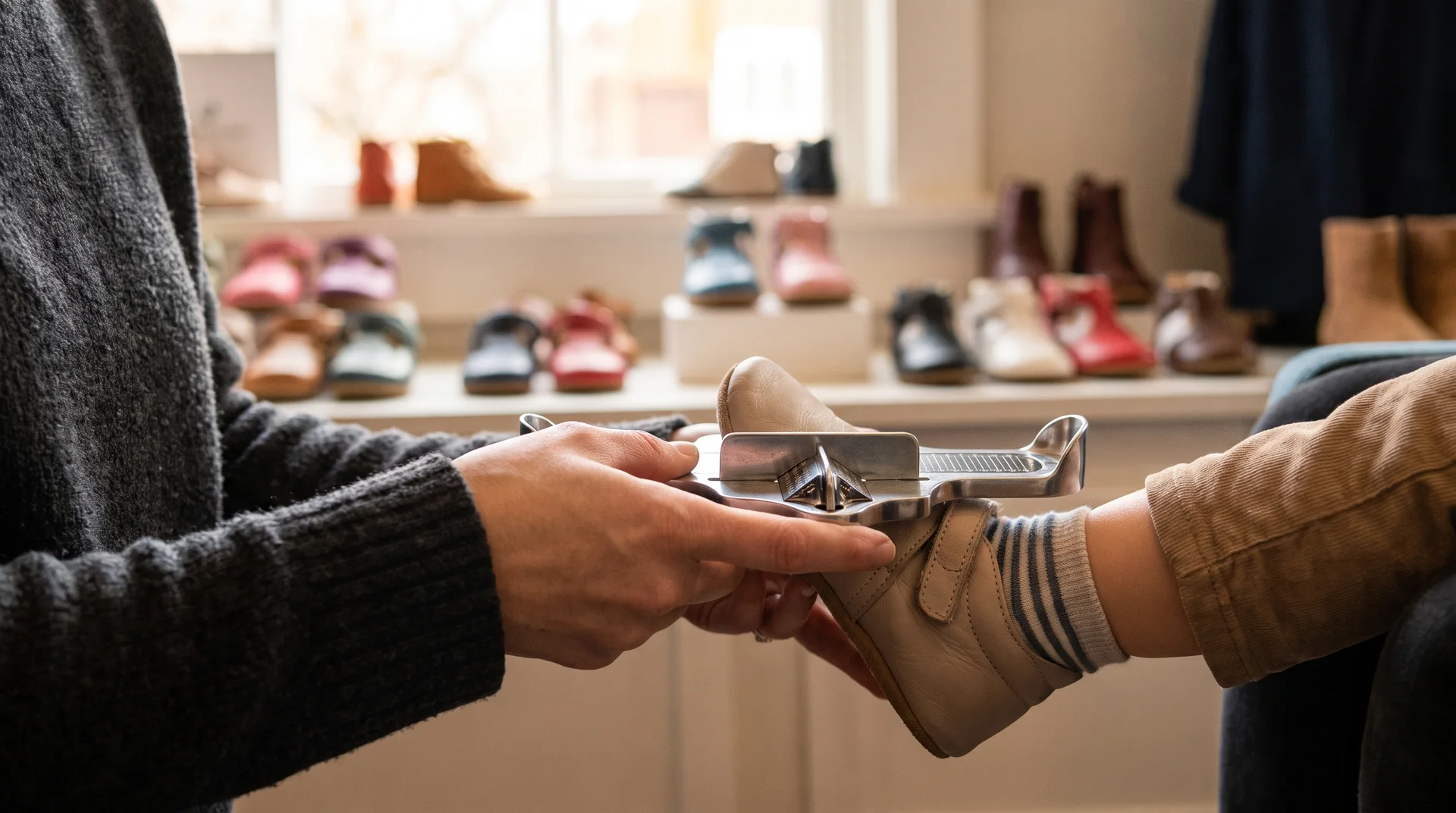
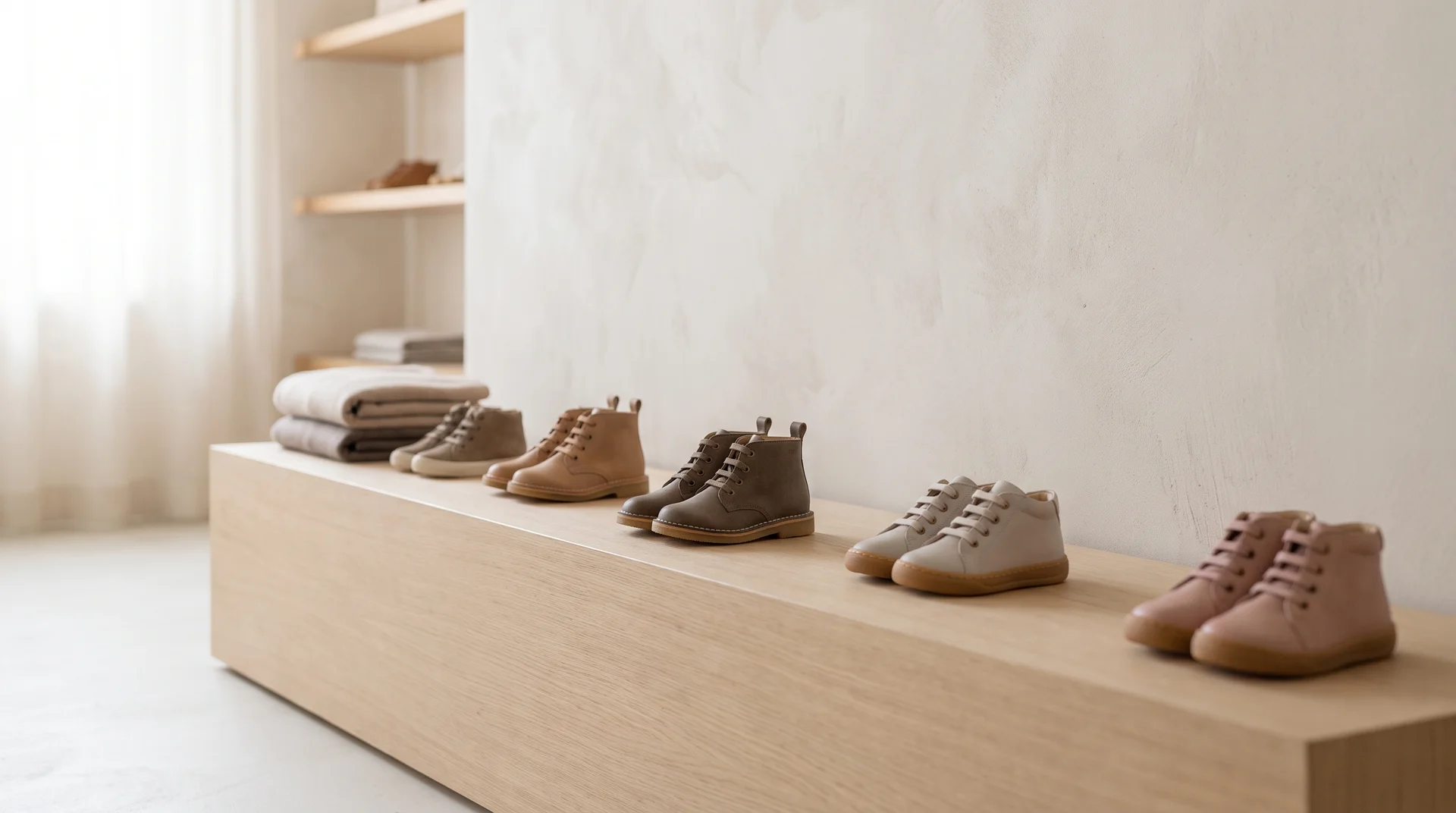
Displaying products logically inside the store improves the shopping experience. Organize shoes by age group (infant/bebe, kids, junior girls), category (sneakers, boots, sandals), and gender. Grouping by colors can create a visually appealing arrangement. Create low shelves and fitting areas that attract children’s attention. Most importantly, ensure your staff is equipped and knowledgeable to measure children’s feet correctly. Choosing the right size reduces return rates and maximizes customer satisfaction.
Final Steps for a Successful Kids Footwear Collection
Success in kids footwear retailing is an ongoing journey requiring constant learning and adaptation. Understanding parents’ priorities, children’s anatomical needs, and market dynamics is key to standing out in this competitive field. Every step-from creating accurate size assortments and efficiently managing seasonal stock, to working with reliable suppliers and developing customer-focused marketing-is part of the bigger picture. Digital platforms like Bulkoon simplify the sourcing process, giving you more time for strategic planning and customer relationships. By following the steps in this guide while building your collection, you can create a profitable and sustainable future for your store.