
Critical Questions to Ask Before Placing a Wholesale Footwear Order

Successful wholesale footwear purchasing begins with asking the right questions. This guide covers the essential queries to ask your supplier regarding quality, stock availability, delivery, payment, and returns, along with key points to watch out for.
Wholesale footwear purchasing is one of the most critical decisions directly affecting the success of a retail business. A wrong order can mean not only a financial loss but also unsellable stock, disappointed customers, and a damaged brand image. Instead of leaving this process to chance, it should be handled with a conscious and systematic approach. The key to establishing a successful supplier relationship and having a profitable season is asking the right questions before placing an order and eliminating all uncertainties. This guide provides a basic checklist to help you be prepared before meeting with your supplier.
Product Quality and Technical Specifications: Basic Checklist
Your customers’ loyalty to your store is directly related to the quality of the products you offer. In wholesale purchases, you may not always have the opportunity to physically inspect the products in detail. Therefore, asking the right questions to remotely confirm quality is vital. Relying solely on the product's appearance can lead to serious returns and complaints in the future.
Quality evaluation is not just about identifying the type of material. Details such as workmanship, last standards, and auxiliary materials used determine the shoe’s ultimate comfort, durability, and customer satisfaction. The more detailed information you obtain at this stage, the more confidence you will have in the products you add to your inventory.
Material and Workmanship Details
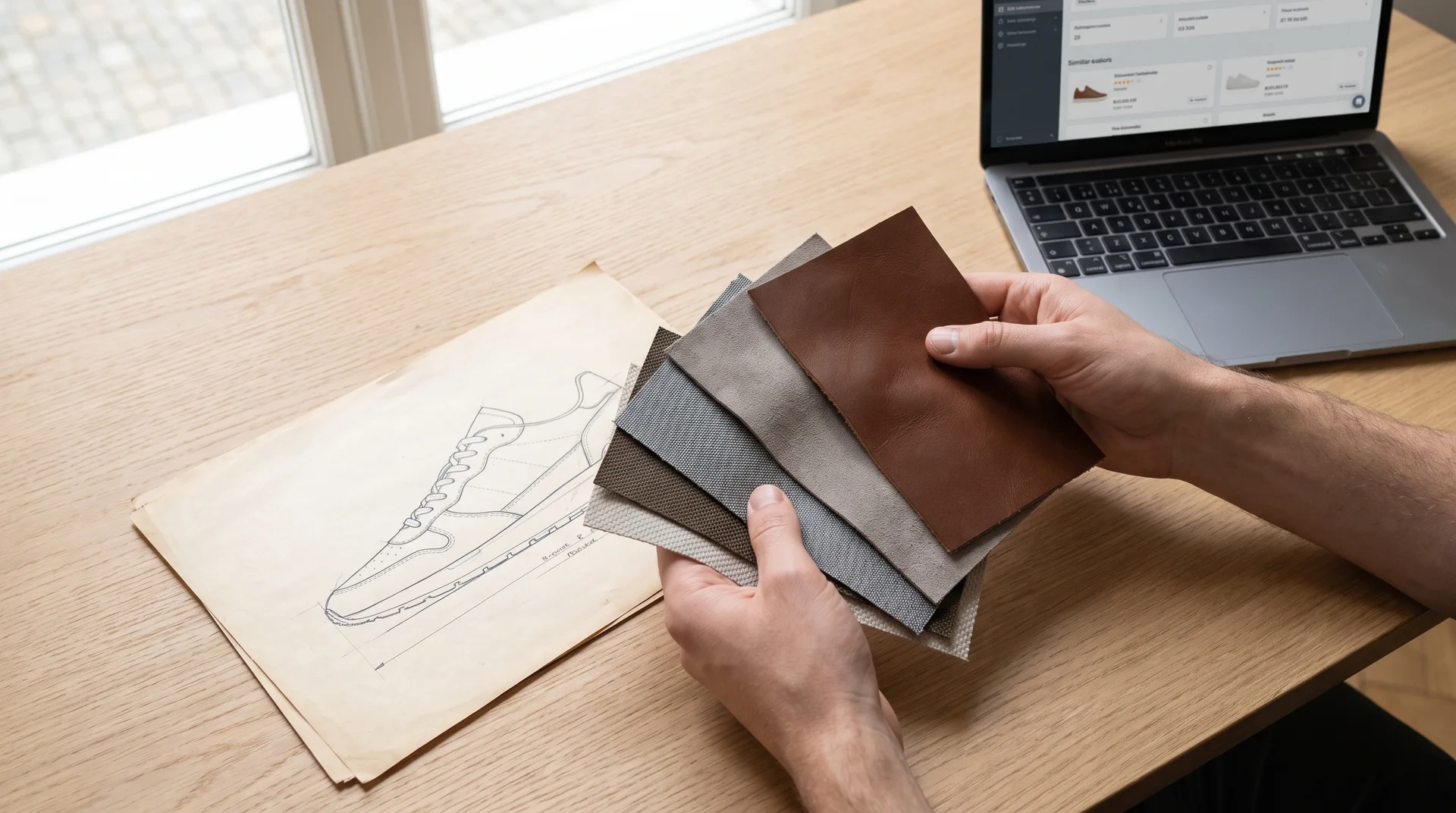
One of the most important factors determining the value of a shoe is the material used. Ask your supplier the following questions: What materials are used for the shoe’s upper, lining, and sole? If leather, what type is it (e.g., synthetic, genuine, suede)? What is the sole material (e.g., polyurethane, rubber, EVA) and does it have features such as slip resistance? Request information about stitch density, adhesive quality, and the durability of accessories like buckles or zippers. If possible, request high-resolution photos or videos of the product from various angles to personally examine workmanship details. Platforms like Bulkoon offer product videos, which provide a significant advantage in this regard.
Last, Size, and Standard Compliance
While shoe sizes in Turkey are generally standard, some manufacturers’ lasts may run narrow or wide. This is one of the most common issues in retail sales. Always ask your supplier whether the lasts conform to standards. Asking “Is this model’s last narrow, wide, or true to size?” can save you many returns. This information becomes even more critical in models with sensitive lasts, especially in women’s heeled shoes. Also, confirm whether the size distribution within the size run is standard.
Supplier Reliability and Capacity
Finding the right product is as important as finding the right partner who can consistently supply that product. Supplier reliability affects many factors, from the timely and complete delivery of your orders to the potential for long-term cooperation. Especially when starting to work with a new supplier, knowing the company’s background and operational capacity minimizes risks.
It is strategically important not only to assess the supplier’s ability to fulfill your current order but also to meet increasing demands aligned with your future growth. Therefore, in your discussions, you should ask questions to understand the company’s production capacity and stock continuity.
Production Capacity and Minimum Order Quantity (MOQ)
What is the supplier’s monthly or seasonal production capacity? This information is particularly important for high volume orders or if you plan to place additional orders mid-season. Another critical topic is the Minimum Order Quantity (MOQ). Is the MOQ calculated per model, per color, or based on the total order volume? Clarifying these conditions helps you manage your budget and stock planning properly. If you’re a small boutique, working with suppliers who offer low MOQs enables more flexibility.
Stock Availability and Supply Continuity
Are the products you plan to order available as ready stock, or will they be manufactured upon order? This question directly affects delivery time. Platforms like Bulkoon eliminate this uncertainty by offering only ready stock products, ensuring rapid order processing. Find out if a best-selling model will be restocked during the season (resort). Running out of stock of a popular product during the busiest season results in significant sales losses. A supplier’s guarantee of stock continuity helps you plan more effectively.
Pricing, Payment, and Financial Terms
As important as product selection and supplier reliability are the financial conditions. Transparent pricing, flexible payment options, and general commercial terms directly impact your business’s cash flow and profitability. Clarifying all details at this stage prevents future disputes and unexpected costs.
Beyond unit cost, payment schedules and financial arrangements can also be decisive in choosing one supplier over another. Working with suppliers who offer terms best suited to your business’s financial structure will provide you a competitive advantage in the long run.
Unit Price and Bulk Purchase Discounts
Is the stated price inclusive of VAT per pair? Is the pricing valid for a single pair or for a size run (assortment)? After clarifying these basic questions, inquire about bulk purchase discounts. Is an additional discount applied after exceeding a certain order quantity or amount? Do these discounts also apply in mixed orders composed of different models? A clear pricing policy allows you to calculate your costs accurately.
Payment Methods and Term Options
How will payments be made: bank transfer/EFT, credit card, cash? Is installment payment available for credit card transactions? Are payment term options offered? Managing cash flow is critical, especially for small and medium-sized businesses. Bulkoon offers buyers financial flexibility by enabling installment payments at cash prices. Asking about extra discounts for upfront payments can also increase your bargaining power.
Logistics, Delivery, and Packaging Processes
The process does not end with order approval; products must reach your business undamaged, complete, and on time. Disruptions in logistics and delivery can prevent you from putting products on the shelves on time, resulting in sales losses. Therefore, it is essential to clarify operational details such as freight, delivery time, and packaging standards before ordering.
Packaging quality prevents products from being damaged during transport, while correct labeling facilitates inventory management in the warehouse. These seemingly small details can have a significant impact on your operational efficiency.
Shipping and Delivery Times
How long after the order is placed will the products be shipped? What is the estimated delivery time? Who bears the shipping cost? Is there a contracted shipping company, or should the buyer organize it? Is a tracking number provided for monitoring the order status? For example, orders placed through Bulkoon benefit from free shipping to all 81 provinces of Turkey and live location tracking, which greatly simplifies this process for buyers.
Packaging Standards and Labeling
Are shoes shipped in their original boxes? Are these boxes placed inside an additional carton (master box) for transport? Proper packaging is especially important for bulky products such as women’s sports shoes, providing ease in storage and display. Are clear labels containing model, color, and size information affixed to the boxes? These details speed up stock counting and management when you receive the products.
Ways to Increase Profitability with Correct Ordering
Placing a wholesale order is not just about sourcing products; it is a strategic step to maximize profitability. Equally important as choosing the right product is deciding on the right size assortment and timing. This section focuses on two critical topics specific to footwear retail: assortment management and stock turnover speed.
Planning these two factors correctly prevents dead stock piles formed by unsellable single sizes and enables more efficient use of your capital. A successful purchase is not only entering the season with popular models but also exiting the season with minimal waste.
Assortment and Size Distribution Strategy
In footwear, "assortment" or "size run" refers to a package of different sizes for a model. A standard women's size run generally includes sizes 36 to 40. However, your customer base may have a different demand profile. Ask your supplier whether there is flexibility to break the standard run or change size distribution (e.g., adding two pairs each of sizes 37 and 38). Broken runs or single leftover sizes are the biggest enemies of profitability at season end. Analyzing your customer data and investing in the most demanded sizes will improve your stock efficiency.
Season and Stock Turnover Speed Planning
What is the estimated stock turnover speed for the products you order? In other words, how quickly do you expect these products to sell and convert to cash? For example, a men’s sports shoe model may sell all year, whereas a sandal model will only be in demand during the summer months. Properly adjusting order quantities for seasonal products reduces excess stock at season end. When talking to your supplier, gather information on the product’s popularity and sales performance in previous seasons to reinforce your estimates. Investing more in fast-moving items while ordering conservatively for slow movers or niche products is a wise strategy.
Final Steps for Conscious Wholesale Purchasing
You have asked all the questions, received the answers, and are ready to place your order. However, the process is not complete yet. The last step is to document all agreed terms and use digital tools to make the process more efficient. These final checks prevent possible misunderstandings and establish a solid commercial relationship with the supplier.

Remember, a successful wholesale purchasing process is built on transparency and clear communication. Ensuring that both you and your supplier have aligned expectations opens the door to a long-lasting and profitable partnership.
Written Confirmation and Contract
Verbal agreements may be forgotten, but written records last. Especially for high volume orders or when working with a new supplier for the first time, request a proforma invoice or written order confirmation covering all agreed terms (price, quantity, delivery date, payment plan, return policy). This document will serve as your reference point in case of any future disputes. Avoid making payments without carefully checking all details.
The Role of Digital Platforms
Traditional wholesale purchasing methods are increasingly being replaced by more efficient digital solutions. B2B marketplaces like Bulkoon simplify much of the inquiry process for you. Platforms verify suppliers in advance, standardize product information, and manage payment and logistics processes on a secure infrastructure. By comparing thousands of models from hundreds of suppliers on a single screen, you can make the most informed decisions without travel and accommodation costs. This saves you both time and money.