Cost Reduction Strategies in Wholesale Footwear Logistics

Gain practical insights on volumetric weight (dimensional weight) calculations, proper packaging techniques, and bulk shipment strategies to control logistics costs that directly affect profitability in wholesale footwear purchasing.
In wholesale footwear trade, product cost is only one part of the equation. Logistics expenses arising on the journey from the supplier to your store can unexpectedly erode your profit margins. Especially in bulky products like footwear, the space it occupies is more important than its actual weight. This is where volumetric weight, also known as dimensional weight, comes into play-it's the first step to understanding and managing your logistics costs. Effective logistics planning not only cuts expenses but also increases operational efficiency, providing your business with a competitive edge.
Understanding the Concept of Volumetric Weight (Dimensional Weight)
The foundation of controlling costs in wholesale footwear logistics lies in understanding the pricing model of cargo companies. Freight charges are determined not only by the shipment's weight in kilograms but also by the space it occupies in the transport vehicle. Here, the concept of "volumetric weight" or commonly referred to in the industry as "dimensional weight" becomes critical. Dimensional weight is a theoretical weight calculated based on the package's dimensions. Cargo companies bill based on whichever is higher: the actual weight or the volumetric weight.
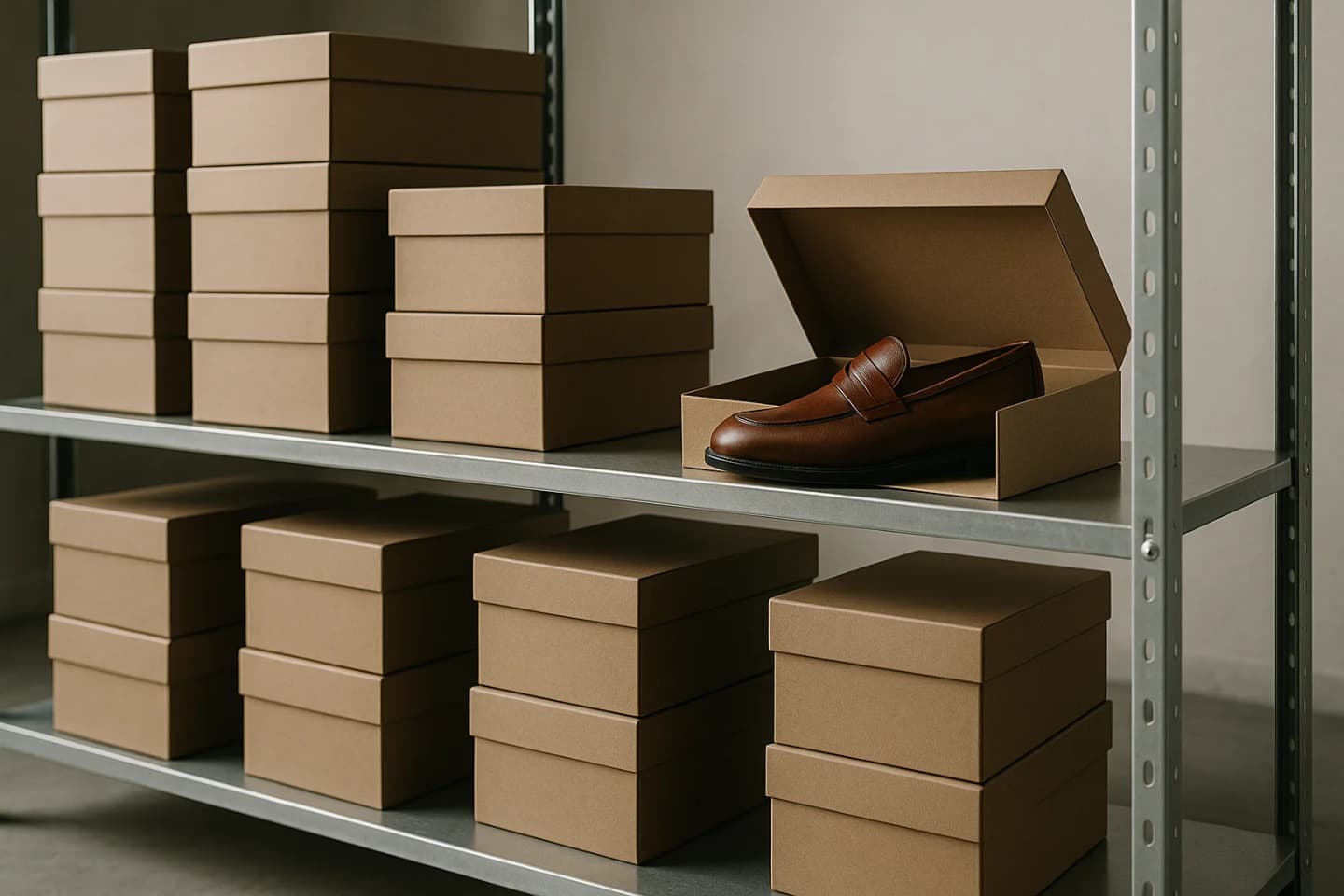
Shoe boxes, even if the product inside is light, occupy significant volume due to their shape. A pair of sports shoes might be light, but together with the box, the space they take up is much larger compared to a more compact product of the same weight. This directly impacts shipping costs, especially in wholesale orders containing hundreds of pairs of shoes. Correctly understanding and managing the dimensional weight value is crucial to avoid unexpected freight charges.
How Is Dimensional Weight Calculated and Why Is It Important?
Dimensional weight is calculated using a standard formula. Typically, the dimensional weight of a package is found by multiplying its width, length, and height in centimeters and dividing by a standard divisor of 3000 (Width x Length x Height / 3000). While small variations exist between cargo companies, the general principle is the same. For example, a carton measuring 40x30x20 cm would have a dimensional weight of 24,000 / 3000 = 8 dimensional weight units. If the actual weight of the products inside the carton is 5 kg, the shipping company will charge based on the 8 units of dimensional weight.
The importance of this calculation lies in enabling the wholesale buyer to forecast costs. Obtaining carton dimension details from the supplier before placing an order or estimating dimensional weight values helps you see the total cost more clearly. This information allows you to compare offers from different suppliers not only by unit product price but also by considering potential logistics costs. This detail becomes even more important for bulky products like wholesale women’s sports shoes.
The Effect of Different Shoe Types on Dimensional Weight
Not every shoe model has the same logistics cost. For example, winter boots or high shoes have a much higher dimensional weight due to their box size compared to a pair of ballet flats or sandals. You might send 8 pairs of boots in a carton, whereas the same sized carton could fit as many as 20 pairs of ballet flats. This directly affects the shipping cost per unit.
Buyers should take this into account when planning seasonal orders. Focusing on less bulky products like flat sandals or slippers for the summer season can naturally reduce logistics costs. When ordering winter products, packaging optimization and bulk shipment strategies become even more critical. Communicating with your supplier about how to efficiently pack products into boxes can help reduce void space and lower the dimensional weight.
Optimizing Costs with Smart Packaging Techniques
One of the most effective ways to reduce logistics costs is to optimize the packaging process, the starting point of the shipment. Proper packaging not only protects the products from damage but also minimizes the dimensional weight value, which directly affects freight charges. Using oversized cartons or inefficiently arranging contents means carrying "empty air," which hits your wallet directly.
For wholesale footwear buyers, this process starts with establishing proper communication with the supplier. Learning the supplier’s packaging standards and, if possible, discussing more efficient alternatives can yield substantial savings over time. Remember, every cubic centimeter has a cost, and managing this cost is in your hands.
The Importance of Choosing the Right Carton Size
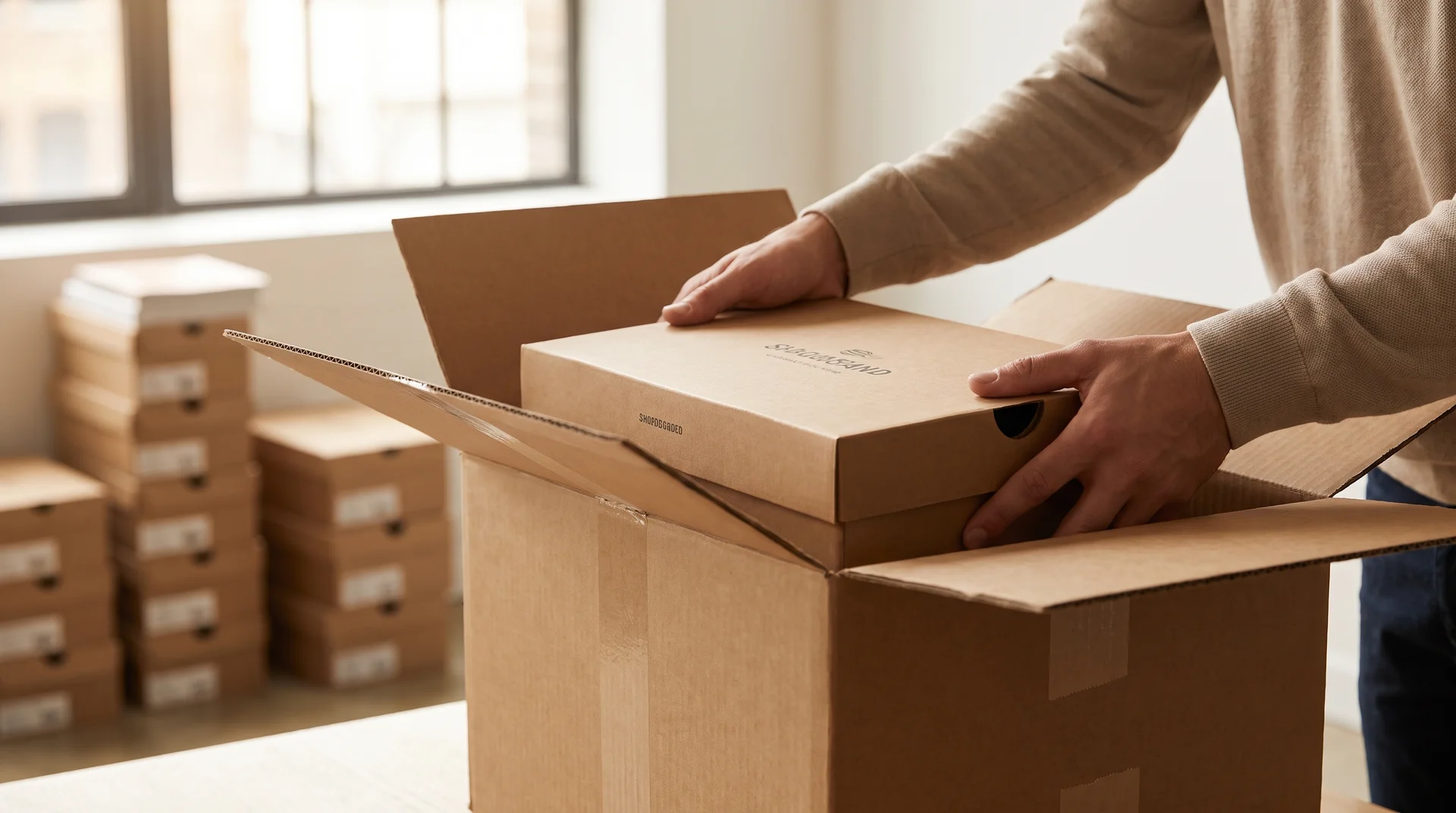
A common packaging mistake is using standard large cartons and filling empty spaces with cushioning materials. This leads to material waste and unnecessarily increases the carton’s volume, raising dimensional weight. The ideal scenario is to choose a carton size closest to the total volume of the ordered shoe boxes, ensuring minimal empty space inside the carton.
You can work with your supplier to establish standardized carton sizes optimized for different order quantities. For example, cartons specifically designed to fit 8, 12, or 16 pairs can improve packing efficiency and reduce dimensional weight costs. This approach generates cost advantages especially for businesses that regularly order similar volumes.
Using Durable and Lightweight Packaging Materials
The goal of packaging is to protect the product, but this should not increase the total shipment weight or volume unnecessarily. Instead of heavy cardboard boxes or excessive filler materials, considering modern, lightweight alternatives is important. For example, different flute types of corrugated cardboard can provide the same durability with less weight.
Also, instead of foam or Styrofoam used to fill gaps between shoe boxes, lighter and eco-friendly materials like air pillows or kraft paper can be preferred. These materials reduce the total package weight and take up less space, facilitating storage when necessary. Asking your supplier about packaging material options helps you make informed decisions.
The Power of Bulk Shipping and Consolidation
Taking advantage of economies of scale in wholesale is one of the fundamental rules for lowering costs. This rule also applies to logistics processes. Instead of ordering frequently in small batches, consolidating your orders into one larger shipment can significantly reduce the shipping cost per unit. This strategy, known as "consolidation," is a cornerstone of logistics optimization.
Consolidation not only saves shipping costs but also improves operational efficiency. Tracking one large shipment is easier than managing multiple small packages. It also simplifies processes such as customs clearance or delivery scheduling. This approach offers significant potential, especially for businesses sourcing from different suppliers or product groups.
Reducing Unit Cost by Combining Orders
Cargo pricing models usually follow a pattern where the unit cost decreases as shipment volume increases. For example, sending one 10-dimensional-weight package costs less than sending ten 1-dimensional-weight packages separately. Therefore, planning your purchases weekly or monthly and consolidating your needs into a single order is a wise strategy.
For instance, instead of a boutique owner ordering 10 pairs of different men’s sports shoe models weekly, they could order 40 pairs at once to meet the monthly demand. This way they pay for only one shipping fee, which is more advantageous than paying four separate fees. When making such plans, considering stock turnover and warehouse capacity is also important.
Consolidating Products from Different Suppliers
If you work with multiple suppliers, logistics can become more complex. However, this challenge can be turned into an advantage. If your suppliers are geographically close, you can collect all your orders at a single point through a logistics partner or a consolidation center and have the shipment sent to you as one package. This method is especially effective for importers or buyers working with manufacturers in different cities.
Digital wholesale platforms can also offer solutions in this area. For example, platforms like Bulkoon allow buyers to order products from different brands and manufacturers in a single cart, simplifying consolidation. This means purchases from multiple suppliers can be managed in one operational process, optimizing logistics costs.
Choosing the Right Shipping Partner and Managing Agreements
Another critical step in optimizing logistics costs is selecting the shipping partner that best suits your business needs. There are many cargo and logistics companies available, each offering different services, pricing policies, and expertise areas. Choosing the cheapest option may not always be the best decision. Factors such as service quality, delivery speed, insurance coverage, and technological infrastructure are equally important.
Once you find the right partner, you can negotiate special deals for your regular and bulk shipments to get prices below standard rates. Shipping companies are willing to offer exclusive discounts and benefits to loyal and high-volume customers. Therefore, it is important to consider logistics services not as just a cost item but as a strategic partnership.
Comparing Price and Service Quality
Before choosing a shipping company, conduct thorough research. Obtain price quotes from different firms for your typical shipment sizes and routes. While evaluating offers, do not focus only on price. Look for answers to questions such as:
What are their delivery time commitments, and how reliably do they meet these timelines?
What are their insurance policies for damaged or lost shipments?
How user-friendly and detailed are their shipment tracking systems?
How accessible and solution-oriented is their customer service?

By evaluating these factors together, you can determine the company that offers the best price-performance balance for your business. Sometimes paying a slightly higher fee for more reliable and faster service can be more profitable in terms of customer satisfaction and operational smoothness.
Volume-Based Agreements and Negotiation Tips
If you regularly purchase wholesale, you are a potential business partner for shipping companies. You can use this potential to negotiate special agreements. Before negotiating, clearly define your average monthly or quarterly shipment volume (total dimensional weight and carton count). Having concrete data strengthens your position.
When requesting quotes, don't just ask for discounts on the unit price per dimensional weight. You can also request discounts or waivers on additional fees such as fuel surcharges or pickup charges. Additionally, you can propose a tiered pricing model offering extra discounts for exceeding specific volume thresholds. Remember, this is a partnership, and creating a structure where both parties benefit is key to a long-term and efficient collaboration.
Leveraging Technology and Platforms
Digitalization is transforming every aspect of commerce, including logistics. Modern technologies and online platforms enable wholesale buyers to manage logistics processes more efficiently, transparently, and cost-effectively. From shipment tracking systems to inventory management software, B2B e-commerce platforms, and route optimization tools, many digital solutions serve as powerful levers to reduce costs.
Using these tools effectively reduces time spent on manual processes, minimizes errors, and makes decision-making data-driven. By integrating technology into your business processes, you can have full control over logistics operations and uncover hidden costs to eliminate them.
Shipment Tracking and Management Software
Knowing where your shipment is has become a standard expectation rather than a luxury. Advanced shipment tracking systems allow you to monitor your package’s movements in real-time-from the moment it leaves the supplier’s warehouse till it arrives at your storage. This transparency lets you take proactive measures against potential delays and provide accurate information to your customers.
Some logistics software can analyze performance data of different shipping companies to recommend the best carrier or predict your future logistics costs based on past shipment data. These tools provide valuable insights for strategic planning, helping you make more informed decisions.
Logistics Advantages of B2B Platforms
Shoe-focused B2B wholesale platforms like Bulkoon bring significant logistics advantages for buyers. These platforms often operate through their contracted shipping firms, offering shipping rates more advantageous than what an individual business might secure alone. In some cases, shipping may even be free over a certain order amount. For example, Bulkoon’s free shipping to all 81 provinces eliminates logistics costs for buyers, directly increasing their profitability.
Additionally, these platforms manage the entire logistics process on your behalf. From the moment you place an order, they handle product collection, packaging, and shipment. This allows you to focus solely on selecting the right products. Understanding how it works helps you fully benefit from the efficiency offered by such platforms.
Conclusion: Logistics Is the Silent Partner of Profitability
The key to success in wholesale footwear trading is not only finding the right products at the right price but also delivering these products to your store efficiently and cost-effectively. Logistics, often overlooked as a background process, is actually a strategic element that directly impacts your profitability. Understanding dimensional weight calculations, optimizing packaging, consolidating shipments, and leveraging technology may seem like small details but collectively create significant differences.
When you start seeing logistics not just as a cost but as an area of efficiency and competitive advantage, you can push your business potential further. Strong relationships with your suppliers and logistics partners, combined with strategically using digital platforms, will be your greatest supporters on this journey. Applying these strategies lets you control operational expenses and focus your energy on your core business: offering the best products to your customers.