How Will Future Shoe Stores Operate?
Digital catalogs, AI-powered sales systems, and data-driven purchasing processes are rewriting the rules of footwear retailing. The stores of the future are transforming into more efficient and customer-focused operations managed by technology and data, rather than intuitive decisions. Discover the role of online supply platforms in this transformation and how physical stores have evolved into experience centers.
The days when a shoe store owner traveled from city to city for wholesale purchases, examined physical samples, and flipped through thick catalog pages are swiftly becoming a thing of the past. Today's and tomorrow's successful retailers are placing technology at the center of their operations. Digitalization is no longer an option; it is the fundamental requirement for staying competitive in the industry. Every process, from product supply to customer relations, from inventory management to sales strategies, is being reshaped by smart systems and data analysis. This new era brings about a working model where intuitive decisions are replaced by evidence-based strategies, and efficiency and customer satisfaction are prioritized.
Digital Catalogs and Videos: From Static Presentation to Dynamic Experience
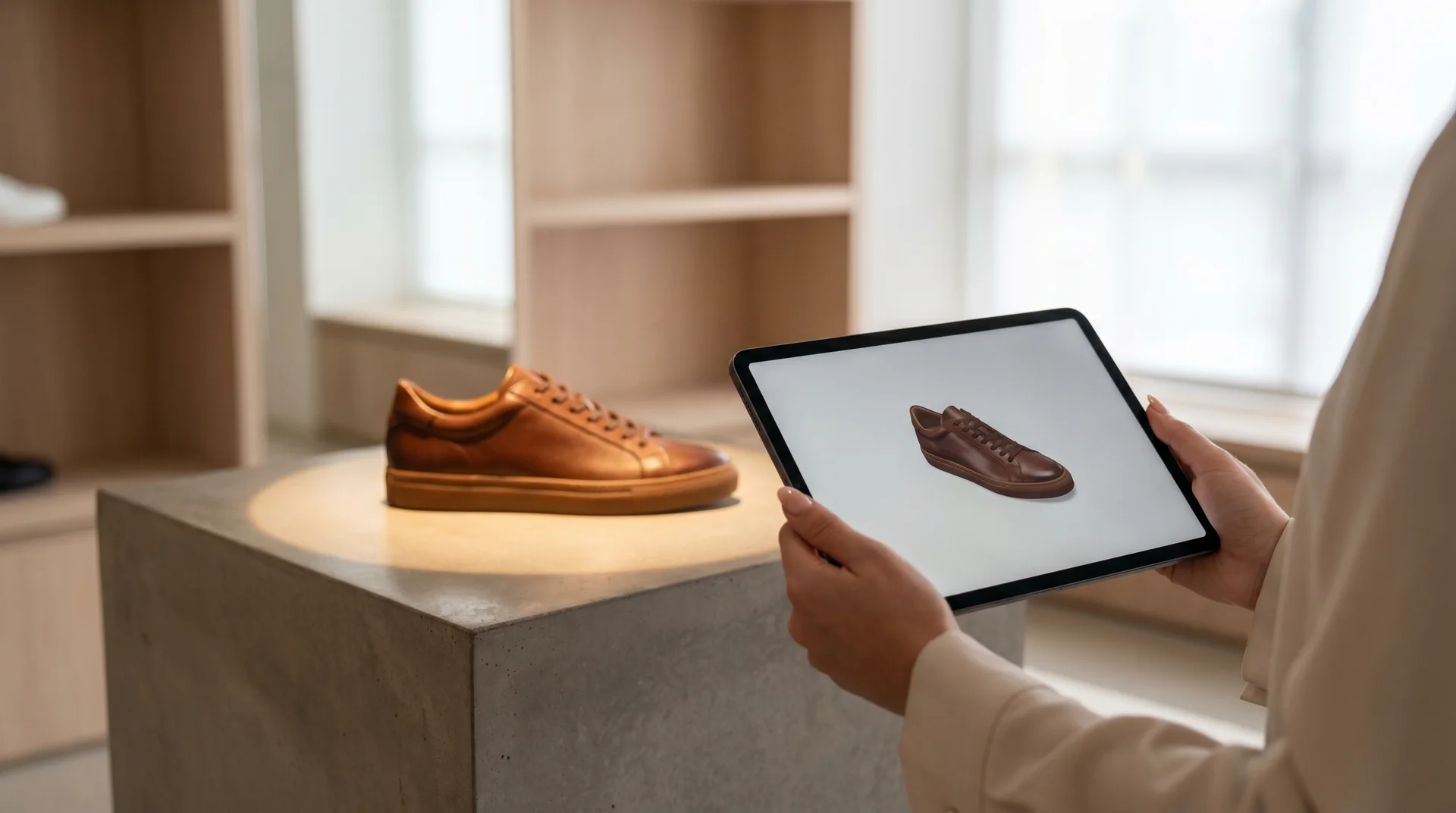
One of the biggest challenges in wholesale shoe purchasing is forming an accurate idea about quality, texture, and fit without seeing the product physically. Traditional photography can only partially address this need. However, the stores of the future are utilizing interactive product presentation technologies when selecting their suppliers. High-resolution 360-degree product images allow the buyer to examine the model from every angle, while detailed zoom features make it possible to see every detail, from stitching quality to material texture.
Beyond photographs, product videos are one of the strongest tools that support purchase decisions. Videos showcasing how the model fits on the foot, its flexibility while walking, and its appearance under different lighting conditions provide an invaluable preview of the product's real-life performance. These dynamic presentations alleviate hesitations, especially when starting to work with a new supplier or model. Buyers can be more confident that the products they will bring to their stores will meet their customers' expectations. As a result, return rates decrease, and customer satisfaction increases.
You might also like


AI-Powered Sales and Customer Relations
In retail, artificial intelligence (AI) has transitioned from a luxury that only large chains could afford to an accessible tool for businesses of all sizes. Future shoe stores will be equipped with AI algorithms that analyze customer behaviors and offer personalized recommendations. For instance, based on a customer's past purchases and online browsing habits, personalized recommendations for new models can be sent via email or mobile app notifications. This not only increases the likelihood of a sale but also strengthens customer loyalty.
AI plays a critical role not only in sales but also in operational efficiency. Particularly, AI is powerful in analyzing shoe trends. Systems can predict which colors, materials, or silhouettes will be popular by scanning social media, fashion blogs, and sales data. These insights allow store owners to make more accurate wholesale purchasing decisions, reducing the risk of leftover stock at the end of the season and utilizing capital more efficiently. Additionally, chatbots used in customer service can instantly answer frequently asked questions, allowing staff to focus on more complex issues.
Online Supply Platforms: The New Hub for Wholesale Purchases
The digitalization of wholesale purchasing processes may be the most profound change in the industry. The traditional supply chain was plagued by inefficiencies such as intermediaries, long distances, and limited supplier networks. Nowadays, online supply platforms like Bulkoon eliminate these barriers by directly connecting buyers with manufacturers. These platforms allow store owners to access thousands of models from hundreds of different suppliers from a single screen.
This centralized structure provides significant advantages for buyers. They can easily compare prices, minimum order quantities (MOQ), and delivery conditions from different suppliers. By filtering products by category, price, brand, or popularity, they can find the models they are looking for within seconds. The digital wholesale purchasing process not only saves time and costs but also enables stores to create more diverse and unique collections. Discovering suppliers that cater to niche markets or specialize in specific styles has never been easier.
Data-Driven Purchasing: Transition from Intuition to Strategy
One of the most crucial factors that set a successful shoe store apart from others is having the right products in stock at the right time. In the past, these decisions were largely based on the intuition and experiences of the store owner. However, the stores of the future are changing this approach with data-driven retailing. Data gathered from point-of-sale (POS) systems clearly reveals which models, sizes, and colors are selling the most.
This data provides a roadmap for future purchasing decisions. For instance, a report showing that the sizes 38 and 39 of a specific boot model are quickly selling out while size 36 remains on the shelf will inform how to optimize the size distribution (assortment) for the next order. Similarly, by analyzing which product categories (e.g., sneakers vs. heels) generated more sales within a certain period, the purchasing budget can be directed towards the most profitable areas. This strategic approach minimizes deadstock costs and directly increases the store's profitability.
The Evolution of Physical Stores: Experience-Centered Spaces
All these digital transformations do not imply that physical stores are losing their importance. On the contrary, their roles are changing. The shoe stores of the future will cease to be mere places where products are sold and will evolve into centers where the brand and products are experienced. Technology is used to enrich this experience. For instance, "endless aisle" applications are becoming common, allowing customers to order colors or sizes not available in-store from large touchscreen displays.
The in-store atmosphere is becoming a crucial part of the customer journey. Good lighting, comfortable fitting areas, and knowledgeable staff create value that online shopping cannot offer. Some innovative stores set up customization stations where customers can design their own shoes or install interactive digital screens that narrate the story of the products. The physical space transforms into a stage that supports online presence, builds brand loyalty, and inspires customers. In this integrated model, online and offline channels complement each other to create a seamless customer experience.
Building a Future-Ready Shoe Store
The shoe store of the future will have a flexible and intelligent structure that integrates technology into every aspect of its operations. It will gain efficiency by conducting supply processes through digital platforms, present the right products by predicting customer expectations with artificial intelligence, and maximize profitability by analyzing sales data. This is no longer a distant future vision, but essential steps to be taken to survive and grow in today's competitive market.
This transformation is not just about adopting technological tools; it also requires a mindset change. Embracing data as a guide, being open to innovation, and placing customer experience at the center of every decision are characteristics that define the successful retailers of the future. Businesses that combine the tactile experience of physical stores with the efficiency of the digital world will not only survive but will also become the players that set the standards in the industry.