7-Step Roadmap for Those Who Want to Establish Their Own Footwear Brand

Creating your own brand in the footwear industry is an achievable goal when the right steps are taken. This guide covers all critical processes, from market research to private label manufacturing, brand registration to choosing the right supplier, providing practical insights for entrepreneurs and boutique owners.
The idea of seeing your own footwear brand on shelves is an exciting goal for many entrepreneurs. However, this journey involves much more than just creating creative designs. Success comes through strategic planning, the right business partnerships, and understanding market dynamics. Every stage - from private label manufacturing to brand registration, from finding wholesale suppliers to collection planning - is a critical step shaping the future of your brand. This guide provides a concrete and actionable roadmap for those who want to establish their own footwear brand, breaking down this complex process into manageable steps.
Step 1: Market Research and Niche Identification
At the core of every successful brand lies a deep understanding of the market it serves. In a competitive industry like footwear, focusing on a specific niche instead of trying to appeal to a broad audience helps your brand stand out. Market research is not just about following current trends but also about identifying future opportunities and unmet gaps.
Define Your Target Audience
Clearly determining who will wear your products guides your entire branding strategy. You need to analyze not only the demographic characteristics of your target audience (age, gender, income level) but also their psychographic traits (lifestyle, values, interests). For example, is your target audience urban professionals who prioritize sustainability, or active young people who value comfort? The answers to these questions will influence everything from your design language to your marketing messages. Clarifying which customer need or problem you address is the first step in crafting your brand promise.
Competitive Analysis and Opportunity Evaluation
Analyzing current players in the market provides valuable insights. What are your competitors’ strengths and weaknesses? In which price segments do they position themselves? By examining customer reviews, you can identify areas where they fall short. Perhaps there is a gap in the market for women's loafer models with a certain aesthetic or a lack of stylish choices in large sizes. This analysis helps develop a unique selling proposition (USP) for your brand. While evaluating opportunities, remember that differentiation can be not only in the product but also in service, packaging, or brand storytelling.
Step 2: Brand Identity and Legal Protection
A strong brand identity helps you secure a place in consumers’ minds and gives your products distinct character. Legally protecting this identity safeguards the investment you make. Branding is more than just your logo; it is the foundation of the emotional connection you build with your customers.
Creating Brand Name, Logo, and Story
Your brand name should be memorable, easy to pronounce, and resonate with your target audience. Ensure the name you select has not been previously registered. Your logo and visual identity (color palette, typography) should reflect your brand’s personality. Is it minimalist and modern, or bold and energetic? Your brand story ties these visual elements together. Why did you start this business? What does your brand represent? A sincere and consistent story makes it easier for customers to connect with your brand.
The Importance and Process of Brand Registration
Brand registration is not a luxury but a necessity. Registering your brand’s name and logo offers legal protection against unauthorized use by others. This prevents future issues with counterfeit products and legal disputes. Before applying, you should conduct name and logo similarity searches in the database of the Turkish Patent and Trademark Office. Usually, this process is managed through a trademark attorney, and you need to specify which goods and service classes your brand will be protected under. Taking this step early protects you from potentially large costs and reputation damage in the future.
Step 3: Product Design and Technical Detailing
This stage converts ideas from paper into tangible products and brings your brand vision to life. For a successful production process, your designs must be not only aesthetically appealing but also technically feasible and consistent. This forms the foundation of communication with your manufacturer.
From Concept to Technical Drawing
Mood boards and initial sketches mark the beginning of design. However, manufacturers require detailed technical drawings (technical packs or tech packs) to realize these ideas. These documents include every component of the shoe, the materials to be used (type of leather, sole material, lining), stitching details, color codes (Pantone), and measurements. The more detailed your technical drawings, the lower the margin of error in production and the closer the final product will be to your vision.
Prototype and Sample Development
Sample production is the most critical step before mass production. Your chosen manufacturer creates the first prototype based on your technical drawings. This sample offers an opportunity to evaluate the accuracy of the last (shoe mold), material compatibility, workmanship quality, and overall appearance. This process often requires several revisions. You must clearly communicate any changes to the manufacturer and ensure that the final approved sample remains as the reference model (witness sample) for mass production. Patience at this stage directly affects the final product quality.
Step 4: Finding the Right Manufacturing Partner: Private Label Manufacturing
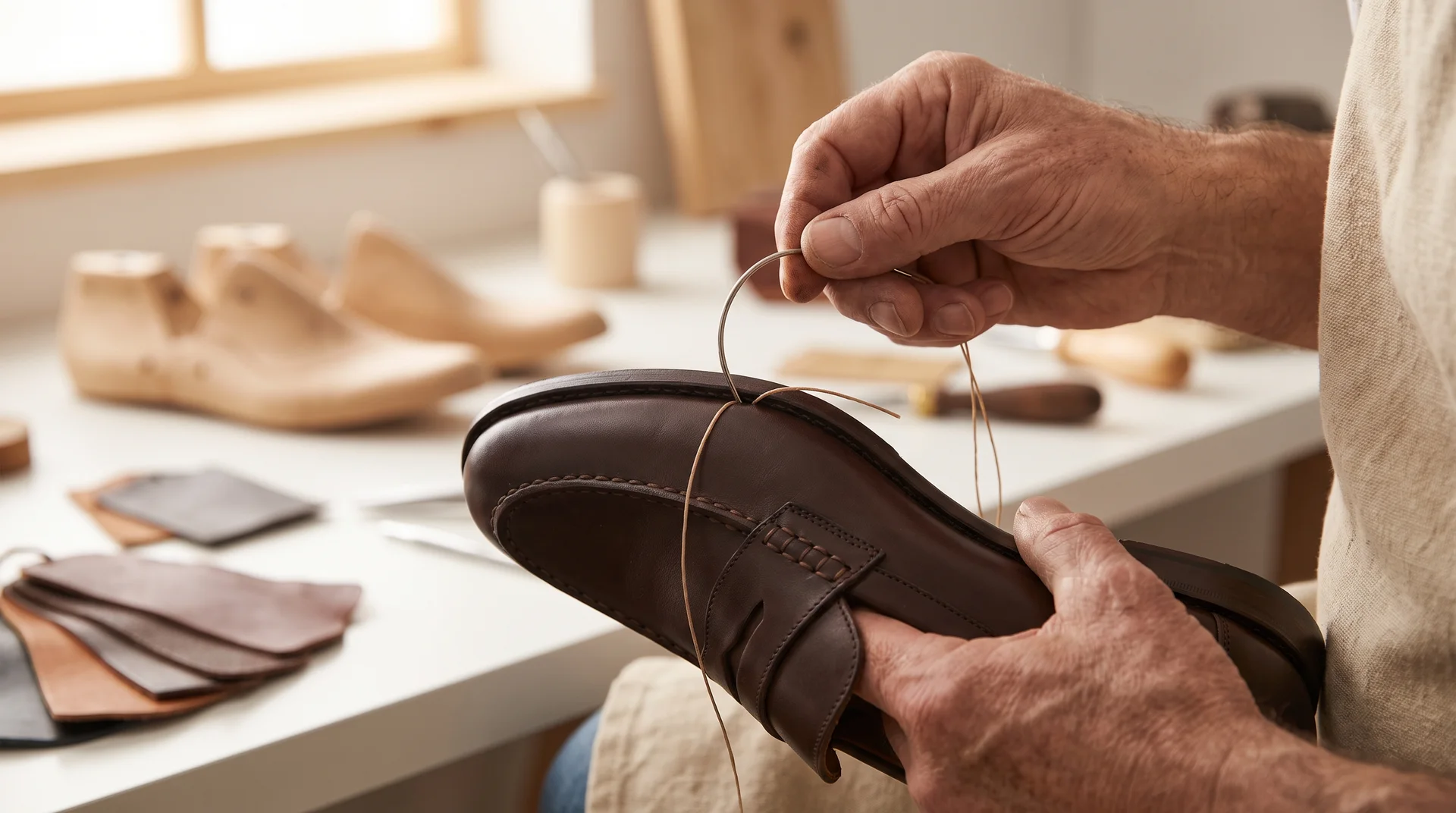
Using the private label manufacturing model instead of setting up your own production facility is the most capital- and operationally efficient route for new brands. Finding the right private label manufacturer is vital for your brand’s quality, costs, and delivery reliability.
Criteria for Selecting a Private Label Manufacturer
Focusing only on price when choosing a manufacturer can be costly in the long run. The key criteria to evaluate include:
Area of Expertise: The manufacturer’s experience in your targeted footwear category (e.g., men’s sports shoes or leather boots) is important.
Quality Control Processes: Ask about the quality control steps they apply on the production line.
Minimum Order Quantity (MOQ): Work with manufacturers who offer an MOQ suitable for your budget and inventory capacity.
Communication and Transparency: Choose a partner who provides you regular updates and answers your questions promptly.
References: If possible, request references from brands who have previously worked with the manufacturer.
Leveraging Supplier Networks
Finding the right manufacturer can be time-consuming and challenging. Here, B2B wholesale platforms provide valuable support. Platforms like Bulkoon host numerous approved suppliers, meaning manufacturers who meet specific standards and whose reliability has been verified. You can access profiles of over 100 manufacturers and suppliers on a single platform and review their expertise and product ranges. This significantly shortens the research process and reduces risks, especially for newcomers. Finding the right manufacturing partner through a trusted network builds a solid foundation for your brand.
Step 5: Collection Planning and Pricing
Your first collection is the initial impression your brand makes on the market. Therefore, product selection and pricing strategy must be carefully planned. It is essential to strike a balance that reflects your brand identity while ensuring commercial success.
Product Selection and Size Run Plan for the Initial Collection
Instead of offering a wide range of products at the start, it is more strategic to begin with a few key styles (hero products) that embody your brand’s essence. A focused collection of 5-7 models simplifies production management and clarifies your marketing message. Planning the correct size distribution, the size run plan, for each model is critical. In the Turkish market, sizes 37-38 are typically the most demanded in women’s shoes, while sizes 41-42 lead in men’s shoes. Optimizing this distribution according to your target audience helps inventory turnover and reduces the risk of unsold sizes.
Cost Analysis and Profitable Pricing Strategy
Pricing is more than just adding a profit margin on top of costs. You must accurately calculate your product cost (Cost of Goods Sold - COGS), including materials, manufacturing labor, lasts, packaging, and shipping. Then add your operational expenses (marketing, salaries, warehouse rent, etc.) and your targeted profit margin to set wholesale and retail prices. When pricing, consider your competitors’ price levels and your brand’s market positioning (premium, mid-segment, etc.). The right price should be reasonable for customers and sustainable for your business.
Step 6: Management of Supply and Logistics Processes
The period after production approval requires as much attention as design and planning. Monitoring production, ensuring quality control, and timely, seamless delivery to you form the basis of operational success.
Production Tracking and Quality Control
Maintain regular communication with your manufacturer throughout production. Track which phase the production is in (cutting, sewing, assembly, finishing), and if possible, request samples or photos for interim checks. Ensure that randomly selected products from mass production match the quality of your approved witness sample perfectly. Quality control should occur not only at the final product stage but also at various stages of production. This proactive approach prevents major problems and delays early on.
Logistics and Storage Solutions
Once production is complete, plan how products will be transported from the factory to you or your customers. The shipping process is important for packaging durability and cost efficiency. Will you use your own storage space or a third-party logistics (3PL) provider? This decision depends on your order volume and operational capacity. Alternatively, some entrepreneurs prefer to start with ready-stock products instead of private label manufacturing. Platforms like Bulkoon offer only ready stock items, enabling you to sell selected models immediately under your own brand (if permitted by the supplier) or directly. This can be a lower-risk way to test the market.
Final Step: Market Entry and Sales Channels
After designing and producing great products, the final and most important step is connecting them with customers. Choosing the right sales channels and establishing an effective marketing strategy will determine your brand’s commercial success.
Online and Physical Sales Points
You can use multiple channels to bring your brand to market. Your own e-commerce site is the most important platform to tell your brand story with full control. In addition, large marketplaces can help you reach a wider audience quickly. For physical sales, you may open a boutique, organize pop-up stores, or sell products to existing shops. Your choice of channels depends on your target audience’s shopping habits and your budget. The best approach is often an omnichannel strategy that combines online and offline channels.
Preparation for Wholesale
One of the most effective ways to grow your brand is selling wholesale to other retailers. For this, you need to prepare a professional presentation. Create a catalog or line sheet containing product images, technical specifications, and wholesale prices. Clearly define your wholesale conditions (minimum order quantity, payment options, delivery times). Digital wholesale platforms like Bulkoon provide an excellent opportunity to showcase your products to thousands of boutiques and store owners across Turkey. By understanding how the platform works, you can create a new B2B sales channel for your brand. This not only increases brand awareness but also provides a steady revenue stream.