Store Window Display Arrangement: Shoe Presentation Techniques That Draw Customers Inside

An effective store window display is much more than just showcasing products. It tells a story that draws potential customers inside through proper lighting, focal points, and visual merchandising principles. Discover how balance, color, light, and creative accessory use in shoe presentation can boost your sales.
The window of a shoe store is the first and most critical communication established with a potential customer. It is a silent salesperson that stops a passerby, invites them inside, and ultimately converts the interaction into a sale. Successful window displays go beyond showing the newest models; they tell a story, create an atmosphere, and reflect the brand's identity. This process involves a series of strategic decisions ranging from selecting the right products to how you illuminate them. A well-designed display is the key to converting foot traffic in front of your store into real customers.
Fundamental Principles of Visual Merchandising: Transform Your Window into a Stage
Visual merchandising is the art of transforming a window from a space where products are randomly arranged into a stage that captures the customer's attention and guides them inside. At the core of this art lie universal principles regarding how the human eye perceives composition. Understanding these principles not only helps you showcase your shoes but also turns them into objects of desire. A professional approach ensures that every detail serves a purpose.
Balance and Symmetry: Compositions That Don’t Tire the Eye
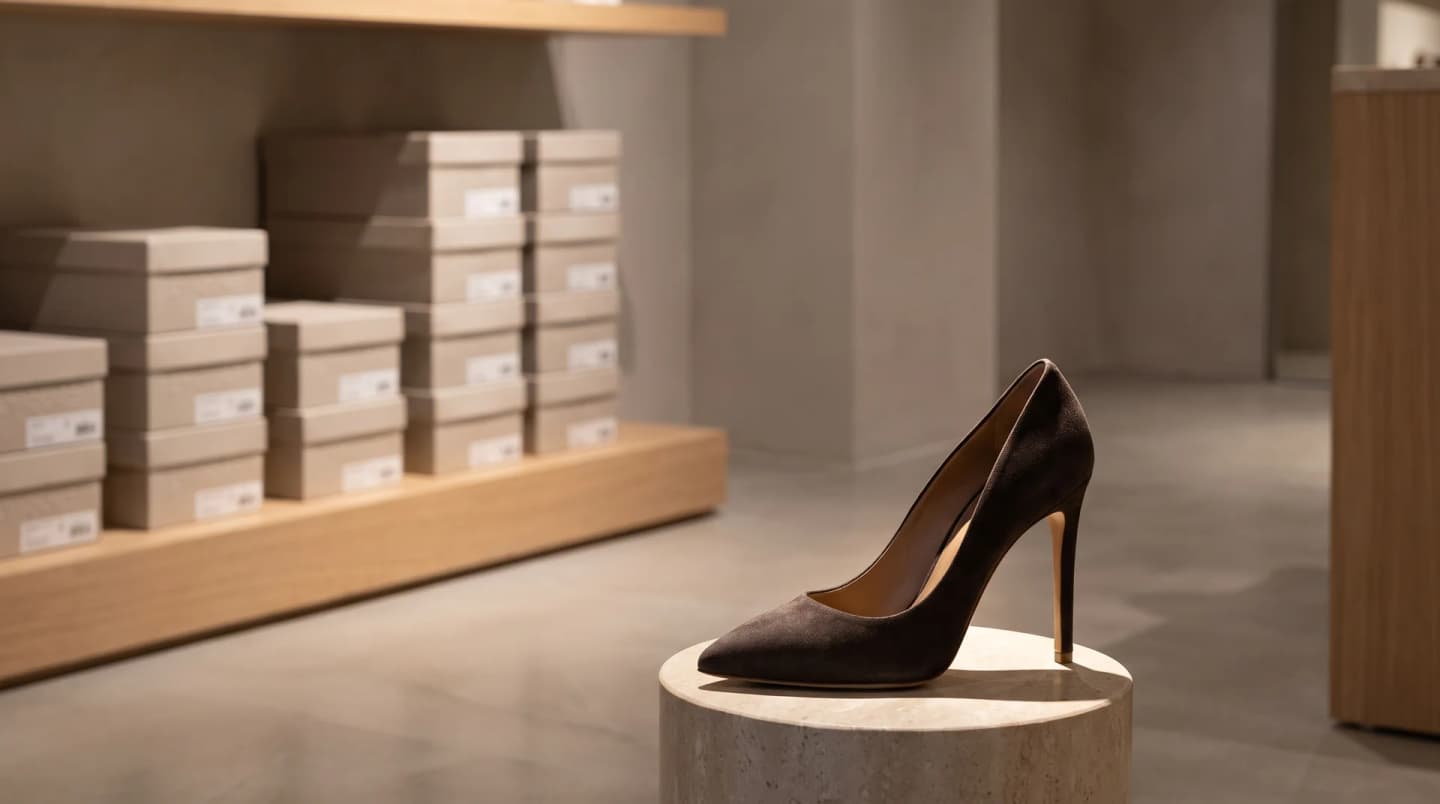
In window design, balance refers to how visual weight is distributed across the composition. Symmetrical balance involves arrangements where each side mirrors the other when the window is divided down the center. This often creates a classic, formal, and orderly feel. For example, placing a women’s stiletto model in the center with equally weighted shoes on both sides forms a symmetrical balance. Asymmetrical balance, on the other hand, is achieved by balancing objects of different sizes and shapes. For instance, placing a large boot opposite several smaller but brightly colored ballet flats. Asymmetrical arrangements can be more dynamic, modern, and engaging.
Color Theory and Psychology: Activate Emotions
Colors are powerful tools that directly affect customers’ moods and perceptions. A monochromatic color scheme (different shades of the same color) offers a sophisticated and elegant look. For example, combining beige and brown men’s casual shoes with natural materials creates a warm and trustworthy atmosphere. Complementary colors (those opposite each other on the color wheel), such as blue and orange, provide high contrast and are ideal for creating an energetic and attention-grabbing display. Bringing the season’s trending colors into your window signals that your store is current and fashion-focused. Color choice should align with your target audience’s expectations and the character of the products presented.
An effective window instantly creates impact by using the foundational elements of visual merchandising: balance and color harmony. These principles allow you to convey your message clearly without overwhelming the customer’s eye.
Focal Point Selection: Which Shoe Takes Center Stage?
Every successful display has a star. The focal point or “hero product” is the key element that catches the customer’s eye first and around which the rest of the window is arranged. Correctly identifying this focal point is like composing the opening sentence of the story you want to tell. Concentrating attention in one place prevents the message from scattering and leaves a clear impression in the customer's mind.
Choosing the “Hero” Product: Highlight the Season’s Star
The hero product is usually the most trendy model of the season, one of the best sellers, or the shoe with the most visually striking design. When selecting it, you should consider not only aesthetics but also commercial potential. From the 10,000+ model options offered by Bulkoon, you can find the most suitable, eye-catching, and unique pieces that fit your store's concept. For instance, a sparkling heeled shoe with jewels for a special event season or a lively-colored women’s heeled sandal for summer can be perfect heroes. Placing this product at the center of the window or at the strongest point according to the “rule of thirds” draws all attention to it.
Grouping and Storytelling: Let the Products Speak
After determining the hero product, the other shoes and accessories play supporting roles that reinforce this main character. Grouping products around a theme is an effective storytelling method. For example, for a “weekend getaway” theme, you might combine a comfortable sneaker, a sandal, and a slipper. For an “office elegance” theme, showcase a classic loafer, a ballet flat, and a low-heeled shoe together. These groupings present not just a shoe but a lifestyle or usage scenario to the customer. Because Bulkoon stocks only ready-to-ship products, you can quickly access the complementary items needed to create such themes and keep your display dynamic.
Choosing the right hero product and presenting it with a supporting story transforms your window from an ordinary product exhibition into an inviting and attractive narrative that draws customers in.
The Power of Lighting: Creating Emphasis with Proper Illumination
Light is one of the most important elements that sets the atmosphere of a display and reveals the texture, color, and form of products. Without the right lighting strategy, even the best-designed composition can lose its impact. Lighting does more than ensure visibility; it directs the customer’s attention to the points you want and enhances the perceived value of the products.
Spotlights and Accent Lighting
Accent lighting plays a critical role in highlighting hero products you’ve identified as focal points in your window. Track-mounted adjustable spotlights are among the most flexible solutions for this. By adjusting the angle and intensity of light, you can emphasize the stitching detail, material texture, or a shiny accessory on a particular shoe. Instead of shining light directly above the product, using a slight angle creates shadows and adds depth and three-dimensionality. This technique prevents the shoe from looking flat and lifeless.
Color Temperature and Atmosphere
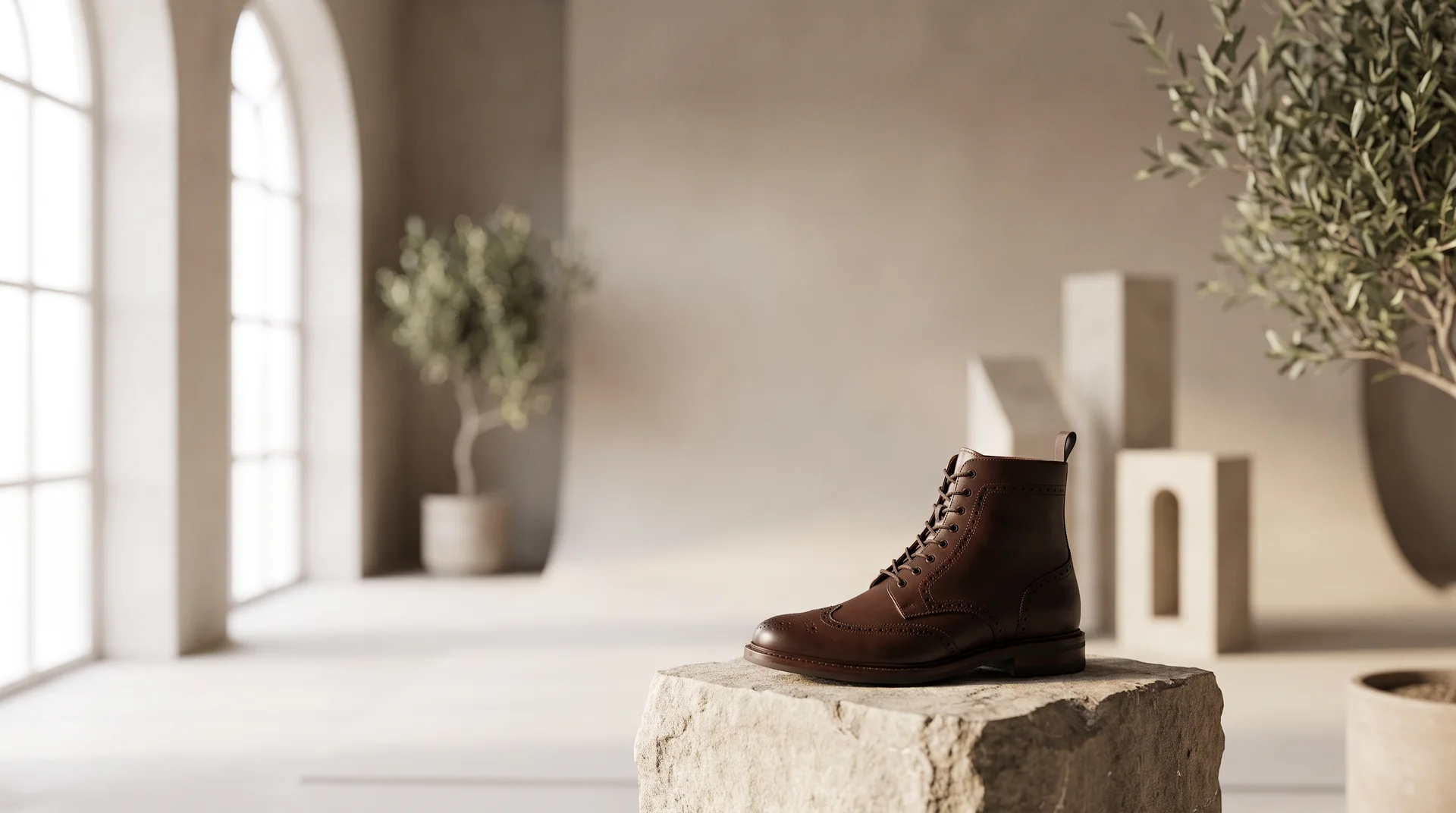
The color temperature of the lighting, measured in Kelvin (K), directly influences the overall atmosphere of the display. Low Kelvin values (2700K-3000K) are called “warm white” and emit a yellowish light. This type is ideal for creating intimate, luxurious, and inviting environments, especially for classic men’s shoes made of natural materials like leather and suede. Higher Kelvin values (4000K-5000K), known as “cool white,” convey a more modern, energetic, and sharp feeling. This lighting is preferred in windows displaying dynamic and technologically advanced products like women’s sport shoes.
Strategic use of lighting not only illuminates your products but also gives them character and shapes customer perception, triggering the desire to buy.
Creative Use of Materials and Accessories in Window Design
Although the shoes themselves are the stars of the display, the materials and accessories supporting them complete the scene and enrich the story. Properly chosen decorative elements add depth, texture, and character to your window, taking it away from ordinariness. These materials should reflect your brand’s identity and reinforce the theme of the displayed products.
Height and Layering: A Dynamic Look
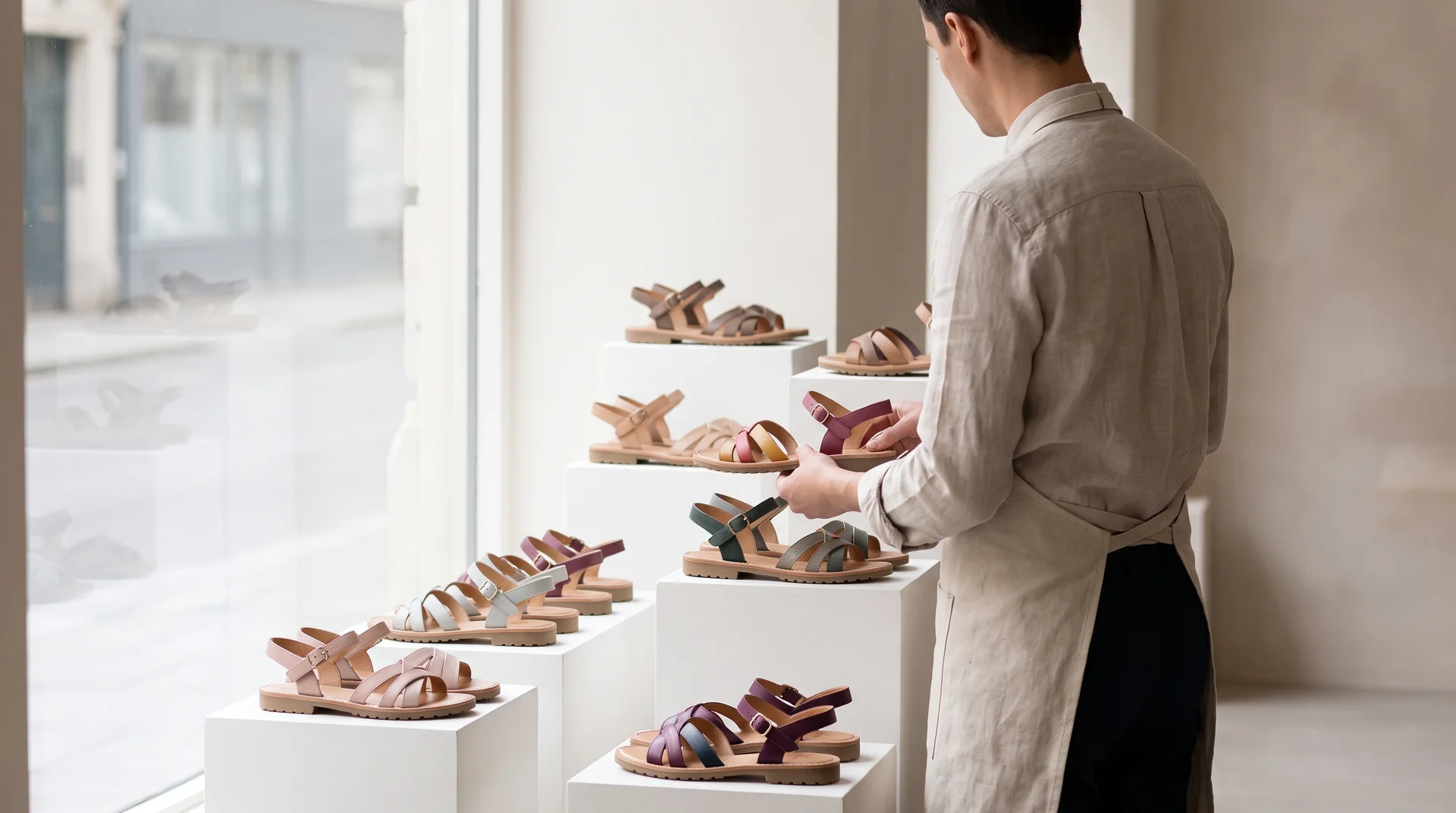
Displaying all shoes at the same level creates a monotonous and boring image. It is essential to use varying heights to create a visual hierarchy in your window. You can utilize specially designed shoe stands, transparent plexiglass boxes, wooden blocks, or even stacked books. Give priority to the most important or eye-catching products by placing them at eye level or slightly above. Creating different levels allows the customer’s eye to wander inside the display and to explore each product individually. This layered structure adds a professional and deliberate feel to the window.
Thematic Decor and Backgrounds
The background of your window acts like a canvas that unifies the entire composition. A simple colored panel, a wood-textured covering, or a seasonally appropriate visual can completely change the atmosphere. For example, when showcasing sandals from a summer collection, using natural materials like sand, seashells, or wicker in the background strengthens your theme. For winter boots, dry branches, artificial snow, or wood pieces might be used. These thematic decors place products in context and help customers imagine how they would feel wearing those shoes.
Creative accessories and layered arrangements visually enrich your window and offer customers not just a product, but a holistic experience.
Impact of Digital Tools and Wholesale Purchasing Processes on the Window
Today’s retail requires combining the physical store experience with the possibilities of the digital world. Even the traditional art of window display can greatly benefit from the efficiency and variety offered by modern wholesale platforms. The right digital tools enable you to plan your window faster, more trendy, and more effectively.
Capturing Trends: Drawing from Online Platforms
The secret of a successful window is showcasing current and in-demand products. B2B wholesale shoe platforms like Bulkoon allow you to view thousands of models from hundreds of suppliers on a single screen. This is an invaluable resource for discovering market trends, new designs, and potential “hero products.” Some of the products on the platform include product videos, helping you better understand the shoe’s stance, materials, and details. Thus, even before physically seeing the product, you can more effectively plan how it will look in your window. This digital discovery process makes it easier to source the most suitable and attention-grabbing models for your store.
Stock Management and Window Rotation
To keep the display fresh and appealing, it must be changed regularly. Digital wholesale platforms make managing this rotation much more efficient. By working with approved suppliers on Bulkoon, you can reliably and quickly order new products. The advantage of ordering needed models with just a few clicks and benefiting from fast shipping enables you to update your window frequently. This agility allows you to adapt quickly to special days, holiday seasons, or sudden weather changes. You can see how simple this process is by checking out How It Works.
Digital wholesale processes turn window design from a reactive task into a proactive strategy based on data and trends. This helps your store stay one step ahead in competition.
Final Touch: Tips to Keep Your Window Vibrant
Creating a perfect window design is only the beginning of the process. Real success lies in maintaining the continuity of this visual impact. A window should be thought of as a living and breathing organism; it must be kept alive with regular maintenance, changes, and analysis. These final touches maximize the return on your investment.
Regular Changes and Cleaning
Customers, especially those who frequently pass in front of your store, may get tired of seeing the same window. Offer them something new by refreshing your display every 2-4 weeks. This change can mean creating an entirely new theme or just rearranging products and a few accessories. Most importantly, your window must always be impeccably clean. Dusty shoes or dirty glass can overshadow even the most stunning designs and damage your brand image. Regular cleaning is a sign of your professionalism and the value you place on your products.
Evaluating Feedback
The best way to understand how effective your window is, is to observe customers. Do people stop in front and look? Which products draw more focus? Don’t hesitate to ask customers who enter what caught their attention in the window. Additionally, tracking sales increases of specific products after display changes provides concrete feedback. Use these data and observations to make your next window design even more effective. Remember, the best window is the one that communicates best with your target audience.
The success of a window is measured not only by its initial setup but by the continuous attention and care it receives. Regular maintenance and analysis turn your window into a powerful sales tool.