How to Establish an SKU and Shelf Coding System in a Footwear Warehouse?
Bulkoon Editorial TeamB2B Wholesale Commerce Content Team
The Bulkoon editorial team publishes practical guides grounded in wholesale footwear sourcing and digital B2B commerce.
· 8 min read
A practical guide to setting up an effective SKU and shelf coding system in the format A-03-02, designed to manage hundreds of footwear models quickly and accurately.
Relying solely on the visual appearance on the box to place or search products in a footwear warehouse with hundreds of different models, colors, and sizes can lead to serious operational time loss. Incorrect product shipments, delayed deliveries, and inconsistent stock counts directly reduce the profitability of retail stores and boutiques. Establishing an effective Stock Keeping Unit (SKU) architecture and a logical shelf address infrastructure brings sustainable and error-free flow to footwear storage processes. In this article, we examine step by step how you can implement a standard coding system that combines product code, color, size, and physical location.
Creating SKU Logic and Code Architecture in Footwear Retail
SKU (Stock Keeping Unit) is a unique alphanumeric code that identifies each unique product in the warehouse. Because footwear models often come in different colors and sizes, coding without a standard rule quickly causes confusion. A proper SKU architecture should provide clear information about the product category, model, color, and shoe size just by looking at the code, regardless of the actual product.
Avoid complicated and overly long character strings when setting up your system. An ideal footwear SKU structure should be between 10 and 14 characters and follow a logical hierarchy. For example, a code created for the women's footwear category could be structured as WMN-SPR01-BLK-38. Thanks to this coding structure, warehouse staff can directly locate the correct product by reading the code on the order document without opening the box.
Fundamental Components of the Stock Code Structure
Category Code (3 Characters): Indicates the general group of the product (e.g., WMN: Women's, MNS: Men's, BAB: Baby).
Model and Style Code (4-5 Characters): Represents the product's design or model series (e.g., SPR01: Sports Model 1, BTT02: Ankle Boot Model 2).
Color Code (3 Characters): Defines the main color of the product (e.g., BLK: Black, WHT: White, TAN: Tan).
Rapid Product Identification Through Logical Coding
A logical SKU sequence minimizes training time even for newly hired warehouse personnel. New season women's sports or men's sports collections added to your product range can be included in the system within seconds under this logic. To prevent confusion caused by similar-looking characters, avoid using characters such as the letter “O” in place of the number zero ‘0’ in SKU codes, ensuring operational clarity.
In summary: A standardized alphanumeric SKU structure breaks down complex footwear stocks into identifiable and traceable small units. Proper SKU architecture is the first step to reducing in-warehouse error rates and automating stock tracking.
Warehouse Location and Shelf Coding Standards (A-03-02 Model)
Identifying products by SKU alone is not sufficient; these products also need a systematized address for their location within the warehouse. The shelf addressing system functions like street and building numbering in a city. Dividing the warehouse area into aisles, shelves, and vertical compartments and coding accordingly can increase picking speed by up to three times.
The widely used and very practical A-03-02 location format narrows down the address step by step in the warehouse. In this coding example, the letter 'A' represents the aisle or main section, '03' indicates the shelf unit, and '02' denotes the vertical level or compartment number on that shelf. When the picker has the location information clearly on the picking list, the product search time is eliminated.
Aisle, Shelf, and Compartment Layering
When organizing the warehouse layout, letters and numbers should be arranged from left to right and from bottom to top in ascending order. The ground level should always be accepted as the '01' or 'A' level, with numbers increasing as you move up to higher shelves. This arrangement facilitates drawing a standard picking route.
Section A: The A aisle or left main wall of the warehouse.
Shelf No. 03: The third vertical shelf unit in aisle A.
Level 02: The second shelf level vertically from bottom to top on shelf 03.
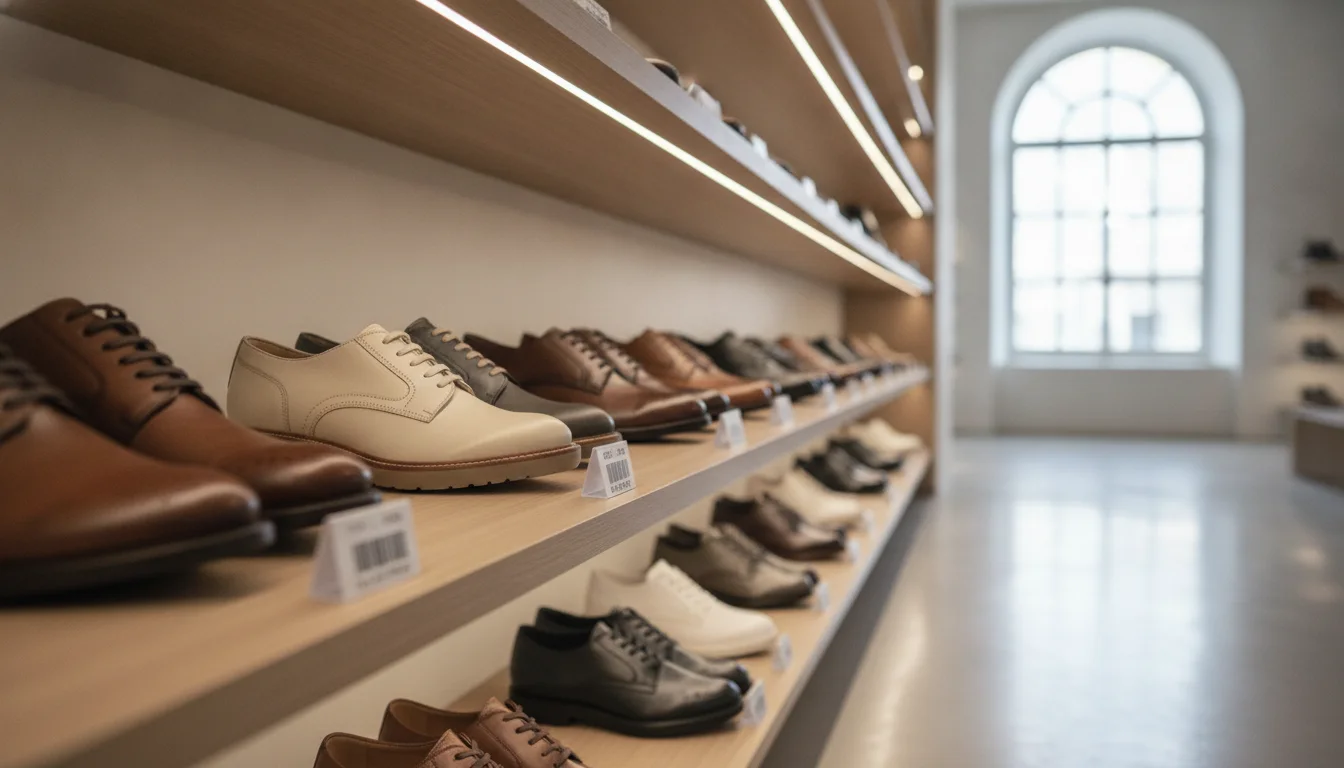
A systematic shelf addressing and barcode infrastructure significantly reduces in-warehouse picking times.
Addressing Techniques to Optimize Picking Routes
To prevent unnecessary walking during order picking, a “S” shaped picking route should be planned inside the warehouse. Location codes should be marked with large, reflective, or prominent labels that increase shelf visibility. As we often emphasize in our How-To guides, operational efficiency arises from the harmony between physical arrangement and digital coding.
In summary: A layered shelf location system like A-03-02 reduces search times nearly to zero. Physical labeling and proper route planning maximize movement efficiency within the warehouse.
Managing Assortments and Size Distribution Within the Warehouse
Assortment management is one of the most critical operational processes in footwear wholesale and retail trade. Products generally enter the warehouse as standard assorted cartons with certain size distributions. At the retail stage, these cartons are either opened and distributed to shelves as single pairs or stored by maintaining their assortment integrity.
Your warehouse coding system should be capable of managing both full assorted carton stocks and opened single-size stocks simultaneously. The master barcode or SKU on the outside of an assorted carton should indicate a breakdown of all sizes inside. The singles within an opened carton should be placed on relevant shelf compartments with individual SKU codes and size labels.
SKU and Shelf-Based Tracking of Wholesale Assortment Cartons
A separate bulk storage area should be allocated in the warehouse for products kept as full assorted cartons. Locations in these areas can be marked with a special suffix such as B-01-01-ASR. This approach prevents disruption of order picking shelves and increases picking speed when preparing wholesale carton orders.
Warehouse Placement for Single Size Replenishments
Best-selling mid-range sizes (e.g., 37-38 for women, 41-42 for men) should be placed at eye level and on shelves with the easiest access. Less frequently moving sizes like 35, 36 or 44, 45 can be stored on the lowest or highest shelf levels. This vertical size-based placement allows ergonomic picking.
In summary: A warehouse layout suitable for assortment and single-size dynamics prevents stock disorder. Placing best-selling sizes in easily accessible shelving directly shortens picking times.
Dynamic Storage Based on Seasonal Transitions and Stock Turnover Rate
The footwear sector is highly seasonal. The circulation speeds of summer ballet flats, slippers, and sandals versus winter women's ankle boots or boots change drastically according to seasons. The dynamic storage strategy aims to keep high-turnover products closest to picking areas.
Applying ABC analysis, products should be classified by their movement frequency in the warehouse. Class A (fast-moving) products should be located closest to the warehouse entrance and packing tables. Class C (slow-moving or end-of-season) products should be moved toward back or upper areas of the warehouse. This placement should be updated dynamically at the beginning of each season.
Placement of Fast-Moving Models in Front Warehouse Areas
A "fast picking zone" should be created for trending or promotional items of the season. Shelf codes in this area might be labeled, for example, as FP-01-01. Keeping fast-moving models in this zone allows most daily orders to be prepared quickly without penetrating deeply into the warehouse.
Reorganization of End-of-Season and Dead Stock Areas
Discounted stocks or products carried over to the next season lose picking priority at season-end. To prevent these stocks from blocking main picking aisles, shelf locations should be updated and moved to back storage areas, with immediate revision of location codes in the system.
In summary: Dynamic storage based on stock turnover reduces the distances personnel must travel. Seasonal product rotation allows efficient use of warehouse space.
Zeroing Shipment and Inventory Counting Errors
The most common issue in human-factor-dependent footwear warehouse management is shipping wrong colors or sizes due to similarity of model images on boxes. Sending navy instead of black shoes incurs return shipping costs and customer dissatisfaction.
With a proper SKU and shelf addressing infrastructure supported by digital validation tools, error rates approach zero. Using barcode scanners or handheld terminals during picking provides immediate audible alerts if personnel pick from the wrong shelf or box.
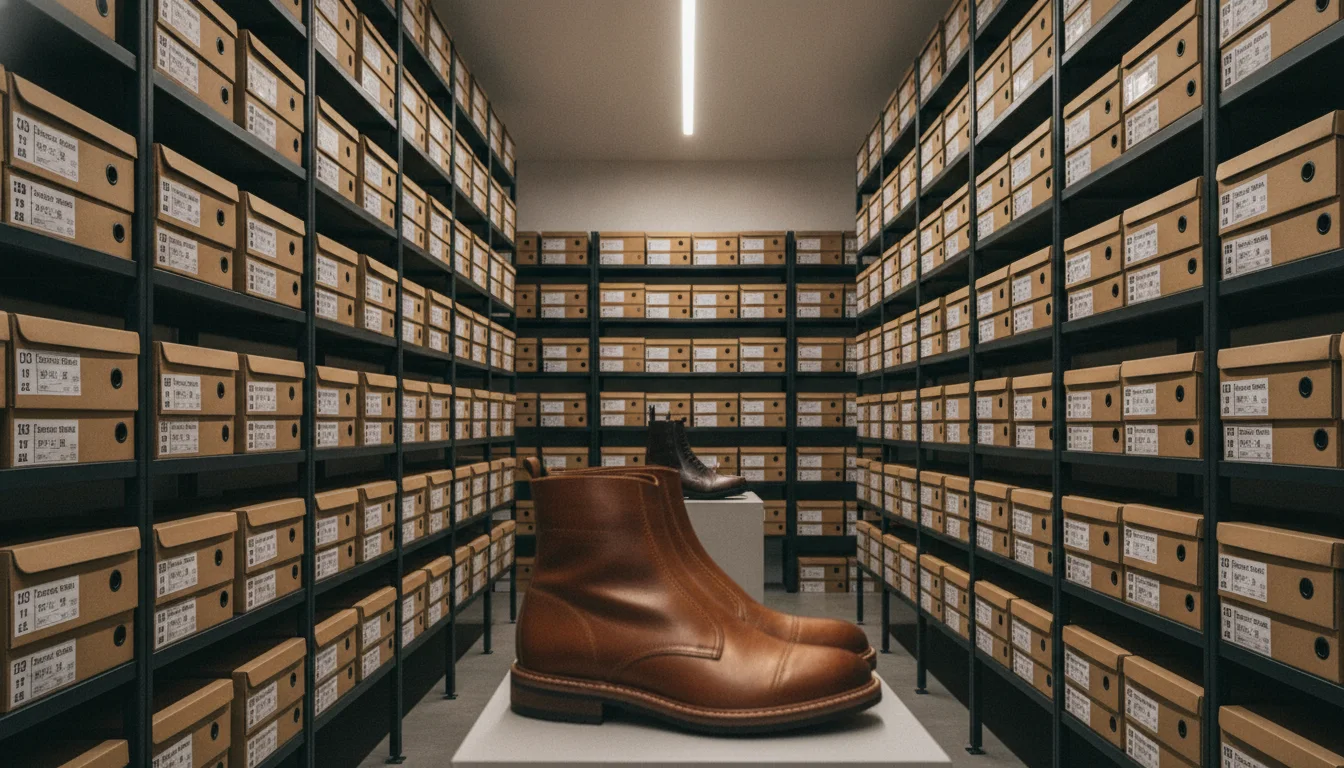
A systematic shelf addressing and barcode infrastructure significantly reduces in-warehouse picking times. - different scene
Barcode Scanner and Digital Validation Integration
Each SKU in the system should be converted into a barcode (EAN-13 or QR code) and affixed to the side surface of the shoe box. During order picking, the picker scans the shelf location barcode (A-03-02) first, then the product barcode. This two-step verification process completely eliminates the risk of packing incorrect products.
Periodic Cycle Counting for Stock Accuracy
Annual general stock counts require stopping operations and are exhausting. Instead, warehouses with completed SKU and shelf coding should implement daily cycle counting of specific aisles. For example, aisle A is counted on Monday and aisle B on Tuesday, maintaining stock accuracy above 99%.
In summary: Barcode-based digital verification and cycle counting permanently prevent shipping errors and stock inconsistencies.
Strengthen Wholesale Supply Operations with Efficient Warehouse Layout
Setting up a systematic warehouse infrastructure not only speeds up current operations but also supports your store's growth potential. Thanks to a properly coded stock structure, you can clearly analyze which categories or sizes you lack when purchasing new products.
While optimizing your store’s shelving and warehouse processes, you also need a fast and reliable supply flow. With only ready stock models available on the Bulkoon platform, you can accelerate the delivery time of ordered products to your warehouse. By browsing over 10,000 models on the platform and using smart filtering tools, you can easily replenish low-stock sizes and avoid sales losses. To explore the ordering steps directly, visit our How It Works page.
The Contribution of a Scalable Warehouse Infrastructure to Retail Growth
Standardized SKU and location codes reduce orientation time to just a few hours when new warehouse personnel join your team. Once warehouse organization is in place, your daily shipping capacity multiplies, and your retail store or e-commerce channel smoothly handles higher order volumes.
Integration with Digital Wholesale Supply Workflows
Systematic stock management is an integral part of modern B2B supply chains. By tracking stock based on accurate data, you can instantly identify best-selling sizes in your store and start supply processes on time, ensuring uninterrupted trade flow.
In summary: Organized warehouse management and digital supply integration bring high customer satisfaction and sustainable profitability in footwear retail.
Sources
Information in this article draws on the following sources.
Discover technical methods to present lasting information accurately and in detail to reduce return rates and increase customer satisfaction in online shoe sales.
Calculate your actual net profit and minimum sales price accurately by factoring in commissions, shipping, advertising, and returns costs when selling shoes on marketplaces.


 3 colors