How Artificial Intelligence Benefits Shoe Stores

Discover practical applications of artificial intelligence for small and medium-sized shoe stores. Learn how AI can help with stock analysis, marketing, customer service, and sales forecasting.
It is no secret that artificial intelligence (AI) powered tools are transforming the retail sector. However, the perception that this technology is only accessible to large chain stores or global e-commerce giants is rapidly changing. Today, even a boutique shoe store or a newly established e-commerce site can leverage the efficiency and creativity advantages offered by artificial intelligence by using the right tools. In this era of personalized customer expectations and increased competition, AI provides tangible solutions to reduce operational burden, strengthen marketing strategies, and most importantly, make smarter inventory decisions.
Operational Efficiency: Time-Saving Automations
Managing a shoe store involves many small tasks that require constant attention. Entering product information, responding to customer inquiries, and handling daily administrative duties can consume valuable time needed for strategic thinking. Artificial intelligence automates these repetitive tasks, giving business owners and managers the opportunity to focus on more critical areas.
Product Descriptions and Catalog Management
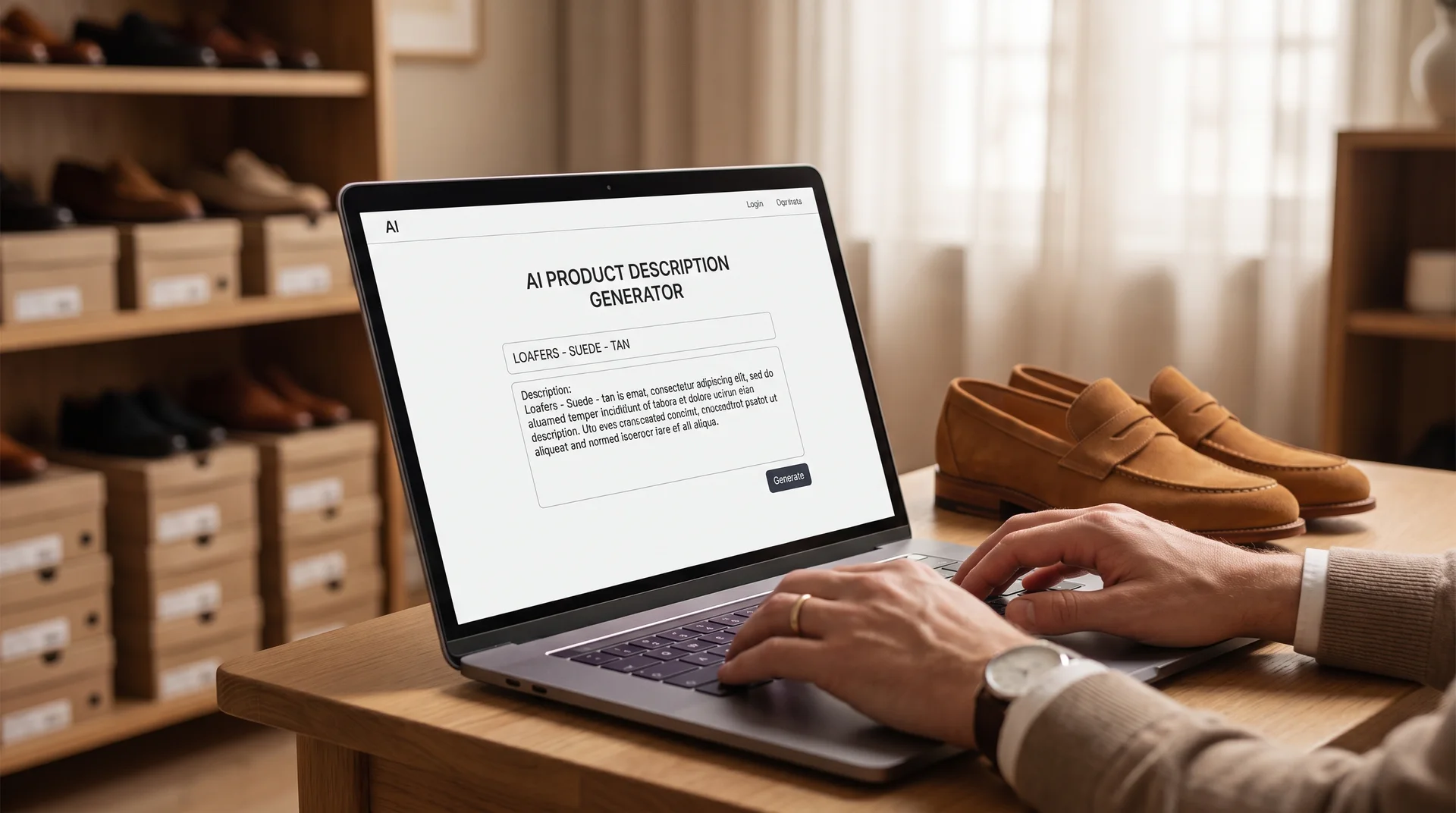
Writing unique, SEO-friendly, and engaging product descriptions for each new shoe model is time-consuming. AI-based text generation tools can take a model's key features (material, heel type, color, style, etc.) and produce multiple description alternatives within seconds. This is especially helpful when managing a catalog with hundreds of different models. For example, for a women's stiletto model, the system can instantly create both a stylish narrative for an evening event and an explanation highlighting the product's technical details. This ensures your e-commerce site or marketplace listings always have rich and professional content.
Customer Service and Communication Automation
Standard questions from customers such as "What is the status of my shipment?", "What is your return policy?", or "Do you have this model in size 38?" can take up a significant portion of the day. AI-powered chatbots integrated into your website or social media accounts can answer these frequently asked questions instantly 24/7. This increases customer satisfaction while allowing your staff to focus on more complex and value-adding customer issues. Advanced AI tools understand conversational language and provide more natural, human-like responses, thereby boosting efficiency without negatively affecting the customer experience.
Artificial intelligence automates operational tasks, returning the most valuable resource to businesses: time. This enables store owners to concentrate more on growth areas such as product selection, marketing strategies, and customer relations.
Strengthening Marketing and Sales Channels
Reaching the right audience and building brand awareness are fundamental goals for every shoe store. Artificial intelligence facilitates and enhances this process by offering creative and analytical support ranging from marketing material creation to campaign strategy development.
Social Media Content Creation and Planning
Social media is one of the most important showcases for shoe retailers. However, continuously producing fresh and engaging content can be challenging. AI tools can generate social media post texts, hashtag suggestions, and even visual concepts around a specific product or theme. For instance, you could ask AI to prepare a one-week content calendar for a new men's sports shoe collection. AI will suggest different focus points for each day (comfort, design, usage area, etc.) and provide ideas for related texts and visuals. This creates consistency and creativity in your marketing efforts.
Personalized Campaign and Email Ideas
Offering personalized deals instead of general discount campaigns significantly increases conversion rates. AI analyzes customer data (past purchases, viewed products, demographic information) to develop personalized campaign ideas. Example scenario: For a customer group that previously bought ballet flats or loafers, a special email campaign introducing new season women’s loafers can be generated. AI helps maximize the campaign’s success by suggesting the email’s subject line, content, and even the best sending time.
Using artificial intelligence in marketing enables more targeted and effective campaigns with less effort. This technology allows small businesses to conduct data-driven marketing like big brands.
Smart Decisions in Stock and Supply Processes
In shoe retail, accurate stock management is one of the most critical factors determining profitability. Unsold products tie up capital, while the absence of in-demand products leads to lost sales. Artificial intelligence provides a data-driven approach to balance these factors, improving forecasting accuracy and reducing risks.
Sales Forecasting and Stock Analysis with AI
AI algorithms analyze past sales data, seasonal trends, and upcoming special events to generate accurate predictions about which models, colors, and sizes will sell more in the future. This guides how much to order of each product. For instance, an AI tool combining last year’s sales velocity for the same period and this year’s market trends can forecast the demand for a specific sandal model during summer. This helps avoid unnecessary stock costs and prevents popular items from selling out.
Data-Driven Approach for Proper Assortment and Size Allocation
One of the most challenging decisions in wholesale purchasing is assortment, that is, size distribution within a series. Traditionally based on experience, these selections sometimes cause hard-to-sell sizes like 37 or 44 to remain on shelves, while popular sizes such as 38 or 42 sell out quickly. AI can model the ideal size distribution based on your store’s customer demographics and past sales data. The system analyzes standard foot size trends in a specific region or customer profile and recommends the most profitable assortment for you. This minimizes the stock burden and loss caused by unsold individual sizes.
Optimizing Seasonal Demand and Stock Turnover Rate
The footwear sector is highly seasonal. Boots sell in winter, sandals in summer. AI helps you manage these seasonal transitions more smoothly. It can determine when to start end-of-season discounts, which products have slow stock turnover and need clearance. For example, when the sales graph of a model begins to decline, AI can flag it as an early warning and recommend a campaign or discount to maintain profitability. This proactive approach reduces dead stock rates and improves cash flow.
Using artificial intelligence in stock management supports intuitive decisions with data, reducing financial risk. Procuring the right products at the right time and in the right quantities is key to a shoe store’s long-term success.
Enhancing the Customer Experience
In today’s competitive market, customers seek not only a product but also a personalized and seamless shopping experience. Artificial intelligence has strong capabilities to better understand customers and present them with tailored offers and recommendations. This directly impacts customer loyalty and sales.
Personalized Product Recommendations
AI engines analyzing the products a customer browses, adds to their cart, and previously purchased can offer highly accurate recommendations in sections like "selected for you" or "customers who bought this also bought." Hypothetical example: If a customer viewed women’s casual shoes, the system might suggest sneakers or ballet flats in similar styles. This personalization helps customers find what they want more easily, increases average cart value, and makes the shopping experience more enjoyable.
Visual Search and Style Consultation
Advancements in artificial intelligence technologies also enable visual-based services. Customers can upload a photo of a shoe they like to your website and instantly find similar models in your inventory. Some advanced tools provide virtual style consultation on which shoes match an outfit. These innovative features differentiate your store from competitors and show customers that you offer a modern, tech-focused shopping experience.
Artificial intelligence acts like a personal sales consultant for each customer, personalizing the shopping process. This creates a significant competitive advantage by boosting customer satisfaction and brand loyalty.
The Role of Artificial Intelligence in Wholesale Purchasing
The benefits of artificial intelligence are not limited to retail sales to end customers. For retailers purchasing wholesale, it significantly facilitates the process of finding the right products and suppliers. Data analysis and smart filtering make purchasing decisions more efficient and strategic.
Efficiency in Supplier and Product Discovery
Finding the most suitable products for your store’s concept and customer base from thousands of models is one of the toughest phases in wholesale purchasing. B2B platforms like Bulkoon leverage technology to simplify this process. For example, Bulkoon’s AI-powered smart selection and detailed filtering features allow buyers to list the most suitable models in seconds based on criteria (price range, material, style, color, etc.). This speeds up discovering new trends and suppliers and enables more informed purchasing decisions. Understanding how digital wholesale platforms work helps you make the best use of these tools.
Analyzing Market Trends
Artificial intelligence can predict future shoe trends by analyzing global and local market data, social media conversations, and fashion blogs. Knowing in advance which colors, materials, or silhouettes will be popular allows you to align your wholesale purchases accordingly. This helps keep your store stocked with up-to-date and in-demand products, giving you a competitive edge.

Using artificial intelligence in wholesale purchasing enables sourcing the right products more quickly and efficiently. This means both time savings and more profitable inventory management.
Conclusion: A Future-Ready Store with Artificial Intelligence
Artificial intelligence is no longer an unattainable technology but an accessible business partner that enhances competitiveness, boosts efficiency, and supports profitability for shoe retailers of all sizes. It delivers tangible benefits at every stage of operations-from marketing to stock management, customer service to wholesale purchasing. Stores that integrate this technology into their business processes not only simplify daily operations but also move forward into the future retail world with stronger, data-driven decisions.