
Shoe Size Numbering Systems: Differences Between EU, UK, and US Measurements

Understanding the differences between EU, UK, and US shoe size numbering systems in international wholesale prevents stock errors. This guide offers practical information on size conversions, last selection, and creating the correct size assortment.
The wholesale shoe boxes you eagerly awaited from an overseas supplier have arrived at your store. However, when you open the boxes, you notice something strange: The "size 8" shoes you ordered are much smaller than you expected. This scenario is familiar to many boutique owners who operate in international markets, and its main cause is non-standardized global shoe size numbering systems. Not knowing the differences between the European (EU), United Kingdom (UK), and United States (US) systems is not only confusing but also creates significant inventory and cost problems. Equipping yourself with the correct information minimizes risks in wholesale purchases and guarantees customer satisfaction.
Basic Shoe Size Numbering Systems: EU, UK, and US
There are three main numbering systems that form the foundation of global shoe trade, each based on a different measurement logic. Understanding these systems is the most fundamental step when selecting products from international suppliers. Knowing the equivalent size of a number in one system in another system is the first rule of creating the right inventory.
European (EU) System: Paris Point
The EU system, used widely in Turkey and Continental Europe, is based on a unit called the "Paris Point." One Paris Point equals 2/3 of a centimeter (approximately 6.67 mm). This system usually does not include half sizes and uses a single scale for both men's and women's footwear. For example, a size 38 shoe corresponds to an internal last length of about 25.3 cm. Although this standardization facilitates trade within Europe, it does not provide a direct conversion formula compared to the UK and US systems.
United Kingdom (UK) System: Barleycorn Measurement
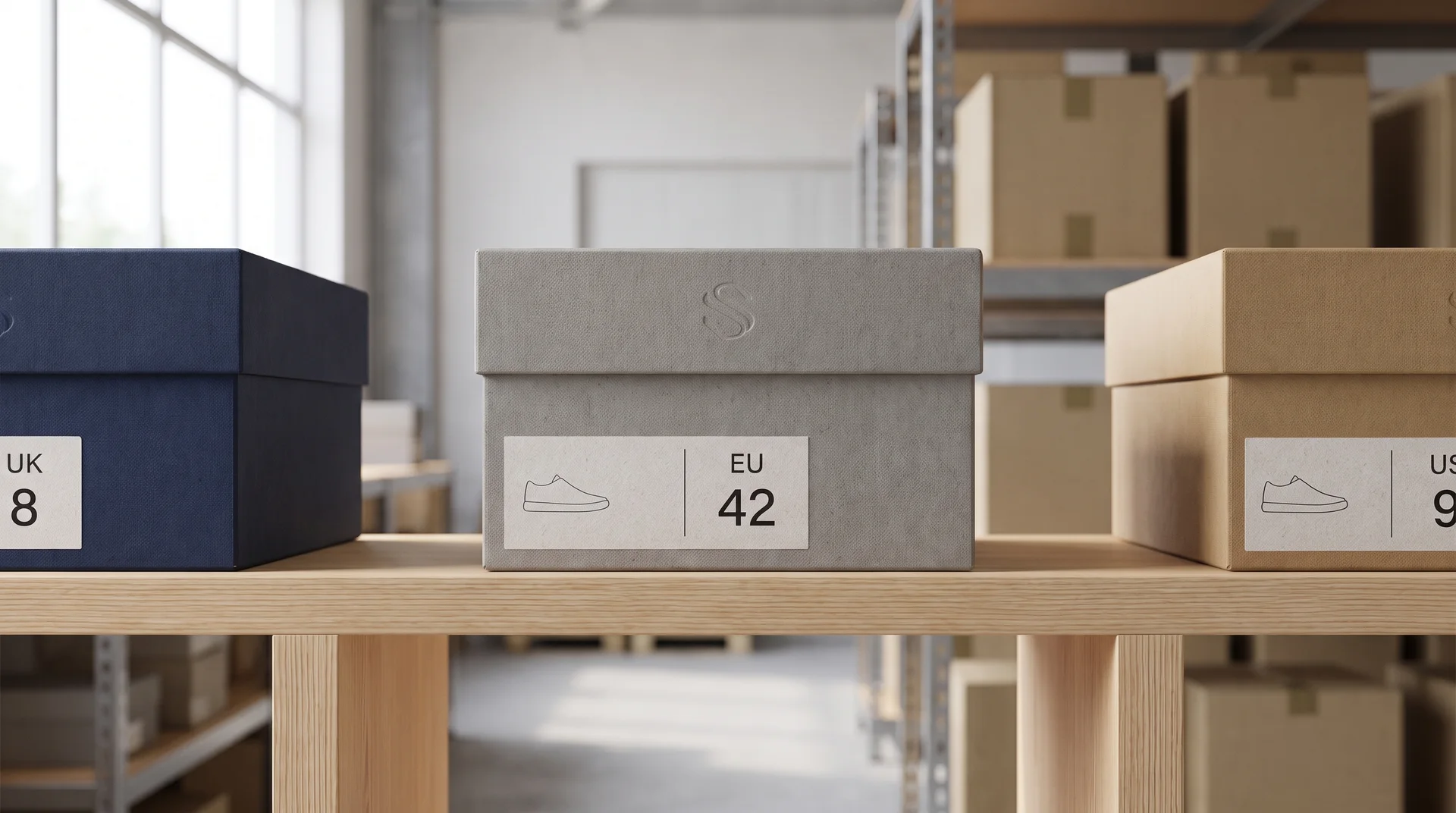
The historically older UK system is based on a unit called "barleycorn," which is approximately 1/3 inch (8.46 mm). The system starts at 0 for junior boys sizes and continues up to 13.5, then resets to 1 for men's adult sizes. This reset point is one of the most distinct differences from the US system. UK sizes are typically numerically smaller than EU sizes; for example, an EU 42 roughly corresponds to a UK 8.
United States (US) System: A Variation of the UK System
The US system also uses the barleycorn unit but has a different starting point than the UK system. The most critical difference is that the US system uses separate scales for men's and women's footwear. A men’s US size 10 is larger than a women’s US size 10. Generally, a women's US size is about 1.5 to 2 sizes larger than the men’s counterpart (for example, Men's US 8.5 ≈ Women's US 10). This situation requires special attention, especially for buyers sourcing men's daily shoes and women's models at the same time.
Understanding the fundamental differences among these three systems enables informed decisions when reviewing international catalogs. Clarifying which system the supplier uses eliminates ambiguity during the ordering process.
The Impact of Numbering Differences on Wholesale Trade
Differences in shoe size numbering systems represent much more than simple numerical variations. For wholesale buyers, these differences impact operational efficiency and profitability directly. A misunderstood size can trigger a chain of issues.
Order Mistakes and Stock Management Challenges
The most obvious risk is ordering incorrect size ranges. Consider a hypothetical scenario: A boutique owner assumes that US 8 is the exact equivalent of EU 38 when ordering women’s shoes from an American brand. However, in that brand’s last, US 8 actually corresponds to EU 39. As a result, the entire stock arrives one size larger than expected. This situation results in unsellable products, also known as “dead stock.” Dead stock generates storage costs and inefficiently ties up capital. Return processes incur additional shipping and time expenses.
Customer Satisfaction and Brand Image
A customer visiting your store who normally wears size 37 may be disappointed upon finding that a particular model is unavailable or does not fit correctly. This experience can cause the customer to not only forgo the purchase but also to perceive your store as having “inconsistent lasts” or “inaccurate sizing.” Customers who repeatedly face size mismatches may lose trust in your brand. Correct numbering is not just a logistical detail; it directly influences brand reputation and customer loyalty.
Mastering sizing systems in wholesale purchasing minimizes these negative effects, protecting both your financial health and market reputation.
How to Use Size Conversion Charts Effectively?
After understanding the differences in sizing systems, the next step is to apply this knowledge in practice. Size conversion charts are your most important tool at this stage. However, rather than trusting every chart available online, a more strategic approach is necessary.
Reliable Sources and Supplier Information
Generic size conversion charts can be a helpful starting point, but the most accurate information always comes from the product’s manufacturer or supplier. Each brand may have its own last standards and, consequently, its own size equivalents. Therefore, before placing an order, request a brand-specific size conversion chart (size chart) from your supplier. Premium brands and approved suppliers listed on platforms like Bulkoon usually share this information transparently. Working with a reliable supplier minimizes potential problems during this process.
Gender and Category-Specific Conversions
Another critical point to remember is that conversions may vary by gender and even by shoe category. As mentioned earlier, men's and women's sizes differ in the US system. Similarly, the last of a women's sports shoe model can differ significantly from that of a women's stiletto model. Sports shoes usually offer a more comfortable fit, whereas a pointed stiletto may have a narrower last. Therefore, it is important to evaluate conversions separately for each product category and obtain supplier information accordingly.
Effective use of a conversion chart involves not just translating numbers but also making an informed interpretation based on the brand and model characteristics.
The "Last" Factor: More Than Just Size
Ordering the correct size is only part of the equation. The key factor that ensures a shoe fits perfectly on the foot is the "last," a three-dimensional form used during shoe manufacturing. Two shoes with the same size number can feel and fit completely differently if made with different lasts. Understanding last characteristics is critical for wholesale buyers to reduce customer returns.
What Are Narrow and Wide Lasts?
A last defines not only the shoe length but also width (foot circumference), toe shape, and upper volume. A "narrow last" generally suits slim and delicate foot structures, while a "wide last" offers comfort for wider or more voluminous feet. Some brands manufacture on standard (D) lasts, while others offer wide (E, EE) or narrow (B) lasts. When communicating with your supplier, asking questions like “Is the last of this model narrow or standard?” will significantly improve your product selection.
The Importance of Last Information in Supplier Selection
The consistency of lasts across a supplier’s products is crucial for a long-term business relationship. If a brand’s size 38 offers similar fitting in every model, it simplifies your stock management. When you cannot physically try products, you must rely on supplier information. Visual materials such as product videos available on Bulkoon offer more clues about the shoe’s overall shape and construction than still photos alone. These videos can help you understand how spacious or slim a model is.
Ultimately, going beyond the size label and questioning last characteristics makes you a more knowledgeable buyer and helps you select the most suitable products for your store.
Strategies for Creating the Correct Size Assortment in Wholesale Purchases
After understanding numbering systems and last differences, you should plan how to create the most appropriate size assortments for your store using this knowledge. Proper size distribution increases stock turnover and directly affects profitability.
Target Audience Analysis and Size Distribution
Each store has a different customer profile. A standard women's size range usually covers sizes 36 to 40. However, your target audience's average foot size may be larger or smaller. Analyze your past sales data to identify the best-selling sizes and emphasize these in your new orders. For example, if sizes 38 and 39 are the top sellers, consider stocking two pairs of each in your assortment. This prevents popular sizes from running out quickly and maximizes sales potential.
Sample Orders and Supplier Feedback
When working with a new supplier or brand, it is wise to place a small trial order instead of a large one initially. This allows you to physically test the product quality and, most importantly, the accuracy of sizes and lasts. Bulkoon’s listing of only ready stock products ensures that such trial orders reach you quickly without weeks of waiting. After testing the incoming products, you can provide feedback to the supplier and use your experience to place larger and more precise orders.
Creating the correct size assortment is a dynamic process based on data analysis, target audience knowledge, and strong supplier communication.

Conclusion: Reduce Risk with Informed Numbering
Success in international shoe trade comes not only from following trends but also from mastering technical details. Differences between EU, UK, and US numbering systems, last characteristics, and proper assortment creation strategies form the cornerstones of the wholesale buying process. Attention to these topics protects you from risks such as incorrect stock, customer dissatisfaction, and financial loss.
The Role of Supplier Communication
The most important variable throughout this process is clear and transparent communication with your supplier. Do not hesitate to request size charts, inquire about last properties, and ask for trial orders. A reliable business partner will share this information with you, helping you make the right decisions. With Bulkoon’s extensive catalog offering more than 10,000 models, you can find the right products for your store by acting with this awareness.
The Advantages of Digital Wholesale
Digital platforms like Bulkoon offer the opportunity to compare products from different suppliers in one place and communicate with them directly. By exploring How It Works, you can enjoy the benefits of wholesale purchasing with more information and options without geographic barriers. Remember, accurate information is your most valuable asset in wholesale shoe trading.
This in-depth knowledge of sizing will place you one step ahead of your competitors and help you build your business on a solid foundation. Continue following our blog page for more tips and industry analysis.