What to Consider When Purchasing Footwear Wholesale?

Making the right decisions when purchasing footwear wholesale directly impacts your store's success. This guide covers all critical steps from target audience analysis and season planning to choosing the right size run and finding reliable suppliers to help you create a profitable inventory.
Have you ever wondered why a model that instantly sells out at the most popular footwear store on a street can sit on the shelf for months in another boutique just a few blocks away? The answer is not luck, but strategy. Successful wholesale footwear purchasing involves much more than selecting attractive models. Understanding your customer base, staying true to your store identity, and managing operational details correctly define the fine line between profitability and dead stock. This guide addresses the essential steps to make informed decisions in the wholesale buying process to maximize your store's potential.
Understanding Your Customer Base and Market: The First Step
The most fundamental step before purchasing wholesale is to deeply understand who you are selling to and where these customers live. Not every product performs equally in every geography or demographic group. A successful selection is built upon this analysis. The climate, social structure, and economic conditions of your store's location directly affect which types of footwear will be in demand.
For example, for a store near a university campus, dynamic and affordable women's sports shoes might be prioritized, whereas classic and elegant women's stilettos make more sense for a boutique in the heart of a business district. Therefore, analyzing your current customer data and profiling your potential customers before purchasing are key to making accurate decisions.
Demographic and Geographic Factors
The age range, occupations, and lifestyles of your customers shape their footwear preferences. If you cater to a young and active crowd, you should emphasize comfort and trendy models. For a more mature customer base, quality, durability, and classic designs take precedence. Geographic location is equally critical. If you operate a store on the Mediterranean coast, summer items like sandals, slippers, and ballet flats will be popular most of the year. Meanwhile, in Eastern Anatolia, the stock of winter boots and waterproof models plays a more crucial role.
Purchasing Power and Price Segmentation
Knowing the average purchasing power of your customer base determines which price segment of products you should target. In an area with intense luxury consumption, you can sell premium products made from high-quality materials with strong brand value; in more budget-conscious markets, models with a good price-performance ratio will achieve success. Instead of limiting your product range to a single price segment, creating a balanced portfolio consisting of entry-level, mid-range, and premium products catering to various budgets will help you reach a broader customer base. This balance increases your turnover potential and makes you more resilient to market fluctuations.
Customer and market analysis form the foundation of wholesale purchasing strategy. Purchases made without these insights largely rely on assumptions, increasing financial risks. Proper analysis means proper product selection.
Product Selection Compatible with Your Store Concept
Your store has an identity and a promise it offers to customers. This identity reflects in every detail-from your products to your display windows. When selecting wholesale footwear, adhering to this identity is crucial for brand coherence and customer loyalty. Conceptually inconsistent or randomly chosen products confuse customers and weaken your store’s expert image.
For example, if your store is positioned around casual and everyday wear, suddenly adding evening and flashy high heels to your portfolio may alienate your current customers. Instead, adding collections that complement your current concept, such as quality women's loafers or elegant ballet flats, is a more strategic move. Every purchase decision should be filtered through the question: "Does this product fit my store’s story?"
Brand Identity and Product Consistency
Your brand identity is why customers choose you. Perhaps you are the first to bring the trendiest products or you have the highest-quality classic models. Every shoe you select should reinforce this identity. Consistency in style, quality, and price helps customers know what to expect. This trust forms the basis for repeat sales. Consistency does not mean boring; it means being innovative and diverse within your niche.
Balance Between Trend Products and Core Models
A successful product assortment balances evergreen core models with the season's trending items. About 70-80% of your inventory should consist of basic products that sell every season, carry low risk, and have predictable profit margins (for example, a black stiletto, a white sports shoe, a classic men's moccasin). The remaining 20-30% can be allocated to trend products that are riskier but exciting, such as fashionable colors, bold designs, or popular materials for the season. This balance ensures both a steady cash flow and keeps your store modern and dynamic.
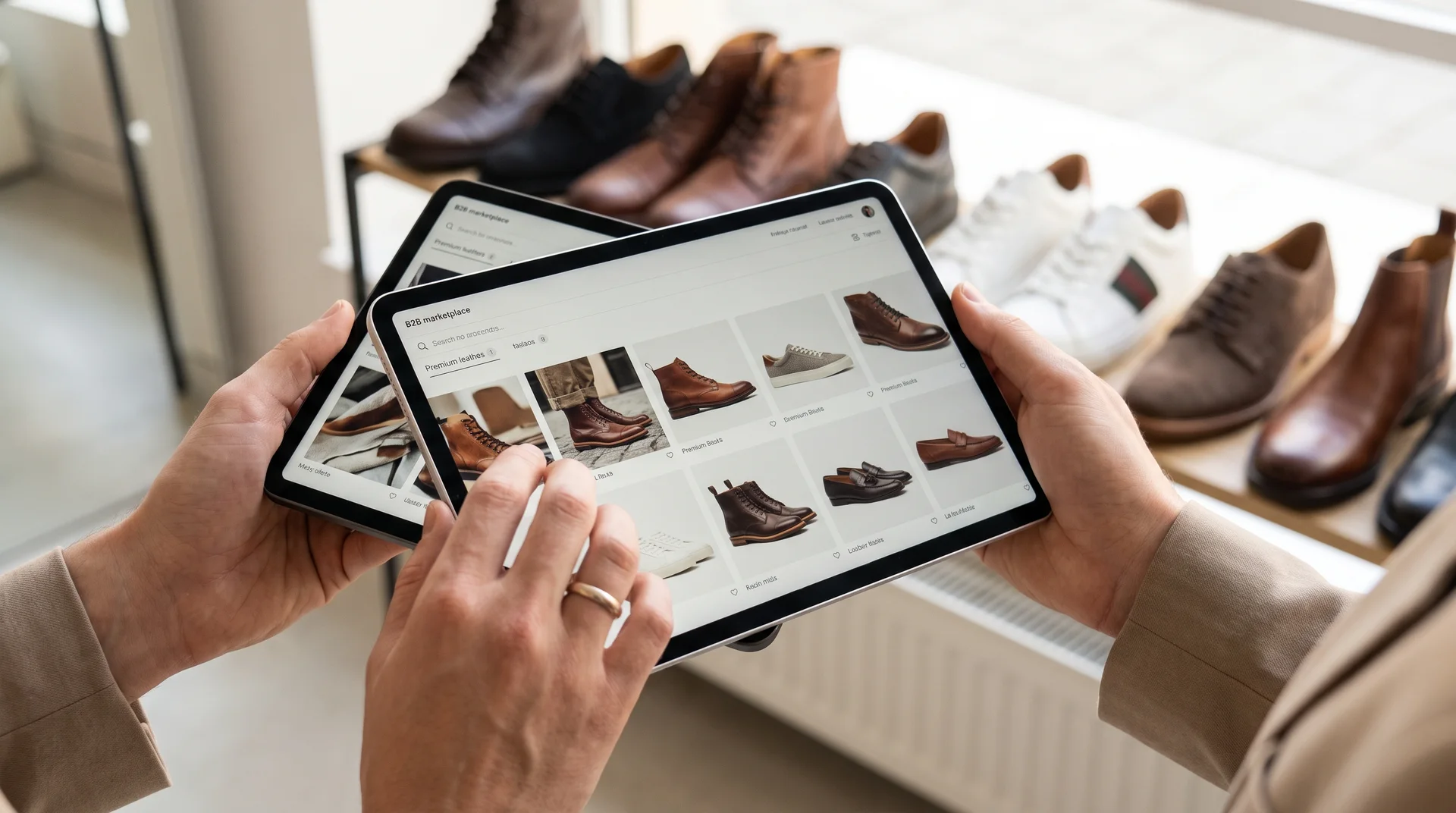
Selecting products that align with your store concept, consistently and in balance, not only boosts sales but also builds a strong brand image. Customers begin to see you as a trusted address where they know what to expect.
Operational Details Directly Affecting Profitability
Choosing the right model for the right customer is only one part of the equation. The operational side of wholesale purchasing-such as size run planning and season management-are critical factors that directly influence profitability. Incorrect size distribution or timing of stock entry can cause even the most popular models to become dead stock. Therefore, every purchasing decision should carefully evaluate financial and logistical consequences.
Profit in footwear retail not only comes from sold products but also from how much cost is avoided on unsold items. A single leftover size or an outdated model can significantly erode total profits from that product line. This section discusses two key operational topics to watch to maintain profitability: size runs and stock turnover rate.
The Importance of Correct Size Runs and Size Distribution
In wholesale footwear, a "size run" or "package" refers to a standard pack containing different sizes of a single model (for example, sizes 36-40 for women, 40-44 for men). However, the size distribution profile of a store's customers may not be standard. If most of your customers wear sizes 37-38, 40-size shoes in a standard package risk remaining unsold. These "leftovers" or "broken sizes" usually have to be sold at heavy discounts at the end of the season, reducing profit margins. Therefore, it is important to negotiate flexible size run options with your supplier or make purchases focused on your best-selling sizes based on sales data. Data-driven size planning minimizes dead stock risks.
Season Planning and Stock Turnover Rate
Stock turnover rate measures how quickly your inventory sells and converts to cash. High turnover indicates a healthy cash flow and efficient business operation. Season planning directly affects this metric. Stocking winter boots in August is as incorrect as purchasing summer sandals in July is late. Putting products on shelves at the right time-when demand begins to rise-increases the chance of selling at full price. Adopting a low-stock and fast-replenishment model can be less risky, especially for new boutiques. Instead of large, one-time purchases, placing smaller orders more frequently preserves cash flow and allows quicker adaptation to changing trends.
Operational efficiency, especially in size run and season management, are pillars of your store’s financial health. Paying attention to these details guarantees long-term success and profitability.
Supplier Selection and Ordering Processes
No matter how good your products are, achieving sustainable success without a reliable supplier network behind you is difficult. The right supplier is not just a product provider but a partner who supports your business with quality, on-time delivery, and effective communication. Wrong supplier choices can result in delayed deliveries, quality issues, and unexpected costs.
Choosing suppliers requires meticulous research and evaluation. Instead of focusing only on price, consider the supplier's overall reliability, production capacity, and market reputation. Digital wholesale platforms simplify this process, providing an assurance layer for buyers. For example, platforms like Bulkoon work only with approved suppliers, removing buyer verification and reliability concerns.
Criteria for Reliable Suppliers
Key criteria to identify a reliable supplier include: firstly, consistent product quality-there should be no differences between samples and final products; secondly, adherence to delivery schedules-seasonal products must arrive on time; thirdly, open and effective communication channels that allow quick resolution of any issues; and finally, the supplier’s financial stability and industry history, which provide important insights for long-term collaboration.
Minimum Order Quantity (MOQ) and Flexibility
The Minimum Order Quantity (MOQ) is the lowest number of products you must order from a supplier. High MOQs can be a significant financial burden and stock risk, especially for small and new boutiques. Instead of tying large capital to one model, working with suppliers offering lower MOQs or flexible packaging options allows increasing product diversity and distributing risk. Digital platforms allow ordering from various suppliers in a single cart, providing significant flexibility in this regard.

A strong relationship with the right supplier forms the operational backbone of your business. A partner who delivers quality, timeliness, and flexibility is your greatest assurance against market challenges.
Advantages of Digital Wholesale Platforms
Traditional wholesale purchasing required city-to-city travel, attending fairs, and face-to-face meetings with limited suppliers. This process was both time-consuming and costly. Today, digital wholesale platforms have completely changed the game for footwear retailers. These platforms bring thousands of models and hundreds of suppliers together on a single screen, making procurement more efficient, transparent, and strategic.
Shoe-focused B2B marketplaces like Bulkoon provide buyers access to a broad supplier network without geographical limits. This is especially advantageous for boutiques searching for niche products or wanting to differentiate in the market. By eliminating the need for travel and lodging expenses, they reduce costs and dramatically lessen the time spent on market research and product comparisons.
Efficiency and Cost Savings
The clearest benefit of purchasing wholesale through a digital platform is efficiency. It eliminates travel expenses such as flights, hotels, and meals. You can examine thousands of products any time from your store’s comfort, compare prices, and place orders. Advanced filtering options allow you to find men's sports shoes by material, color, or price range within seconds. This gives you more time for strategic decision-making.
Instant Access to a Wide Product Range
Digital platforms offer a broader product variety than local wholesalers or single brands can provide. Bulkoon’s 10,000+ model options enable buyers to explore different styles, brands, and price points in one place. This diversity helps find products best suited to your store’s concept, differentiate your store, and quickly respond to changing customer demands. You can also instantly see new collections and flash deals to seize market opportunities before competitors.
Digital wholesale is not a luxury but a necessity for modern retail. It lowers costs, increases efficiency, and offers previously unavailable access and variety for strategic product selection.
Final Checks for a Successful Choice
Purchasing footwear wholesale is a multifaceted process requiring careful planning and strategic thinking. From knowing your customers to finding the right supplier, adhering to your store identity, and ensuring operational efficiency, every step is a link in a chain affecting the next. Success comes from securely connecting each link. Remember, every pair of shoes you place on your shelves is not just a product but also your brand, the promise to your customer, and a financial investment.
Before making your final decision, ensure the products you select align with your store’s overall goals. Will this collection help you achieve profitability targets? Will it strengthen your brand image? Will it create customer loyalty? Positive answers to these questions are critical indicators that you are on the right path. Informed and data-driven decisions will put you a step ahead in the industry.
Sources
Information in this article draws on the following sources.