Wholesale Work Safety Footwear Opportunities in the Industry

The work safety footwear market offers a stable and profitable wholesale channel beyond legal requirements. By understanding certifications such as S1, S2, S3, target industries, and supplier selection criteria, you can capitalize on opportunities in this niche market.
Work safety footwear provides a stable market shaped more by regulations and industrial needs than by fashion trends. For wholesale buyers entering this field, success depends not only on finding the right product but also on understanding certification standards, the specific demands of target industries, and the dynamics of a reliable supply chain. Considering protective footwear as part of your retail store or corporate sales portfolio means investing in a category that sees constant demand and holds high potential for brand loyalty. This market is beyond traditional footwear trade - it requires technical knowledge and expertise but offers significant growth opportunities in return.
Basic Standards and Certifications of Work Safety Footwear
When purchasing wholesale work safety shoes, the labels and codes on the products signify much more than just a model number. These certifications are a universal language indicating the level of protection the footwear provides against various risks. Understanding this language as a buyer is the first step toward offering the right product to your customers and fulfilling legal responsibilities. Selling incorrectly certified products is not just a commercial mistake but also endangers the end user's safety.
What Do S1, S2, and S3 Certifications Mean?
Based on European Union standards, these codes clearly define the protection level of the footwear. Each level includes the features of the previous one while adding extra protections. Knowing this hierarchy helps you offer the most suitable solution for your customers in different industries.
S1: The basic protection level. It includes a protective toe cap resistant to 200 joules impact (usually steel or composite), an anti-static sole, and energy absorption in the heel area. Suitable for sectors like light industry and logistics, operating in dry environments.
S2: Includes all features of S1 plus water-resistant and waterproof upper (vamp). Required for damp or wet working conditions. Commonly preferred in food industry and cleaning services.
S3: The most comprehensive protection level. Along with all S2 features, it includes a steel or composite midsole to resist punctures. Mandatory in risky environments such as construction, heavy industry, and metalworking where sharp objects like nails or screws are present.
The Importance of CE and ISO Standards in Wholesale Purchasing
The CE mark acts like a passport indicating that a product complies with the EU’s health, safety, and environmental protection regulations. The presence of the CE mark on work safety footwear guarantees that the product meets fundamental safety requirements. When purchasing wholesale, you should avoid products lacking this mark. ISO 20345 is the primary international standard specifying requirements for work safety footwear. Verifying that your supplier manufactures according to this standard assures product quality and reliability. Compliance with these standards is not only a choice but a legal obligation that directly affects your liability in case of workplace accidents.
Understanding Target Industries: Who Buys Work Safety Footwear?
To fully capitalize on opportunities in the work safety footwear market, you need to deeply understand the needs of the potential customer base. Each industry has its unique risks and expectations. Offering the right product to the right corporate customer is key to sales success. This is not just selling footwear but offering a safety solution. Therefore, when building your portfolio, you should account for the demands from different sectors.
Construction and Heavy Industry Requirements
These sectors operate under the toughest working conditions, hence require the highest level of protection. For workers in construction sites, mines, metal factories, and shipyards, S3-certified boots are a standard necessity. Key features in these shoes include puncture-resistant midsoles, reinforced toe protection against heavy impacts, slip-resistant and heat-resistant soles. Also critical are ankle support and durable outer materials (usually leather) adaptable to harsh terrain. When selling to these sectors, product durability and longevity are your strongest selling points.
Logistics, Food, and Service Sector Needs
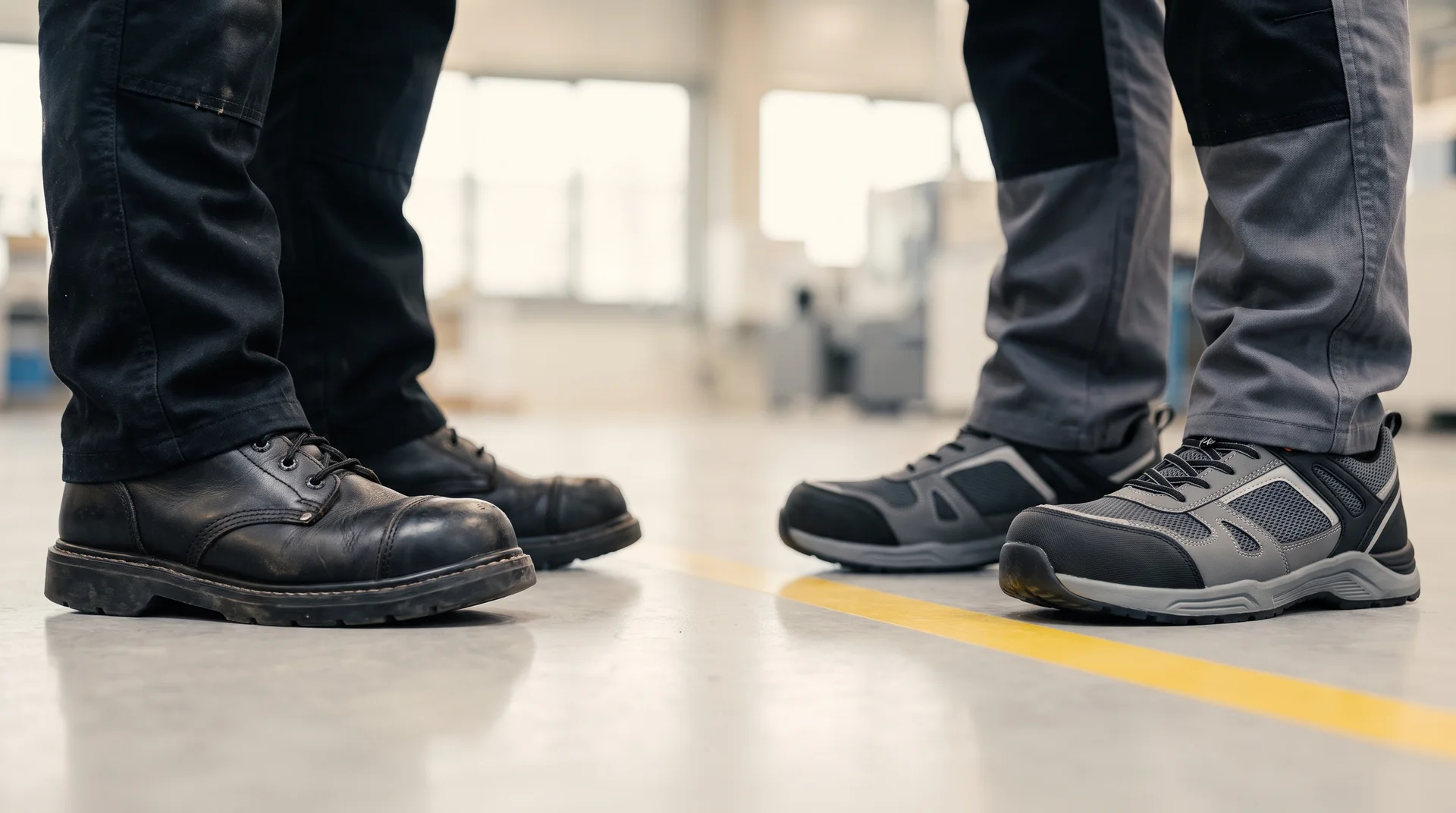
Unlike heavy industry, these sectors face different risks and requirements. Logistics and warehouse personnel prefer lightweight and comfortable models that reduce fatigue from standing all day. S1 or S1P (puncture-resistant) certified, sneaker-like designs are popular in this area. In industries like food production or healthcare where hygiene is crucial, S2-certified, easy-to-clean, water-resistant, and commonly white-colored models are in demand. Slip-resistant soles (SRC certification) are essential across these sectors. Anti-static features can also become critical where electronic components are handled or sensitive equipment is used.
Supplier Selection Criteria in Wholesale Purchasing
Finding the right product is as important as working with the right supplier who can provide that product reliably. In a technical category like work safety footwear, the supplier is not just a goods provider but a business partner. The supplier’s reliability, product quality, and services directly impact your commitments to your customers. Hence, choosing a supplier is a strategic decision that should not be rushed.
Production Capacity and Delivery Reliability
Corporate clients usually place large-volume orders tied to specific schedules. It is critical that your supplier can meet these demands on time and completely. In situations like construction projects or plant openings where timing is crucial, any delay can cause loss of customers. Platforms like Bulkoon help minimize this risk by working with approved suppliers. Working only with verified manufacturers who have a proven production capacity above certain thresholds offers buyers a layer of security. Additionally, a supplier’s ready stock policy is a significant advantage for fulfilling urgent demands flexibly.
Technical Support and Product Knowledge Competence
Work safety footwear involves many technical details. Your supplier should be able to provide accurate information on which standard suits which risk group and how material properties affect performance. A good supplier can recommend the most suitable S1, S2, or S3 model when you describe your customer’s operational environment. They should be transparent about product certifications, test reports, and technical documents. This competence enables you to provide more professional and reliable service to the end user. The supplier must act not just as a sales representative but also as a product expert.
Stock and Pricing Strategies for Corporate Sales Channels
The wholesale trade of work safety footwear operates under dynamics different from retail fashion. Building long-term relationships with corporate customers, receiving regular orders, and maintaining profitability requires carefully designed stock and pricing strategies. Success in this market depends less on immediate sales and more on creating recurring and predictable revenue streams.
Size Distribution and Assortment Management
Unlike fashion footwear, size demand in work safety shoes is more standard and predictable. In sectors with a predominantly male workforce, sizes between 41 and 44 are in distinctly higher demand compared to other sizes. When preparing stock for a corporate client, it is sensible to create a standard size run (for example, between 40-45) and allocate more weight to the most requested sizes. In sectors including female employees, planning a broader assortment covering sizes 37-40 is necessary. To speed up stock turnover, focusing on best-selling core models and bringing very specific, niche products on order can be an effective strategy.
Pricing and Payment Terms for Bulk Purchases
Bulk purchase discounts and flexible payment terms form the foundation of corporate sales. Offering tiered pricing according to order volume encourages larger purchases. Special discounts or contract prices for big customers committing to annual purchases open the door to long-term cooperation. Digital platforms provide convenience in payment processes, which is an important advantage. For instance, options like installment plans at cash price on Bulkoon allow buyers to manage cash flow more easily. These financial flexibilities are crucial decision criteria especially for SME-scale corporate buyers.
The Role of Material Quality and Technology
Modern work safety footwear is not limited to heavy boots with steel toecaps. Advances in material science and production technologies have made these shoes lighter, more comfortable, and more functional. As a wholesale buyer, knowing these technological differences enables you to offer your customers more value-added and innovative products. Quality means not only durability but also the wearer’s all-day comfort and performance.
Composite Toecap Versus Traditional Steel Toecap
Traditional steel toecaps are proven for impact resistance but have some drawbacks: weight, heat conduction in cold and hot environments, and triggering metal detectors. Composite toecaps, made from non-metallic, lightweight, and insulating materials such as carbon fiber, fiberglass, or plastic, offer solutions to these issues. They are preferred especially for workers in airports or places with frequent metal detector use and in environments with electrical hazards. Additionally, their lightness significantly increases comfort for those standing all day. Recommending the right toecap technology based on your customer’s work environment demonstrates your expertise.

Sole Technologies: Slip Resistance, Anti-Static, and Heat Resistance
The performance of a work shoe largely depends on the sole. The material used for the sole determines in which conditions the shoe is safe. The most common sole materials and their features include:
Polyurethane (PU): Offers comfort due to its lightweight and flexible structure. Usually used as double density; the bottom layer is abrasion-resistant while the top layer provides shock absorption.
Thermoplastic Polyurethane (TPU): Has higher wear and slip resistance compared to PU. It is more durable.
Nitrile Rubber: Provides excellent resistance to high temperatures (up to 300°C) and chemicals. Ideal for heavy industry and welding tasks.
Also, paying attention to standards indicating slip resistance like SRA, SRB, and SRC is vital, especially for workers on wet or oily surfaces. When reviewing products in the men’s work footwear category, comparing these technical details helps you make the right choice.
Growth Opportunities in the Work Safety Footwear Market
Rising awareness of occupational health and safety and tightening legal regulations continuously expand the work safety footwear market. This market covers not only large industrial enterprises but also extends to a broad customer range including small and medium workshops and service firms. For wholesale buyers, this situation means potential to increase market share by offering sector-specific solutions. Thanks to digital wholesale platforms, it is now possible to access and compare thousands of models from numerous manufacturers in one place. Once you understand how it works, you can discover the right products through these platforms, simplify your procurement processes, and secure your place in this stable market.
Sources
Information in this article draws on the following sources.