Influencer Collaborations in the Footwear Industry: Low-Budget Advertising for Small Boutiques

As traditional advertising costs rise, micro-influencer collaborations offer small and emerging footwear boutiques one of the most effective ways to reach their target audience on a low budget. Discover practical ways to increase brand awareness through barter and commission-based models.
Competing with the massive advertising budgets of large brands can be challenging for a newly established or small-scale footwear boutique. However, modern tools offered by digital marketing are changing this equation. Especially influencer collaborations, when properly structured, have the potential to maximize impact with limited budgets. The focus here should not be on mega celebrities with millions of followers but on micro-influencers who have built a sincere connection with their niche audiences. This strategy allows you to promote your carefully selected wholesale footwear collection directly to potential buyers through a trusted voice.
Why Are Micro-Influencers Valuable for Footwear Boutiques?
Micro-influencers are social media content creators who typically have between 5,000 and 100,000 followers. What makes them valuable is not the size of their follower count but the quality of engagement they have with their audiences. For a visual and style-focused product like footwear, this engagement creates one of the marketing channels with the highest potential to convert into direct sales.
High Engagement and Trust Rates
Research shows that as follower counts decrease, engagement rates (likes, comments, saves) increase. Micro-influencers tend to respond personally to comments and messages from their followers. This makes them appear more accessible and trustworthy like a friend in their followers' eyes. Their sincere reviews of a shoe model can be much more convincing than a scripted promotion by a major celebrity. This trust positively impacts your boutique's brand image.
Direct Access to Niche Audiences
Not every shoe fits every style. Perhaps your boutique sells only Women’s Casual shoes made exclusively from vegan materials or unique Women’s Stiletto designs. Micro-influencers usually create content around a specific aesthetic or lifestyle: minimalist fashion, sustainable living, vintage clothing, or street style. By finding the right influencer, you can showcase your products directly to a niche audience most likely interested in these products. This is a targeted approach that prevents your advertising budget from being wasted.
Micro-influencers address a loyal community with a specific interest rather than trying to reach large audiences. Thus, your footwear collection is seen by the right eyes and your brand message is conveyed more effectively.
What Are Low-Budget Collaboration Models?
The biggest concern for a small boutique is usually cash flow. Fortunately, influencer marketing does not have to be carried out only with large upfront payments. Especially micro-influencers are more open to flexible and creative collaboration models. These models allow you to market while protecting your capital.
Barter (Product Exchange) Agreements
This is the most common and ideal starting model. Instead of paying the influencer money, you gift them one or several pairs of shoes selected from your collection. In return, you ask them to produce an agreed number of content pieces (for example, 1 Instagram post and 3 stories). This is an excellent solution especially when you have new season products in your inventory that need promotion. The diverse and quality products you source from platforms like 10,000+ model options make it easy to offer attractive proposals for barter agreements.
Commission-Based (Affiliate) Models
This model is performance-based and completely risk-free. You provide the influencer with a unique discount code (e.g., "AYSE10") or a trackable website link (UTM-tagged link). When their followers shop using the code or link, the influencer earns a predetermined commission (usually between 10% and 20%) on the total sales amount. In this model, you pay only for actual sales made. This protects you financially and motivates the influencer to bring in more sales.
Both models enable small businesses to create brand awareness and increase sales without large marketing budgets. The important thing is to clearly define collaboration terms from the outset.
Criteria for Selecting the Right Influencer
The foundation of a successful collaboration is finding the right partner. Deciding based only on follower count is a common mistake. Choosing an influencer whose brand identity, product style, and audience align with yours directly affects the campaign’s return.
Audience Demographics and Engagement Analysis
Don’t hesitate to request the media kit or screenshots of statistics from the influencer you are considering collaborating with. Do their followers’ age range, gender distribution, and most active cities match your target audience? Beyond that, examine the comments on their posts. Are the comments generic like “great” or do they include specific questions or sincere likes related to the product? An authentic and engaged audience is much more valuable than fake or passive followers.
Brand Identity and Aesthetic Compatibility
The influencer’s personal brand and visual aesthetic should be consistent with your boutique’s identity. If you sell elegant and sophisticated Women’s Heels, collaborating with an influencer who favors a casual and sporty style in their content could create inconsistency in your brand message. The influencer’s color palette, photography style, and overall presence should provide a natural setting for showcasing your shoes. When reviewing their profile, you should be able to say, “My product would look great on this page.”
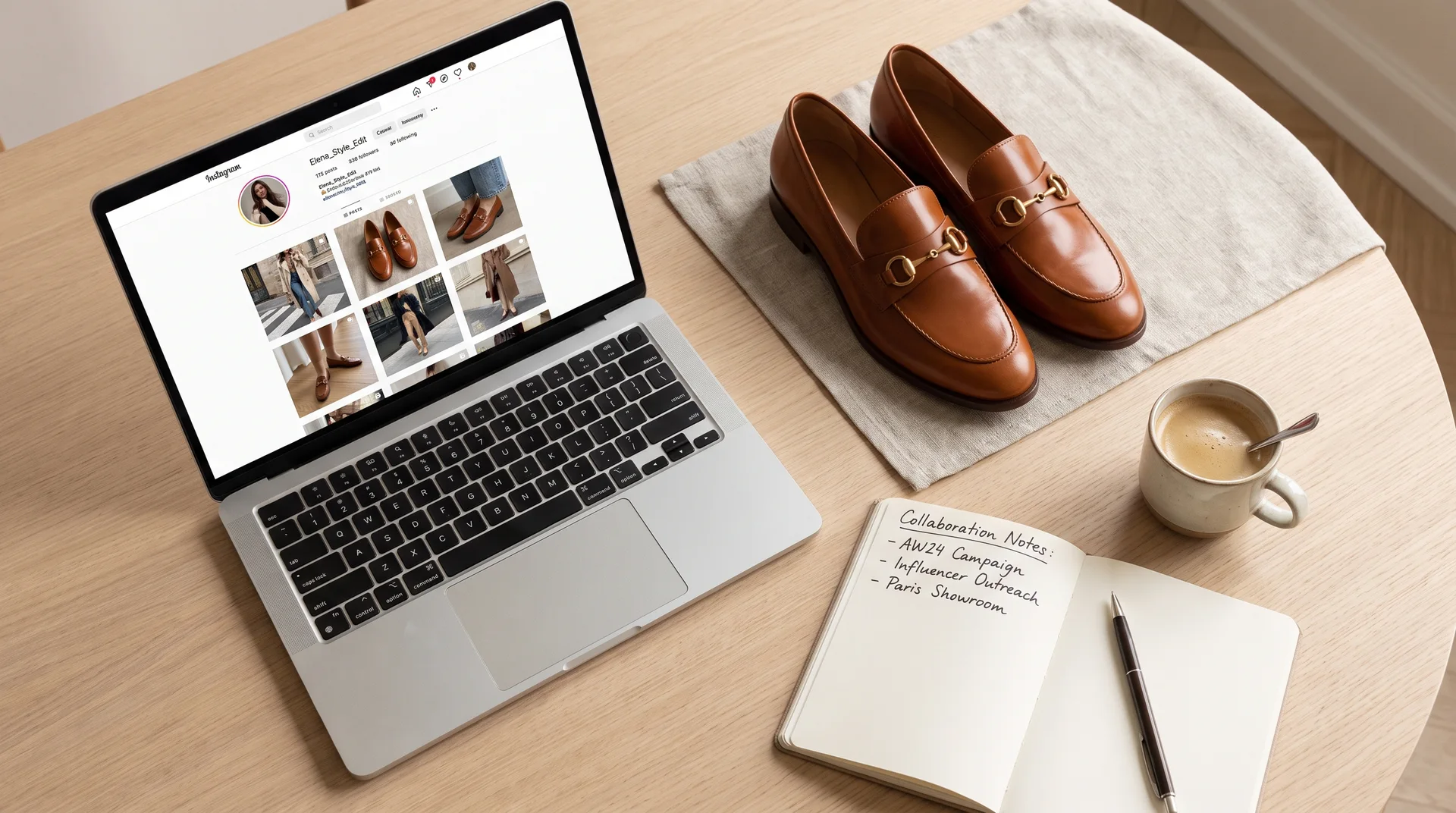
Choosing the right influencer is not just about renting advertising space but finding a trustworthy ambassador for your brand. Therefore, dedicating time to the analysis and evaluation process is critical.
How to Manage a Successful Collaboration Process?
After finding the right influencer, the next step is managing the collaboration process professionally. Establishing clear and transparent communication at every stage prevents misunderstandings and ensures a fruitful partnership where the expectations of both parties are met.
Clarifying Agreement Details
Instead of verbal agreements, prepare a short email or a simple contract containing all details. This text should include:
Deliverables: Number of posts, stories, or videos to be created.
Content Guidelines: Key messages to be mentioned, accounts to tag (@yourboutique), and hashtags to use (#newseasonfootwear).
Timeline: When the content will be shared.
Approval Process: Whether you want to review content before posting.
Usage Rights: Whether you can use the influencer’s images on your social media or website.
Payment/Product Details: Which product will be sent for barter agreements, or commission rates and payment schedule for commission models.
Balance Between Creative Freedom and Direction
What makes influencers successful is their unique voice and creativity. Instead of treating them like an advertising billboard, approach them as partners. Clearly indicate the features of your product you want to highlight (for example, “the sole of this Men’s Sports shoe is made from recycled materials”), but allow creative freedom in content creation. Followers do not respond to content they perceive as inauthentic or forced. Striking this balance increases the authenticity and success of the campaign.
Effective process management is key to turning a one-time campaign into a long-term partnership that continuously adds value to your brand.
Measuring and Evaluating the Impact of Collaborations
One of the most important reasons to allocate resources to marketing activities is to see the return on investment (ROI). Influencer collaborations are no exception. Measuring the success of the campaign with concrete data helps both evaluate the current collaboration and plan future strategies more efficiently.
Key Performance Indicators (KPIs)
The metrics to track depend on the campaign’s goal. If you want to increase brand awareness, you may focus on reach, impressions, and engagement (likes, comments, shares, saves). If your goal is direct sales, the key metrics to monitor are:
Click-Through Rate (CTR): Traffic to your website coming from the link in the influencer’s story or profile.
Conversion Rate: How many times the influencer’s unique discount code was used.
Sales Volume: Total revenue generated through this collaboration.
Collecting this data helps you understand which influencers and what kinds of content deliver the best results for you.
Building Long-Term Relationships
If you achieved great results with a collaboration, consider continuing the relationship with that influencer. Instead of one-off campaigns, you can create a brand ambassador program. Brand ambassadors regularly use your products, produce authentic content about your brand, and build a deeper connection with you. Such long-term relationships gradually create a loyal community around your brand. Continuing to work with trusted and compatible influencers saves you the hassle and risk of constantly searching for new ones.
Measurement and evaluation turn influencer marketing from a gamble into a data-driven, sustainable growth strategy.
Conclusion: Smart Marketing from Wholesale to Retail Showcase
Success in footwear retail is not only about sourcing the right products at the right price. Developing effective marketing strategies that bring these products to potential customers is equally critical. Micro-influencer collaborations offer one of the smartest solutions to this equation, especially for small boutiques. This low-cost, trust-based, and targeted approach allows you to tell your brand story and increase sales without large budgets. By sourcing quality and diverse collections through platforms like Bulkoon and leveraging the right influencers, you can extend your storefront beyond the physical space and secure a lasting presence in the digital world. Understanding how it works and taking the right steps will turn this potential into reality.