How Artificial Intelligence is Shaping the Footwear Industry

Artificial intelligence is revolutionizing the footwear industry across many areas from demand forecasting and product design to inventory management and customer analysis. This technology enhances efficiency for manufacturers and wholesale buyers while enabling more accurate decision-making. Discover the practical impacts and opportunities this transformation creates for the industry's future.
Artificial intelligence (AI) has evolved beyond just a technology buzzword to become a tangible tool transforming the core dynamics of the footwear industry. Many processes that traditionally advanced based on intuition and experience are now becoming smarter through data analysis and machine learning. For wholesale buyers, retailers, and manufacturers, this transformation means not only operational efficiency but also gaining a competitive advantage in the market. Understanding how AI directs the industry-from design to supply chain, customer experience to sales strategies-is critical to staying prepared for the future.
Reshaping Design Processes with Artificial Intelligence
Shoe design has traditionally been a combination of creativity and craftsmanship. However, AI adds a data-driven dimension to this process, expanding designers’ visions. Designers can now rely not only on their aesthetic instincts but also on intelligent algorithms analyzing market data. This leads to collections that are both more innovative and commercially successful.
Generative AI and Concept Development
Generative AI can present designers with hundreds of different shoe concepts within seconds. By inputting specific keywords, style descriptions, or target audience profiles, AI generates visual drafts that align with these inputs. This technology significantly accelerates the transformation of an idea into a preliminary design and inspires the team with previously unconsidered combinations. For example, a command like "a men's sports shoe combining 80s basketball aesthetics with futuristic materials" can produce countless visual alternatives. This makes brainstorming sessions more efficient and removes creative boundaries.
Material Selection and Sustainability Analysis
AI contributes not just aesthetically but also functionally and sustainably to the design process. Algorithms analyze properties such as durability, cost, weight, and environmental impact of different materials to recommend the most appropriate options. Complex analyses like calculating a shoe’s carbon footprint or predicting the performance of recycled materials can be done much faster and more accurately with AI. This enables brands to develop products that are both higher quality and more environmentally conscious. Since sustainability is an important criterion for today’s consumers, this capability offers a significant competitive edge.
Using AI in the design phase democratizes creativity while facilitating the achievement of technical and commercial goals. This technology frees designers from repetitive tasks, allowing them to focus more on strategic and creative thinking.
Data-Driven Decisions in Demand Forecasting and Inventory Management
One of the biggest challenges in the footwear industry is having the right product available in the right quantity at the right time. Incorrect forecasts lead to piles of unsold products causing losing seasons on one hand, and missed sales opportunities on the other. AI fundamentally changes this equation through big data analytics, empowering wholesale buyers to make more accurate decisions.
Anticipating Seasonal Trends
AI algorithms analyze social media trends, search engine data, fashion blogs, and past sales numbers to predict with high accuracy which colors, materials, and styles will be popular in the future. For instance, AI can identify in which geographic region a particular women’s stiletto model will be in higher demand or which influencer posts boost sales. These insights help wholesale buyers and retailers behave more strategically when selecting collections. Investing in the right products before the season starts increases stock turnover and directly impacts profitability.
Supply Chain Optimization
Effective demand forecasting optimizes the rest of the supply chain. AI enhances the efficiency of all processes from production planning to logistics. For example, it calculates how much raw material should be ordered for a specific model, determines which factory can produce it more efficiently, and plans optimal routes for distributing products to warehouses. This optimization reduces delays, lowers shipping costs, and creates a more resilient supply chain against potential disruptions. For wholesale buyers, this means orders are delivered on time and in full.
Data-driven demand forecasting and inventory management are among the most powerful tools in footwear commerce for minimizing risk and boosting efficiency. AI offers businesses a level of insight and control previously unavailable in this area.
The Role of Intelligent Automation in Production Processes
Shoe manufacturing involves complex steps requiring precise craftsmanship. AI and automation technologies are transforming this traditional structure by making production lines more efficient, flexible, and error-free. Smart manufacturing aims to reduce costs while raising quality standards.

Quality Control and Defect Detection
Inspecting every shoe on the production line manually is both slow and prone to errors. AI-supported image recognition systems perform this task much faster and more consistently. High-resolution cameras scan stitching, glue quality, color consistency, and surface defects on materials with millimeter precision. When the system detects a product outside standards, it immediately alerts staff to separate faulty products before packaging. This reduces return rates and protects brand reputation.
Personalized Production and On-Demand Models
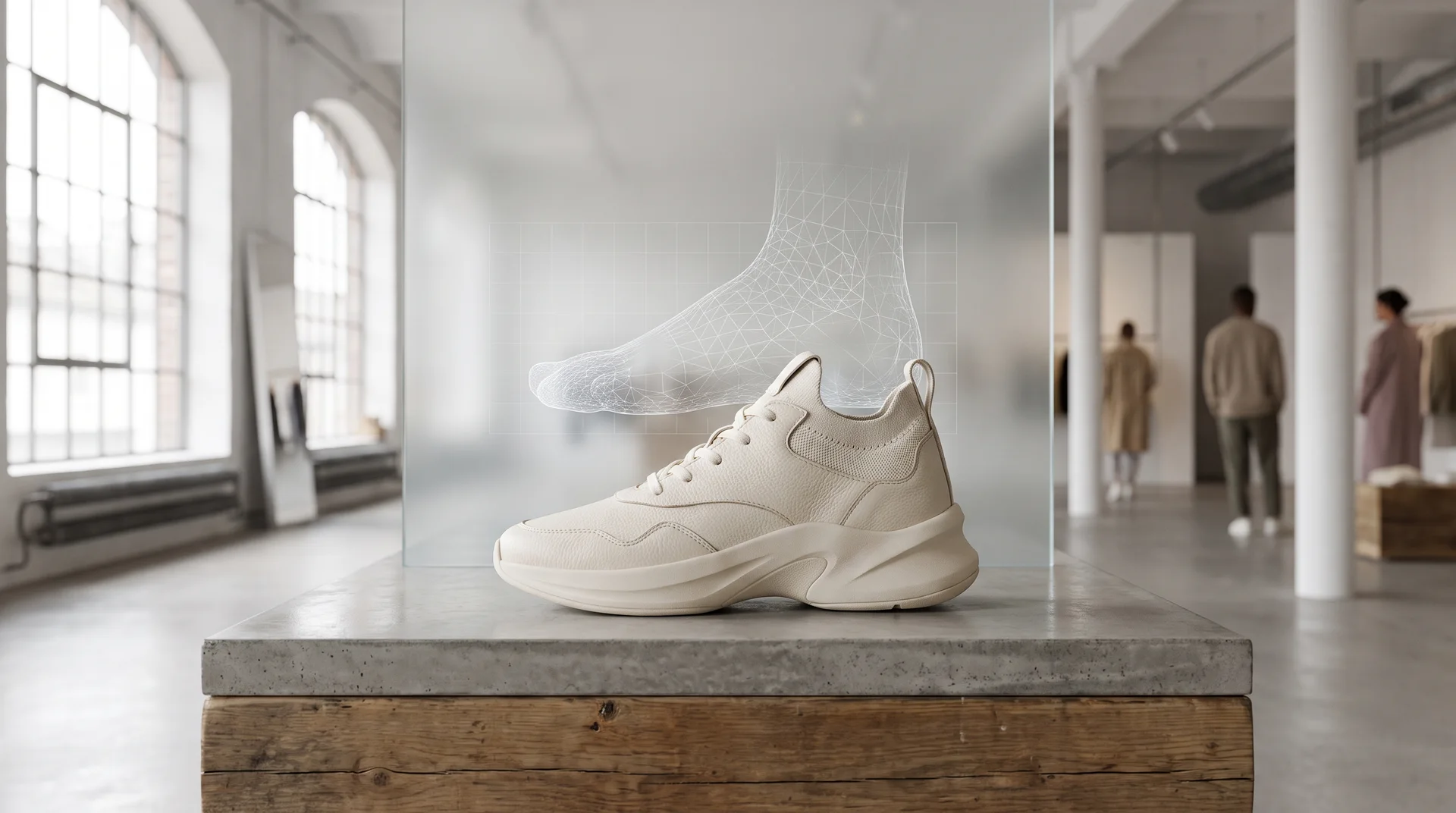
AI also enables personalized shoe production beyond mass manufacturing. Systems analyzing customers’ foot scans or personal preferences (such as color, material, sole type) generate customized production orders accordingly. This "on-demand" production model eliminates the need for large inventories and prevents waste. It offers revolutionary opportunities for brands targeting niche markets or wanting to provide unique products to customers. Consumers can enjoy the privilege of owning a women’s sports shoe specifically made for them.
Smart manufacturing brings agility and customer focus to the footwear industry. These technologies ensure quality while enhancing flexibility and form the foundation of the factories of the future.
Practical Benefits of Artificial Intelligence for Wholesale Buyers
The advantages offered by AI are not limited to manufacturers. Wholesale shoe buyers and retailers also benefit directly from this technology, making their businesses more efficient and profitable. Digital wholesale platforms, in particular, use AI to simplify buyers’ decision-making processes.
Discovering the Right Products Faster
Finding products best suited to your store’s concept and customer base among thousands of models can be time-consuming. AI-powered smart selection features on platforms like Bulkoon simplify this process. The system analyzes your past orders, products you have viewed, and market trends to offer personalized product recommendations. Advanced filters allow you to find a specific model within seconds. This helps you focus on the most accurate and high-potential products even when browsing through a catalog with over 10,000 models.
Market Analysis and Competitive Advantage
AI empowers wholesale buyers to better understand their own market. AI tools analyzing competitors’ pricing strategies, best-selling product categories, and customer reviews can provide you with a strategic roadmap. Through these data, you can determine which product groups to invest in, the price range attractive to your target audience, and the most effective periods for running promotions. This information enables you to build a business strategy based on concrete data instead of intuition, giving you a step ahead in competition.
For wholesale buyers, AI means making smarter purchasing decisions, increasing operational efficiency, and swiftly adapting to market dynamics. Businesses adopting this technology can use their resources more effectively and accelerate growth.
Applications Transforming Customer Experience and Sales
Some of AI’s most exciting applications arise at touchpoints with the end consumer. In retail and e-commerce, AI personalizes the customer experience, increasing loyalty and sales. These developments create an ecosystem that wholesale buyers indirectly benefit from as well.
Virtual Try-Ons and Personalized Recommendations
Augmented reality (AR) combined with AI allows customers to virtually "try on" shoes before purchasing. Using their smartphone cameras, customers see how a shoe looks on their feet. This technology notably reduces return rates in online sales. Additionally, AI-driven recommendation engines offer customers products tailored to their previous purchases, viewed items, and even style preferences. This personalized shopping experience improves customer satisfaction and increases average basket size.
Dynamic Pricing Strategies
Dynamic pricing is another powerful tool AI uses in retail. Algorithms analyze dozens of factors in real time-including product popularity, stock levels, competitor prices, and even time of day-to set the optimal price. This prevents prices from being too high (discouraging sales) or too low (hurting profit margins). For wholesale buyers, dynamic pricing helps position their supplied products more competitively and profitably in the retail market. For more information, you can follow the Bulkoon blog page.
AI is starting a new era in retail by making every step of the customer journey smarter and more personal. These innovations create a healthier and more sustainable commercial environment for the entire supply chain.
The Future of the Footwear Industry: Human and Machine Collaboration
AI positions itself not as a tool to automate the footwear industry but as a partner enhancing human capabilities. This technology nurtures designers’ creativity, enables managers to make more accurate decisions, and simplifies buyers’ work. It opens new doors for efficiency and innovation. In the future, brands and retailers that best integrate AI into their processes will hold leading positions in the market. By exploring how Bulkoon works, you too can benefit from these modern solutions offered by digital wholesale trade.
At the heart of this transformation lies the ability to understand and utilize data. When human intuition and experience combine with AI’s analytical power, the footwear industry will advance toward a future that is both more profitable and more exciting for consumers.