
How Should Size Distribution Be Done in Footwear?
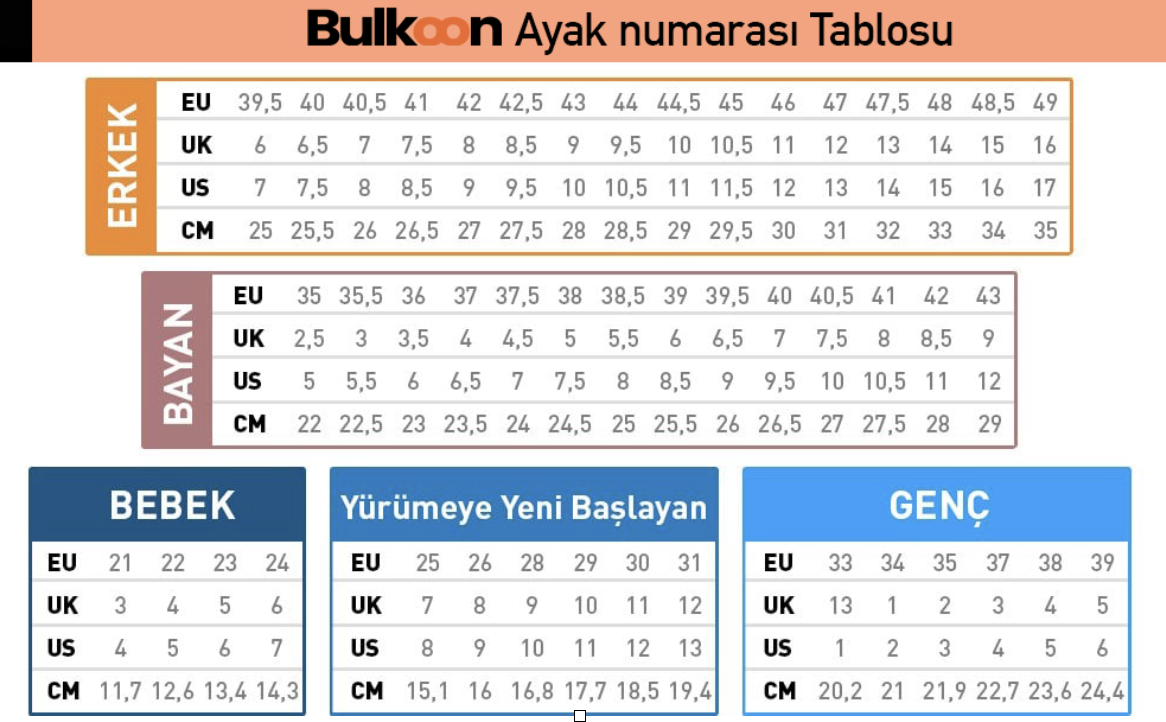
Size distribution, which directly affects profitability in wholesale footwear purchasing, is key to preventing unsold stock and resource waste. This guide explains how to increase financial and ecological efficiency with data-driven assortment planning, focusing on the most demanded sizes in women's and men's footwear for the Turkey market.
One of the quietest factors undermining profitability and sustainability in wholesale footwear trade is a single unsold pair of shoes sitting on the shelf. This situation is not only a missed sales opportunity but also a waste of resources spent from production to logistics. At the root of this waste usually lies a strategic error: size distribution that does not match demand. Correct assortment planning is not only a financial optimization tool but also the cornerstone of a conscious and responsible trading mindset. A successful retailer must anticipate not only which shoe to sell but also which sizes of that shoe will sell.
Basics of Assortment Planning in Wholesale Footwear
In footwear wholesaling, "assortment" refers to the standard package of a model consisting of different sizes. This is usually called a carton or series and allows the buyer to purchase an allocation defined by the manufacturer instead of selecting each size individually. However, this practical arrangement brings a series of risks for the buyer. If the supplier's standard assortment structure does not align with your customer base's demand curve, the inevitable result is dead stock.
What Is a Standard Assortment and What Are Its Risks?
A standard assortment is a size package created by the manufacturer based on market averages. For example, a carton with eight pairs of women's shoes may contain one or two pairs of each size. This approach provides operational convenience for the manufacturer but is not always ideal for the retailer. Your store's location, customer demographics, or marketing strategies can create a demand structure different from the general market average. Sticking to standard assortments leads to the fastest-selling sizes selling out quickly while less demanded sizes accumulate on the shelves. This results in both lost sales and tying up valuable capital in slow-moving products.
The Relationship Between Size Distribution and Profitability
Proper size distribution has a direct impact on profitability. When you stock the sizes your customers seek, your sales rate improves and customer satisfaction rises. Fast-selling products strengthen your cash flow and create capital for new products. An incorrect distribution causes the opposite effect. Every unsold pair means storage costs, tied-up capital, and heavy discounts at season-end. These discounts seriously erode profit margins. Therefore, assortment planning is not a cost item but a strategic investment that increases profitability.
Assortment planning is a fundamental discipline that protects the financial health of your business. Correct distribution ensures efficient use of capital, while wrong decisions result in dead stock costs and margin erosion.
Popular Sizes in the Turkish Market: Women's and Men's Footwear Analysis
Although each store’s customer profile varies, general accepted demand curves exist in the Turkish footwear market. In industry terminology, women's footwear is referred to as women's footwear / ladies' shoes, and men's footwear as men's adult sizes / men's footwear (EU 40-44). Basing your wholesale purchasing strategy on this general data significantly reduces your risk, especially when starting out or entering a new market. Knowing these general trends provides a reliable starting point for establishing your basic stock structure.
The Golden Ratio in the Women's Footwear Category
The women's footwear category typically covers sizes 36 to 40, with demand distributed as a bell curve. The highest demand is seen at sizes 37 and 38, while the interest in edge sizes like 36 and 40 is lower. Therefore, instead of an approach such as "equal quantity for each size" in an 8-pair standard women's assortment, a demand-focused structure should be established. An ideal distribution might be:
Size 36: 1 pair
Size 37: 2 pairs
Size 38: 3 pairs
Size 39: 1 pair
Size 40: 1 pair
This structure prevents popular sizes from running out quickly while avoiding stock accumulation of slow-moving sizes. Particularly in segments like women’s high heels or women's sports shoes, these ratios may vary slightly, but the general trend is concentrated around sizes 37-38.
Demand Intensity in the Men's Footwear Category
The men's footwear category covers sizes 40 to 44 and shows a similar demand curve. The market’s weight centers on sizes 41, 42, and 43. Particularly, size 42 emerges as the most demanded size in men's footwear. An assortment plan aligned with this directly impacts stock turnover. An example distribution:
Size 40: 1 pair
Size 41: 2 pairs
Size 42: 3 pairs
Size 43: 1 pair
Size 44: 1 pair
This balanced structure ensures sufficient stock for the most sought-after sizes, while minimizing the risk of dead stock for less demanded sizes like 40 and 44. This distribution provides quite consistent results in men's casual shoes.

Understanding the general demand curves in the Turkish market is essential information that reduces risk in wholesale purchases. Focusing on sizes 37-38 in women's footwear and 41-42 in men's footwear helps you build a more balanced stock structure.
Data-Driven Decision Making: Decoding Your Store’s DNA
Market generalizations and standard assortment structures offer a solid starting point. However, what will take your business to the next level is a meticulous analysis of your own sales data. Every store’s customer demographics, location, and marketing strategies create a unique demand profile. The only way to understand this profile is to act based on concrete data, not assumptions.
How to Interpret Your Sales Data?
Though modern Point of Sale (POS) systems simplify this analysis, even a simple Excel sheet suffices to track how long it takes for a specific model and size to sell. When analyzing your sales data, focusing only on the best-selling sizes is insufficient. To see the whole picture, ask these questions:
Fast-selling Sizes: Which sizes run out immediately upon stocking in specific models? This clearly signals that you should increase the quantity of these sizes in the next order.
End-of-season Stocks: Which sizes remain most during discount periods? If the same sizes consistently remain on the shelf, consider reducing their proportion in the assortment.
Return Analysis: Examine the reasons for returned products. Frequent returns due to "size did not fit" may indicate an issue with the model's fitting.
The Role of Seasonal Trends and Customer Feedback
Qualitative data is as important as numerical data. Your store staff, who communicate directly with customers, are your most valuable source of information. Regularly collecting feedback on sizes that customers cannot find or ask for can reveal a demand potential not covered by your current assortment structure. Perhaps there is a niche demand for size 41 women’s or size 45 men’s shoes. Moreover, seasonal trends can influence size demands. For example, certain models worn by social media influencers can suddenly increase demand for specific sizes. Tracking such dynamics is critical for proactive stock management.
Analyzing your own sales data and listening to customer feedback enables you to go beyond general market data and create a store-specific, optimized stock strategy.
The Impact of Size Distribution on Stock Turnover and Seasonal Management
Success in footwear retailing is measured not only by selecting the right models but also by selling the right sizes of these models at the right time. Size distribution is one of the most important factors directly affecting stock turnover - how quickly your inventory sells and converts to cash. Effective seasonal management is based on maximizing this speed.
Accelerating Cash Flow with Fast-Selling Sizes
Each model’s most demanded "golden" sizes (e.g., 38 for women, 42 for men) are the engine of your business. Investing correctly in these sizes accelerates stock depletion and capital return. This positive cash flow allows you to place new orders, cover operational expenses, and grow your business. If your most popular sizes are constantly out of stock, you not only miss sales but also slow down your cash flow. Therefore, giving more weight to the best-selling sizes inside the assortment is a critical move for your financial health.
Strategies for Slow-Moving Sizes
Conversely, less demanded edge sizes, such as 36 or 44, can slow down stock turnover. Accumulating these sizes in stock ties up dead capital. Several strategies can address this issue. First, order fewer quantities of these sizes. Mid-season, organize special campaigns or set discounts for slow-moving sizes (e.g., 50% off on a slow-moving size pair when buying a popular size pair). Rather than selling these items at a loss at season-end, it may be more profitable to handle them at the start of the next season or through outlet channels.
Stock turnover is the pulse of your business. Increasing this rate with correct size distribution and managing slow-moving stocks proactively is the key to maintaining profitability throughout the season.
Supplier Relationships and Flexible Ordering Strategies
A successful size distribution strategy depends not only on your analysis and planning but also on the quality of your relationship with your supplier. A reliable and forward-thinking wholesaler knows their customer's success is their own success. Therefore, instead of focusing only on selling standard cartons, they may be more inclined to offer flexible solutions tailored to the retailer's needs.

How to Negotiate with Your Supplier?
Being proactive during the ordering process is important. If you can demonstrate with your sales data that the standard assortment structure is unsuitable for you, you will be in a stronger position to request a custom distribution. Communicating openly with your supplier allows you to benefit from their market observations and data as well. Some suppliers may allow "assortment breaking" or customized series creation above a certain order volume. Additionally, ask if they offer options like "series completion" or single-size ordering to replenish fast-selling sizes during the season, which can make your stock management much more flexible.
Advantages of Digital Wholesale Platforms
Digital wholesale platforms like Bulkoon make this process more efficient for retailers. Access to hundreds of approved suppliers and more than 10,000 models from a single platform allows you to compare different assortment compositions. The fact that all products on Bulkoon are ready stock only means your orders will be processed quickly, enabling fast replenishment of popular sizes. Detailed filtering and AI-supported smart selection tools offered by the platform help you find the products and assortments best suited to your store’s demand profile. This saves you time and helps you make more data-driven decisions.
Strong supplier relationships and tools offered by digital platforms allow you to break free from the limitations of standard assortments and establish a more profitable and flexible stock structure tailored to your store.
Conclusion: Sustainable Growth with Smart Size Distribution
Size distribution in footwear retailing is often overlooked but is a strategic factor with huge impact on profitability and efficiency. Old habits like "equal quantity from each size" or purchases based purely on intuition mean dead stock, wasted capital, and missed sales opportunities in today’s competitive market. The key to success starts with understanding general market trends but continues by customizing this knowledge through analysis of your store’s sales data.
Creating a data-driven assortment plan increases your stock turnover, strengthens your cash flow, and maximizes customer satisfaction. This approach not only provides financial optimization but also contributes to a more sustainable business model by preventing resource waste caused by unsold products. Transparent relationships with suppliers and opportunities offered by digital platforms like Bulkoon make implementing this strategy easier than ever. Remember, selling the right shoe is as important as offering the right size of that shoe to the right customer.