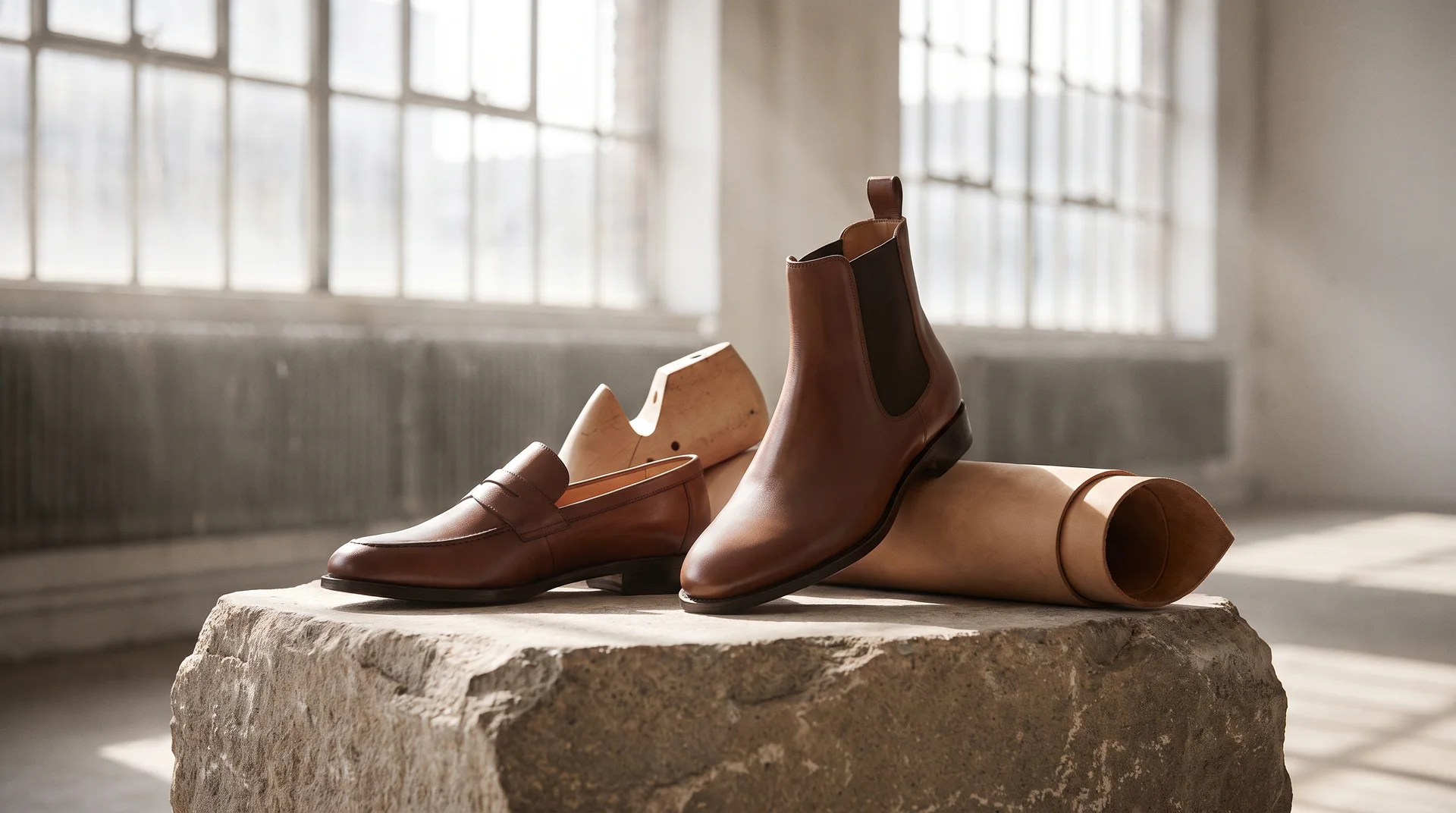
Difference Between Last and Grade in Footwear: Why Isn't Every Size 37 the Same?

Understanding the concepts of last and grade is key for wholesale footwear buyers to reduce return rates and increase customer satisfaction. Discover why different brands and models feel different even in the same size and how to leverage this knowledge to boost your profitability.
Imagine a customer tries on a size 37 sneaker in your store, and it fits perfectly, but when trying a size 37 stiletto from a different brand, they experience significant discomfort. This does not indicate a fault with either the customer's foot or the product's label. It relates to two fundamental concepts behind shoe manufacturing: "last" and "grade." For a retailer purchasing wholesale, knowing what these terms mean is not only about choosing the right products but also directly impacting profitability by reducing return rates and increasing customer loyalty. Understanding why every size 37 is not the same is strategic knowledge that will give you an edge over your competitors.
Footwear Anatomy Basics: What Are Last and Grade?
Shoe sizing seems like a standardized system, but production details behind the scenes make this standardization quite flexible. The two fundamental factors determining how a shoe fits on the foot are the last on which the shoe is manufactured and the grade, which refers to the size increment between numbers. Understanding these two technical details significantly improves the accuracy of your wholesale purchasing decisions.
Last: The Three-Dimensional Soul of a Shoe
The last is a three-dimensional foot model used in shoe production. The entire form of the shoe - including length, width (ball width), toe shape (pointed, rounded, square), and instep height - is shaped according to the last. Each shoe style serves a different purpose and hence requires its own unique last. For example, a women's sneaker last typically has a wider ball area and a rounded toe to ensure comfort and freedom of movement, while a women's stiletto last is designed narrower with a pointed toe for aesthetic appeal. Manufacturers may use hundreds of different lasts adapted to their design language and the foot anatomy of their target audience. Therefore, even two different models from the same brand can have completely different lasts and feel entirely different on the foot.
Grade: The Technical Detail of Sizing
Grade refers to the standard length increment between shoe sizes. In Europe, the widely used Paris point system has a length difference of 6.67 millimeters between consecutive sizes. Theoretically, a size 37 shoe should be 6.67 mm shorter than size 38. However, in practice, manufacturers may deviate from this standard due to cost, design aesthetics, or specific market expectations. Some brands make half sizes (e.g., 37.5) for a more precise fit, while others may try to produce multiple sizes from a single last to reduce costs. These subtle millimeter differences are the core reason why shoes are described as "true to size," "narrow fit," or "wide fit."
How Last Differences Affect Customer Experience
For wholesale buyers, differences in lasts are more than a technical detail; they are a critical factor directly influencing business outcomes. The customer's initial feel when trying on a shoe shapes their purchase decision and overall brand perception. Managing this experience correctly is the key to long-term success.
Return Rates and Customer Dissatisfaction
Especially with the rise of online sales, size mismatch is among the top reasons for returns. When customers order their usual size but receive a product that doesn't fit their foot, they experience frustration. This not only creates costs for return shipping and restocking but also undermines their trust in your brand and store. Customers who repeatedly get wrong sizes may choose not to shop with you next time. High return rates erode your profit margin and increase operational burdens.
Brand Loyalty and the Power of Correct Guidance
This challenge presents a major opportunity as well. When you understand the last characteristics of the products you sell in your store or e-commerce site, you can act more like a consultant than just a seller. Simple guidance like "This model has a narrow last; if you usually wear size 37, we recommend trying size 38" helps customers find the right product and eliminates return likelihood. This proactive approach positions you as an expert in the customer's eyes and builds trust. Customers are far more likely to return to a store that helps them find the right product.
How to Obtain Last Information from Your Supplier When Buying Wholesale
The first step to choosing the right products and guiding your customers correctly is to get accurate information from your supplier. Last and grade details are usually not included in standard product lists. Making a conscious effort to acquire this information is one of the most valuable steps in your wholesale purchasing process.
Golden Rules for Supplier Communication
When placing orders, go beyond just selecting models and colors. Establish an active dialogue with your supplier by asking questions such as: "Is this season's ballet flat last the same as last season's best-selling model?", "Does this sneaker have a standard last or is it better suited for wider feet?", or "What is the instep width of this boot?". Approved suppliers on platforms like Bulkoon are usually well-versed in their products' technical details and can provide clear answers. A reliable supplier knows the characteristics of the products they sell and willingly shares this knowledge with you. This communication saves you from costly errors.

The Importance of Product Descriptions and Visual Inspection
Besides direct communication with suppliers, carefully reviewing product details on digital platforms is critical. Check product descriptions for terms like "narrow last," "true to size," or "wide last." Visual materials such as product videos available on Bulkoon help you better understand the shoe’s overall form, toe structure, and width than static photos alone. When looking at a shoe’s image, focus not just on color but also on proportions and shape. These visual clues give insight into the last.
Protecting Profitability: Size Runs and Stock Management
Knowing the last is not only about selecting the right model; it enables you to create the most profitable stock structure by planning the correct size distribution (assortment) and optimizing stock turnover. This is an essential strategy, especially for boutiques operating with limited capital.
Planning Size Runs According to the Last
A standard series usually contains sizes 36 to 40, with retailers often emphasizing best-selling sizes like 37 and 38. However, this approach does not apply to every last. For example, making a standard size run for a women's loafer known to have a narrow last may leave you with excess stock in sizes 36 and 37, as customers tend to buy one size larger. In this case, refine your assortment to focus more on sizes 38 and 39. Hypothetically, a size run of 1-2-2-1 (36-37-38-39) might work for a standard last but adjusting to 1-1-2-2 (37-38-39-40) for narrow lasts can be more profitable. This fine-tuning reduces the risk of dead stock.
Seasonal Trends and Stock Turnover
How fast a shoe sells (stock turnover) depends not only on trends but also on comfort and fit quality. Customers are less likely to buy even the most stylish shoe if it doesn't feel comfortable when tried on. Models with problematic lasts that cause constant complaints tend to remain unsold at season’s end, tying up your capital and lowering profitability. Conversely, well-liked models with comfortable fit sell quickly, strengthen cash flow, and free resources for new products. You can find a balance by exploring different lasts and styles among Bulkoon’s 10,000+ model options.
Correctly Guiding Customers In-Store and Online
After sourcing the right products, the final step is effectively communicating this knowledge to customers. Proper guidance both in physical stores and e-commerce channels increases sales and minimizes returns.
Staff Training and Product Knowledge
Your sales personnel should know each model's last characteristics. When new collections arrive, organize brief training covering not only models and prices but also last information. Staff who confidently advise customers with statements like "This model fits true to size; you can order your usual size" or "This brand’s lasts typically run half a size large" make a significant positive difference. This raises service quality and builds customer trust.
Practical Tips for E-Commerce
If you sell online, product descriptions are your key communication tool. Always include a "Last Information" or "Size Recommendation" section on every product page. Use clear statements such as "Last: Narrow (We recommend ordering one size up)" or "This model suits wider feet." Highlight relevant size-related customer reviews whenever possible. Other customers’ experiences are among the most credible references for new buyers. These small but effective touches visibly reduce your online return rates.
Conclusion: Informed Buying, Loyal Customers
Technical terms like "last" and "grade" in footwear trade are not details only producers should care about. These concepts directly influence a wholesale retailer’s profitability, operational efficiency, and customer loyalty. Understanding why every size 37 is not the same makes you a more informed buyer. Equipped with this knowledge, you can communicate with suppliers more efficiently, plan your inventory more intelligently, and offer consultancy that adds value to your customers. The result is fewer returns, happier customers, and a healthier business. Leveraging broad product ranges and supplier networks on digital platforms like Bulkoon makes turning this knowledge into a commercial advantage easier than ever. Discover, explore, and confidently order the right products for your store at Bulkoon How It Works.