You might also like

 8 colors
More Color Options
 5 colors
More Color Options
 3 colors
More Color Options
 2 colors
More Color Options
 4 colors
More Color Options

 3 colors
More Color Options


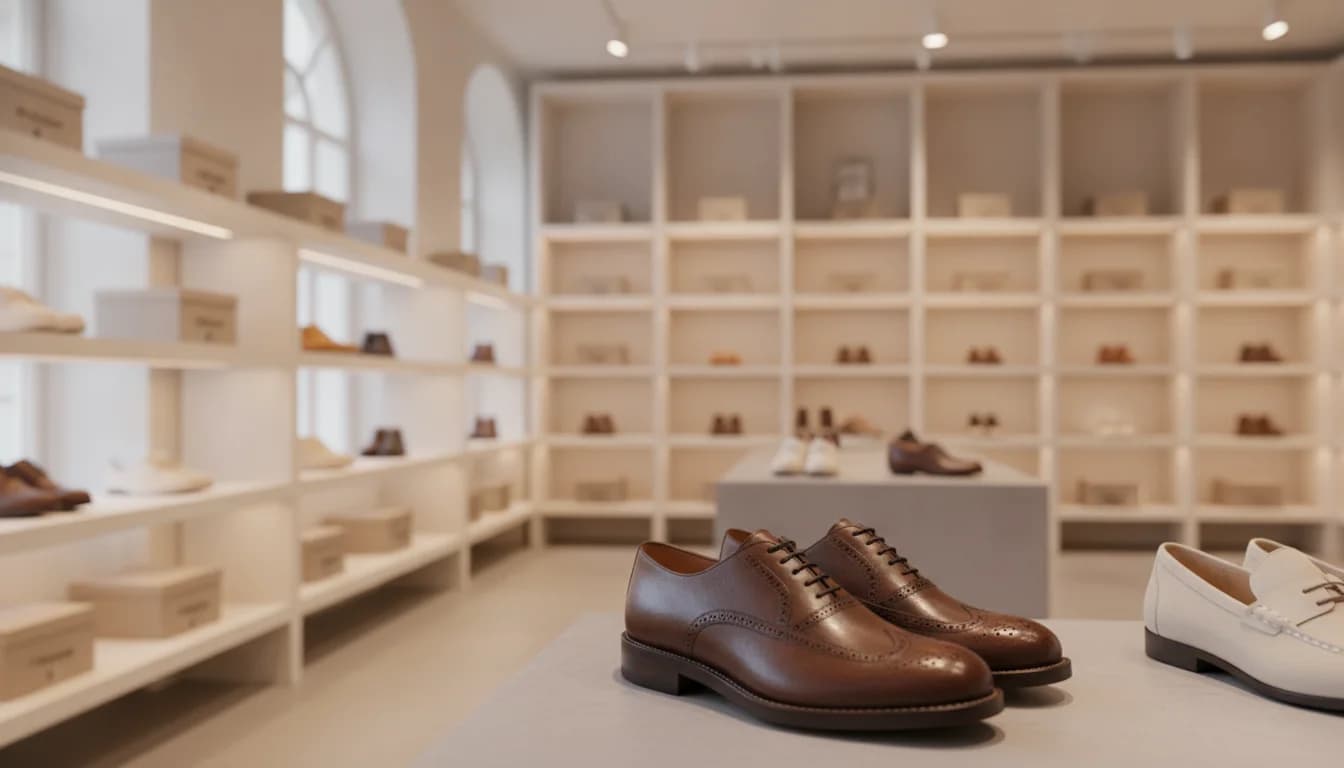
Cost advantages, customer potential, risk factors, and effective stock and assortment management strategies when opening a shoe store in small cities.
High rent expenses, personnel costs, and intense competition in metropolises are increasingly directing retailers towards smaller cities with more reasonable operational costs. Opening a shoe store in Anatolian towns or districts with a relatively limited population offers entrepreneurs a significant cost advantage. However, risks such as the limited customer population, locking up capital for long periods due to wrong product choices, and more conservative consumer habits also exist. In this guide, we detail the opportunities presented by shoe retailing in small-scale markets, the commercial risks that may be encountered, and the appropriate stock methods to implement for sustainable profitability.
The most tangible advantage of starting commercial activity in small cities is the reduced pressure on fixed costs. High square meter rental costs encountered in prime streets and shopping centers in major cities are much more manageable in smaller towns. This situation lightens the capital burden needed at the opening stage and provides flexibility in cash flow.
Additionally, the density of national chains or manufacturer-owned stores is lower in these areas. When you offer quality, comfortable, and appropriately priced products in the local market, creating customer loyalty happens much faster compared to metropolitan areas. It is possible to become the first choice of your target audience with a well-balanced product mix.
Low fixed costs open significant room for margin management to the store owner. The ability to keep rent, local municipality fees, and personnel expenses low reduces the general expense share per shoe. This shortens the breakeven time of the store while allowing flexibility in profit margins during seasonal discounts or campaigns.
Competition in small markets is usually limited to local craftsmen selling traditional products. A store offering collections with current trends and quality materials attracts attention quickly. By strategically including wholesale women's shoes and wholesale men's shoes in your store in the appropriate segment, you can fill the market gap in the area.
Ability to target higher net profit margins thanks to low fixed expenses.
Advantage of modern presentation and wide product range beyond traditional competition.
Potential to establish direct and long-term trust relationships with customers.
In summary: Low operational expenses and limited competition provide a strong foundation for commercial success in small cities. Entrepreneurs can quickly build a profitable structure by combining cost advantages with proper product selection.
8 colorsMore Color Options
5 colorsMore Color Options
3 colorsMore Color Options
2 colorsMore Color Options
4 colorsMore Color Options
3 colorsMore Color Options
The biggest risk in settlements with a limited population is the low customer circulation and purchase frequency. To make several sales to a customer annually, both the store location and the offered product profile must perfectly match the region. Therefore, comprehensive environmental and field research should be conducted before physical investment.
Field research should not only consider the number of people passing by the street but also examine the profile of this population. Student populations, public employees, customers whose income depends on agriculture or industry have different product demands. Inadequate analysis of these dynamics leads to accumulation of products with long shelf life and low turnover in the store.
The age distribution and average household income in the area are the main factors determining the store's pricing policy. While elegant, formal, and comfortable models stand out in district centers with a high concentration of public personnel, in areas with a younger population, sports and daily-use shoes are in demand. High-priced product groups that are unsuitable for the income level increase the risk of stock accumulation.
When selecting a store location, not only street density but also shopping intent on that street should be measured. Banks, government offices, and main bazaar axes are key points where pedestrian traffic converts to shopping. Also, consumers’ online shopping habits in the region should be examined, and the advantages of "trying before buying" and "instant delivery" not offered by e-commerce sites should be highlighted in the store.

Determining the right location by counting pedestrian traffic on weekdays and weekends.
Price segmentation according to the ratio of public, industrial, and student populations in the area.
Identifying frequently requested shoe types by local consumers on e-commerce sites.
In summary: Wrong location and product choices are intolerable in areas with a narrow customer base. Comprehensive demographic analyses and pedestrian traffic measurements minimize risks.
Assortment management is the most critical operational factor determining profitability when retailing shoes in small cities. While marginal shoe sizes (e.g., women's sizes 35 or 40, men's 39 or 45) may sell faster in large cities, selling extreme sizes can take months in limited populations. A case of shoes purchased with the wrong size breakdown can lock your profit on shelves.
Flexible assortment structures focusing on middle sizes should be preferred instead of standard assortment cartons in Anatolian markets. For example, packaging weighted towards sizes 37 and 38 in the women's category and 41 and 42 in the men's category directly affect stock turnover speed. Even a single unsold size can erode all profit from that model.
Regional physical features and climate conditions cause differences in foot shape and size preferences. While wide last models are in demand in some regions, narrow and elegant lasts stand out in others. While comfortable women’s ballet flats or daily walking shoes are chosen in areas with heavy daily use, size distribution should be customized to regional needs.
Rigid assortment rules imposed by traditional wholesale purchases create a financial burden for small stores. At this stage, working with platforms that allow you to flexibly supply needed sizes or best-selling middle groups is vital. Replenishing only the sizes that sell preserves capital efficiency at maximum levels.
Prefer assortment packages weighted towards middle sizes (Women: 37-38, Men: 41-42).
Limit carton purchases by regularly tracking the sales speed of extreme sizes.
Order lasts suitable for the region’s foot width or narrow foot structure habits.
In summary: Without assortment discipline, profitability cannot be achieved in small cities. Flexible size distribution supply models focusing on high-selling sizes protect capital.
Seasons change rapidly in the shoe industry. Selling off leftover products at the end of the season is more challenging in a small city compared to metropolises because the potential buyer pool is limited. Therefore, the main rule is to avoid large stock accumulation in a single season and maintain a consistently high turnover speed.
Starting with small and testable quantities instead of large batches in product procurement is the healthiest way for risk management. The sales performance of models bought in small amounts at the start of the season should be monitored; replenishment orders should be quickly placed for products accepted by customers.
While bringing new season trends to the store, rather than tying the entire budget to a few models, diversity should be increased and series quantities kept low. For example, displaying 10 different models in small quantities on the shelf and seeing which sells quickly is the safest way to measure regional demand. In this strategy, the supplier keeping products in ready stock and fast shipment is a critical factor.
Products whose sales slow down by mid-season should be converted to cash immediately with light discounts. Dead stock reduces purchasing power for the following season. Models sold through digital wholesale platforms that only carry ready stock and offer free shipping to all 81 provinces in Turkey can be replenished daily.
Order with small test batches at the beginning of the season instead of spending the entire budget.
Quick replenishment through suppliers with ready stock for fast-selling models.
Organize early cross campaigns for products at risk of remaining at season end.

In summary: High stock turnover speed is the heart of cash flow in small city retailing. Working with supply infrastructure guaranteeing ready stock keeps leftover risk close to zero.
The customer potential limited by the location of a physical store should be expanded through integration with digital channels. A shoe store opened in a small town has limited growth potential if it relies only on customers walking through the door. By using the store as a logistics and attraction center, it is possible to sell to surrounding cities and districts through Instagram and WhatsApp.
Local marketing activities conducted via social media also increase physical store traffic. When consumers see product videos on Instagram and come to try in-store, the sales closing rate rises significantly.
Sharing short videos and detailed visuals of models taken in real environments from the store via Instagram builds trust. WhatsApp’s catalog feature allows presenting new collections directly to loyal customers. This sincere communication channel with the local audience increases customer retention rates.
Opening physical store stocks to the national market through marketplaces or your own e-commerce site accelerates turnover of products remaining on shelves. Therefore, even if located in a small district, you get the chance to ship products all over Turkey.
Create sincere and trustworthy social media content with in-store product videos.
Provide VIP customers with early product information through WhatsApp private membership groups.
Integrate physical stock with e-commerce channels to break regional dependency.
In summary: The hybrid retail model removes the risk of narrow customer base in small cities. Social media and messaging apps accelerate local sales.
Running a successful and profitable shoe store in a small city is possible with correct analysis, disciplined financial management, and a flexible supply chain. The cost advantage gained from low rent should be preserved by avoiding misallocated capital on wrong stock. Offering balanced collections in the right categories increases the store’s regional brand value.
Store owners should benefit from digital supply solutions instead of traditional and costly methods in wholesale shoe purchasing. Digital platforms eliminating travel, accommodation, and time losses enable stores to replenish stock whenever needed.
A wide product selection and reliable supply infrastructure are the most important factors in store sustainability. Platforms working with verified manufacturers and offering payment facilities such as 3 and 6 installments at cash prices balance your financial burden. To follow innovations in the sector, you can check our trend guides section and visit the How Bulkoon Works page to explore digital conveniences offered by the platform.
Keeping cash flow tight in the opening phase and remaining liquid instead of investing profit directly in stock is vital. Taking advantage of cash payment discounts or installment options lowers borrowing costs. After securing a solid position in the regional market, gradually increasing category diversity is the safest growth path.
Use digital channels during procurement without incurring travel and accommodation expenses.
Evaluate installment and suitable payment options at cash prices to maintain financial health.
Gradually expand the product range based on sales performance.
In summary: A small city shoe store supported by the right supply partner, flexible assortment, and effective digital channels becomes a highly profitable and sustainable commercial enterprise.
Information in this article draws on the following sources.

Don't risk your capital when stocking shoe trends that suddenly go viral on social media. Discover balanced inventory and assortment strategies that keep your store profitable.
Initial sales velocity in wholesale footwear purchasing can be misleading. Learn how to measure a shoe model's reorder potential through size balance, inventory turnover rate, and supplier continuity.

Adding a shoe model that rapidly spreads on social media to your inventory might seem like a great opportunity. However, before making this decision, you need to carefully analyze the nature of viral trends, stock and supply risks, and profitability potential. This guide aims to help wholesale buyers and boutique owners make informed moves.
