You might also like

 3 colors
More Color Options
 3 colors
More Color Options
 3 colors
More Color Options

 3 colors
More Color Options


 3 colors
More Color Options

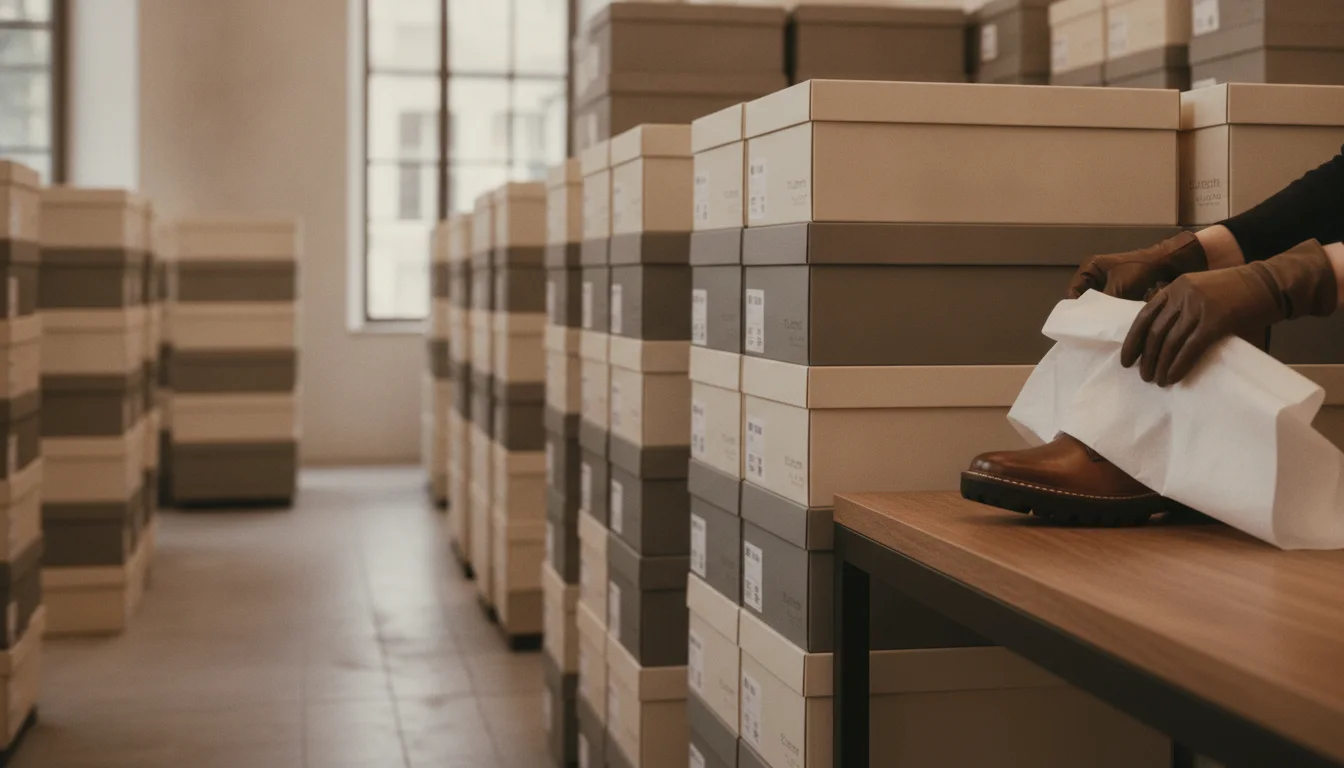
Explore the critical role of packaging quality in footwear retail on customer satisfaction, return costs, and brand image. Economic and protective packaging solutions for boutiques.
The customer's first physical contact with the purchased product in e-commerce or retail operations is the moment they take the shipping package in hand and open the box. No matter how high the manufacturing quality of the shoe is, a crushed carton, torn product box, or dirty packaging materials instantly creates a negative perception for the customer. Throughout the entire supply chain - from wholesale sourcing to retail sales - packaging quality not only protects the product but also directly determines the brand's reliability and customer loyalty. Product deformations caused by wrong packaging choices increase return rates directly and severely damage stores' profit margins.
A shoe purchased digitally must represent the quality promised by the brand when it reaches the consumer. An unscathed, sturdy, and clean shoe box emerging from the shipping envelope is a concrete indicator of the value given to the buyer. Businesses that pay attention to the packaging process gain a professional and trustworthy position in the eyes of customers. For a hypothetical example: a customer buying through social media who receives a carefully wrapped product without deformation is significantly more likely to repurchase from the brand.
Even a product made of genuine leather or delicate fabric appears degraded in quality when crushed under poor shipping conditions. For instance, a break caused by shipping pressure on the toe of a stylish women's stiletto model devalues the product in the eyes of the customer. Regardless of how flawless the workmanship is, a packaging error eliminates the perceived value of the product and severs the customer's emotional connection to the brand.
To strengthen the first impression and maintain your brand perception, the key points to consider in the packaging process are:
Use outer cartons with durability to prevent the product box from being crushed during shipping.
Quality tissue paper lining inside the box to prevent product scratches.
Enhance a professional look with the brand logo or a neat label arrangement.
In summary: The customer's first physical contact with the package is as important as product quality. Careful packaging increases brand value, while neglected packaging leads to customer loss.
3 colorsMore Color Options
3 colorsMore Color Options
3 colorsMore Color Options
3 colorsMore Color Options
3 colorsMore Color Options
During shipping logistics, packages pass through multiple transfer centers, are transported on conveyor belts, and are stacked on top of each other. The original shoe box alone is not designed to withstand external environmental conditions. Therefore, it is essential to use a secondary shipping carton or high-grammage protective outer packaging to protect the product box. The double boxing technique absorbs the physical impacts from outside and prevents damage to both the original box and the product inside.
The risk during transport is not only physical impacts. Especially during seasonal transitions, humidity changes inside shipping vehicles can cause staining or shape distortions on suede and leather products. Silica gel moisture-absorbing packets inside the boxes ensure the product stays fresh and dry. Also, paper or plastic toe supports used to prevent the toe from collapsing help the product maintain its original form as it left the store. This application is particularly critical for soft-structured women's ballet flats.
In summary: Impact and moisture risks during shipping should be minimized with double boxing and internal support materials. These protection steps secure the product's physical integrity.
Many small businesses or newly opened boutiques regard packaging expenses as a cost item and try to save on protective cartons and packaging materials. However, the return costs caused by crushed boxes or damaged shoes are multiple times higher than the cost of quality packaging. Returns incur double shipping fees, dead stock storage, re-packaging labor, and most importantly, hidden costs such as customer loss. General observations in the retail sector show that small investments in packaging quality significantly reduce return rates [1].
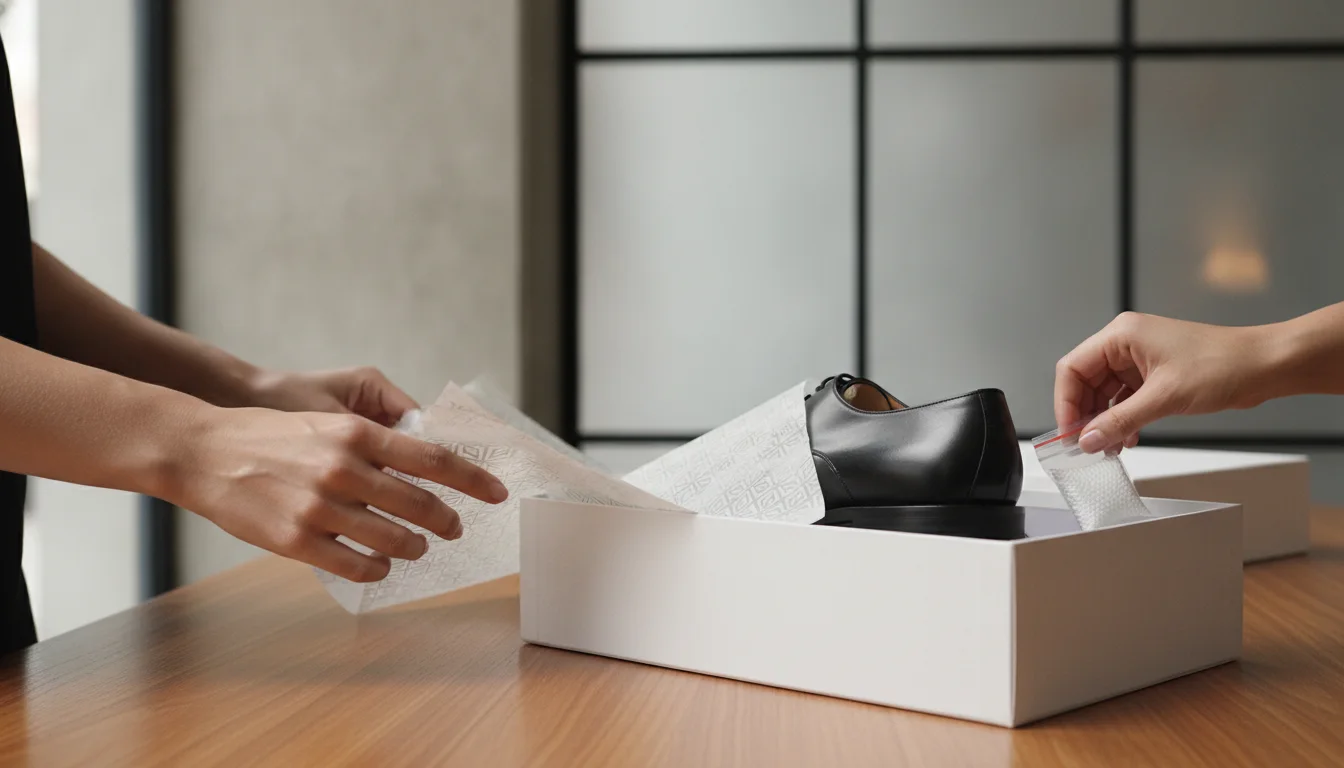
Packaging is not only about the box and bubble wrap. The placement of invoices, exchange cards, and brochures inside the box is also part of operational quality. The invoice must be placed in a transparent pocket outside or inside the box so that it does not get wet or crumpled and remains organized. Misplaced or lost documents increase the burden on customer service. In order operations offering free shipping across Turkey's 81 provinces, checking documents before dispatching the package facilitates process tracking.
In summary: Saving on shipping packaging increases return costs. A proper packaging system reduces return rates and preserves long-term business profitability.
Small businesses do not need to invest in costly, custom-printed packaging. High-quality corrugated cardboard boxes produced in standard sizes and neutral-colored protective papers can deliver an extremely aesthetic presentation. Businesses can optimize their packaging inventory by standardizing ideal box sizes. Using an excessively large box requires extra filler materials and increases shipping dimensional weight costs. Too small a box causes the product to squeeze and deform.
A well-organized packaging table and standardized packaging steps increase the speed of warehouse employees. Binding the process from placing the product into the box to wrapping it with protective tape with certain rules minimizes operational errors. Using standard packaging templates from wholesale receipt to delivery to the end consumer saves time and labor. In addition to selecting the right products through platforms digitizing supply processes, packaging and shipping these products smoothly is the retailer’s responsibility. To quickly plan supply steps, you can learn about digital wholesale purchasing processes by checking Bulkoon platform’s How It Works page.
In summary: Using standard-sized and quality cartons instead of custom-designed packaging provides both cost control and increased packaging operation speed.
The packaging quality presented to the customer by the retailer actually starts at the wholesale purchasing stage. If the bulk cartons and inner boxes delivered from the manufacturer to the store are of low strength, the boxes get damaged before reaching the store shelves. Therefore, when buying wholesale, attention must be paid not only to the product model and stitching quality but also to the carton grammage of the original shoe box offered by the supplier. Working with approved suppliers from reliable platforms guarantees delivery of products with packaging that meets the standards.
Stock turnover speed and size distribution (assortment) are vital in footwear trade. Shoe boxes stacked on shelves need to be resistant to crushing. Weak boxes get crushed at the bottom, and the damaged boxes of specific sizes in the assortment (for example the best-selling size 37 or 40) become difficult to sell. Proper stock management in the store and preserving products without damage during season transitions depend on sturdy box construction. Maintaining box standards in both women's shoe models and men's shoe categories preserves stock value.
In summary: Adhering to sturdy box standards in wholesale supply facilitates in-warehouse stacking and preserves the integrity of size assortments, positively affecting stock turnover speed.
The packaging operation is the most critical final link in the retail chain. Practical measures that businesses can take to improve packaging processes can be summarized as follows:
Determining appropriate shipping carton sizes for each shoe type (heels, ankle boots, ballet flats).
Always including form-supporting tissue paper and moisture-absorbing packets inside the product.
Reinforcing shipping boxes with double-sided quality tape and including all necessary documents.
Preferring verified suppliers with confirmed box quality for wholesale purchases.

High-quality products supplied from platforms offering only ready stock, combined with the right packaging strategy, provide sustainable profitability for retailers. The wholesale footwear tips guides prepared to understand industry dynamics and establish correct packaging standards offer operational guidance for new stores. Proper packaging is not an expense but a strategic investment that guarantees customer satisfaction and brand value.
In summary: Retailers who standardize packaging processes protect product quality, increase customer loyalty, and eliminate shipping-related cost risks.
Information in this article draws on the following sources.
Starting work with a new shoe supplier by placing a small initial order allows you to test product quality, sizing, packaging, and logistics performance without taking unnecessary risks.

Focusing solely on unit price in wholesale footwear purchasing can reduce long-term profitability. Discover critical criteria such as quality consistency, stock accuracy, and assortment structure.
Explore the physical product defects, sizing and material mismatches behind high return rates in footwear retail, and operational solutions to reduce returns.