
What Factors Influence Wholesale Footwear Prices?

Wholesale footwear prices consist of multiple cost components including raw material quality, labor details, exchange rate fluctuations, logistics expenses, and production volume. Understanding these dynamics enables retailers to make more informed and profitable purchasing decisions.
The price on a wholesale footwear tag is actually the final stop of a long and complex journey. Behind that figure lies a detailed cost analysis extending from raw material procurement to craftsmanship in the workshop, international market fluctuations, and logistics operations. Especially for a new boutique owner or retailer, understanding these factors means not only negotiating better but also maximizing profitability and customer satisfaction by selecting the right product at the right price. Knowing the elements that determine price gives buyers a strategic advantage and helps them build their collection more consciously.
Fundamentals of Production: Raw Material and Labor Costs
The two most basic factors determining the wholesale price of a shoe are the materials used and the labor transforming these materials into a product. Even the slightest change in these two items can cause a significant difference in the final price. Quality, durability, and aesthetic perception are directly dependent on these factors, and buyers need to carefully evaluate this balance.
The Impact of Material Choice on Price: Leather, Synthetic Leather, and Textile
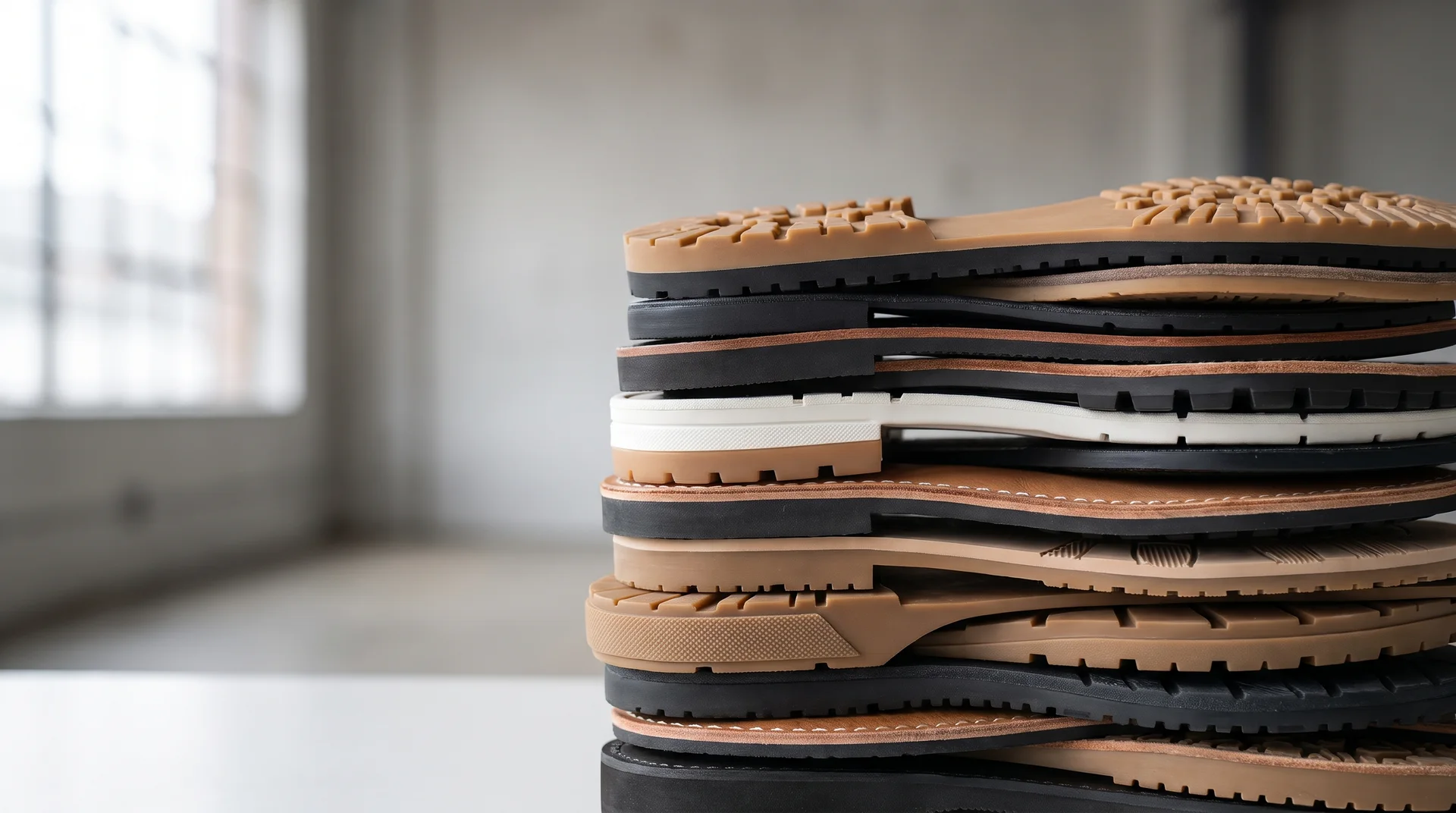
Material cost makes up the lion’s share in shoe manufacturing. Genuine leather is among the most expensive options due to processing, tanning, and quality. High-quality materials such as calf or lamb leather increase both the shoe’s price and perceived value. Synthetic leather (PU or PVC) offers a more affordable alternative, and modern technology provides very durable and aesthetic choices. However, even the highest quality synthetic leathers are usually more economical than entry-level genuine leathers. Textiles like canvas and mesh are mainly used in sports and summer models, with more variable costs. The material’s quality, thickness, and origin directly affect price. For example, a synthetic leather imported from Italy can be significantly more expensive than a domestically produced material.
The Role of Labor and Production Processes
Shoes are a labor-intensive product. The complexity of the design is the main factor determining labor cost. For example, a women’s stiletto model requiring hand-stitched details, laser-cut patterns, or complex assembly takes much more time and skill than a simple design slipper. The experience of the upper maker (the person sewing the shoe’s upper), the precision of the cutter, and the speed of the assembly team impact production efficiency and thus cost. The cost of skilled labor represents a significant portion of total production expenses. Therefore, it is usually safe to assume that shoes sold very cheaply compromise on labor or materials.
From Design to Shelves: Mold, R&D, and Packaging Costs
The cost of a shoe leaving the factory is not limited to visible materials alone. Invisible investments and operational expenses such as design, mold development, and brand presentation also constitute an important share of the unit cost.
Model Development and Mold Costs
Each new shoe model requires a unique mold set. Especially sole molds require high-precision engineering and durable materials, amounting to a serious initial investment. A manufacturer might incur tens of thousands of lira in mold costs for a new men’s sport shoe sole. This cost is divided by the total number of shoes produced of that model and reflected in the unit price. The more units produced, the lower the mold cost per unit. However, in boutique or more niche production, this cost impact is more noticeable. Additionally, the designer’s fee and sample production (R&D) processes increase initial costs.
The Price Impact of Packaging and Brand Identity
Packaging, which is the last stage before the shoe reaches the customer, plays a critical role in both protection and brand image. There is a cost difference between a standard cardboard box and a specially designed, logoed, high-quality box. Protective papers, form supports, labels, and brand cards inside the box also increase costs. Manufacturers aiming to build a strong brand identity invest more in packaging, and this naturally reflects on wholesale prices. For the buyer, this is not just an added cost but an advantage of presenting a more attractive and valuable product on the shelf.
Macroeconomic Factors and Logistics
The price of a shoe is not determined only at the production workshop. Global and national economic conditions, supply chain efficiency, and logistics operations deeply influence the cost structure. These factors can develop beyond the producer’s control but have a direct effect on prices.
Exchange Rate and Dependence on Imported Raw Materials
While Turkey’s footwear sector largely uses domestic resources in production, some critical raw materials are imported. High-performance adhesives, chemicals, certain special textile and synthetic materials are indexed to foreign currency. Increases in exchange rates directly raise the Turkish Lira cost of these imported inputs. Although producers may initially absorb the increased costs in their margins, if the exchange rate rise is persistent, they must pass it on to wholesale prices. Consequently, buyers should anticipate that fluctuations in currency markets will affect wholesale prices, albeit with some delay.
The Importance of Freight and Dimensional Weight Calculations
After production is completed, the process of delivering products to the buyer incurs logistics costs. Shipping fees are generally calculated based on the product’s weight and volume (dimensional weight). The dimensional weight of a pair of boots differs from that of a pair of ballet flats, so shipping costs vary accordingly. Although unit logistics costs decrease in bulk purchases, logistics always remains a significant expense. At this point, advantages offered by platforms like Bulkoon come into play. For example, Bulkoon provides free shipping service to all 81 provinces in Turkey for purchases made through the platform, eliminating this significant cost for retailers and directly increasing net profitability.
Order Quantity and Seasonal Price Dynamics
Wholesale pricing is not static. The size and timing of the order are the most important factors determining bargaining power and discount potential per unit. Planning and efficiency are crucial for producers, while ordering the right volume at the right time is key for buyers’ profitability.
The Effect of Production Volume on Unit Cost (MOQ)
Economies of scale, a fundamental economic principle, apply in footwear production as well. The more units produced of a model, the lower the fixed costs per unit (molds, design, overhead, etc.). Therefore, manufacturers usually set a Minimum Order Quantity (MOQ) for a model. Large orders enable producers to buy raw materials at better prices, use production lines more efficiently, and optimize labor costs. This efficiency gain is generally passed on to the buyer as a price reduction. Low-quantity, special production requests increase unit costs.
The Role of Seasonal Demand and Inventory Turnover in Pricing
Shoes are a product sensitive to fashion and season. At the beginning of summer, demand for women’s sandals peaks, and prices are at their highest level. Toward the end of the season, manufacturers and wholesalers discount inventory to clear stock and make room for new season products. For the retailer, this creates the necessity to manage inventory turnover correctly. Products purchased at the right price and sold quickly during the season yield high profitability, while outdated and leftover stock can cause significant losses. Hence, buyers must closely monitor seasonal trends and dynamically manage stock according to demand.
Quality and Price Balance: Why Cheap Products Can Be More Expensive in the Long Run
One of the most common mistakes in wholesale purchasing is making decisions based solely on the lowest unit price. However, the initial purchase cost is only part of the product’s total lifecycle cost. Low-quality products can become much more expensive in the long term due to returns, customer complaints, and reputation loss.
Evaluating Price-Performance Ratio
An intelligent buyer focuses not only on the price tag but on the price-performance ratio. If a shoe purchased very cheaply opens at the sole soon, stitches come undone, or materials deform quickly, this causes customer dissatisfaction. An unhappy customer may not only return the product but also decide never to shop from your store again and share negative reviews with others. Conversely, a slightly more expensive shoe made with quality materials and proper craftsmanship earns customer trust and builds brand loyalty. This is the foundation of long-term success.
The Hidden Cost of Return Rates and Customer Satisfaction
Returns caused by poor quality directly erode profit margins. Each returned product involves operational costs (shipping, staff time, restocking), and usually must be sold at a discount. Consider a hypothetical scenario: a very cheap shoe bought for 100 TL and sold for 200 TL with a 15% return rate versus a higher-quality model bought for 120 TL and sold for 240 TL with only a 2% return rate. The operational burden and revenue loss caused by the high return rate in the first scenario can reduce overall profitability below that of the second scenario despite higher initial cost.
Tips for Smart Decisions in Wholesale Purchasing
After understanding all these factors affecting wholesale footwear prices, retailers need to turn this knowledge into strategic advantage. Finding the right supplier, analyzing costs transparently, and leveraging modern trade tools are the most effective ways to increase profitability and competitiveness.

Supplier Relationships and Transparent Pricing
Building long-term relationships with reliable and transparent suppliers is fundamental for successful retailing. Working with manufacturers who can explain why prices are at a certain level and provide clear information about material and labor quality prevents surprise costs. Platforms like Bulkoon provide this trust environment by verifying all suppliers. Access to hundreds of approved suppliers and their products in one place saves buyers time and increases security.
Reducing Costs Using Digital Platforms
Traditional wholesale methods involve significant time and travel costs, such as going city to city searching for producers or attending fairs. Digital B2B marketplaces eliminate these costs. Bulkoon brings thousands of models and dozens of suppliers to buyers’ screens, ending expenses for flights, hotels, and fuel. You can easily compare prices via the platform, discover new trends, and place orders with a few clicks, saving both time and money. This enables you to allocate resources more efficiently to grow your business.
Sources
Information in this article draws on the following sources.