How Does In-Store Product Placement Affect Sales?
Managing a successful footwear store is not just about sourcing the right products. How these products are presented to customers-the in-store placement strategy-directly affects sales performance. From window display to shelf management, lighting to category separation, every detail shapes the customer's purchasing decision. This guide covers the fundamental principles of in-store product placement and practical tactics to increase sales.
When your carefully selected wholesale footwear collection arrives at your store, only half the success is complete. The other half lies in how you present these products to customers. The impression a customer forms within the first five seconds of stepping into your store largely determines how long they stay and whether they make a purchase. This critical moment reveals how vital in-store product placement and visual merchandising strategies are. A cluttered shelf, a misplaced bestseller, or a poorly lit corner can make even the highest quality product invisible. Therefore, store layout is more than an aesthetic concern-it is a scientific approach that directly impacts sales.
Fundamental Principles of Strategic Product Positioning
In-store placement is the art of consciously guiding the customer. Every shelf, wall, and empty space should have a purpose. Strategic positioning aims to draw customer attention to desired products, encourage them to spend more time in the store, and ultimately increase the average basket size. This approach requires planning based on customer psychology and shopping habits rather than random product placement.
At the heart of this planning is the customer's natural movement flow and line of sight. Retail principles generally accepted, such as the tendency of customers to turn right upon entering, can serve as a starting point for product placement. However, every store has its own dynamics, architecture, and target audience. Therefore, adapting these basic principles to your business model is the key to success.
The Golden Rule of Eye Level
The saying “eye level is sales level” is an unchanging retail rule. The area most easily noticed and attracting the most attention spans approximately between 120 and 160 cm from the floor. Therefore, placing footwear models with the highest profit margins, new season styles, or those you particularly want to promote on shelves at this level directly increases sales potential. Lower shelves are usually reserved for more economical or basic products, while top shelves can be assigned to overstocked or less demanded items. This simple hierarchy ensures customer attention is focused on your most valuable products.
Store Entrance and the "Welcome Zone"
The first few meters where a customer enters the store is called the “welcome zone” or “decompression area.” This zone is a transition point where the customer adapts from the outside environment to the store atmosphere. Immediately crowding this space with products can overwhelm the customer and cause important details to be missed. Instead, using this space to reflect the store’s overall concept with a visual display, seasonal theme, or an element emphasizing brand identity is more effective. After this brief adaptation period, the customer begins shopping with a more focused mindset.
Window Displays and New Arrivals: The Power of First Impression
The window display is the face of your store communicating with the outside world and your strongest tool to attract potential customers inside. An effective window can stop a passerby and convince them to enter. Similarly, the placement of new arrivals within the store keeps existing customers interested and gives them a reason to revisit. These two elements reflect your store’s dynamism and freshness.
First impressions do not only create aesthetic appeal but also set expectations about the types of products customers can find inside. A professionally designed window provides clues about the quality of products within. Therefore, window and new product areas are strategic points that should be regularly updated and thoughtfully managed.
Window Display Arrangement: Your Store’s Invitation
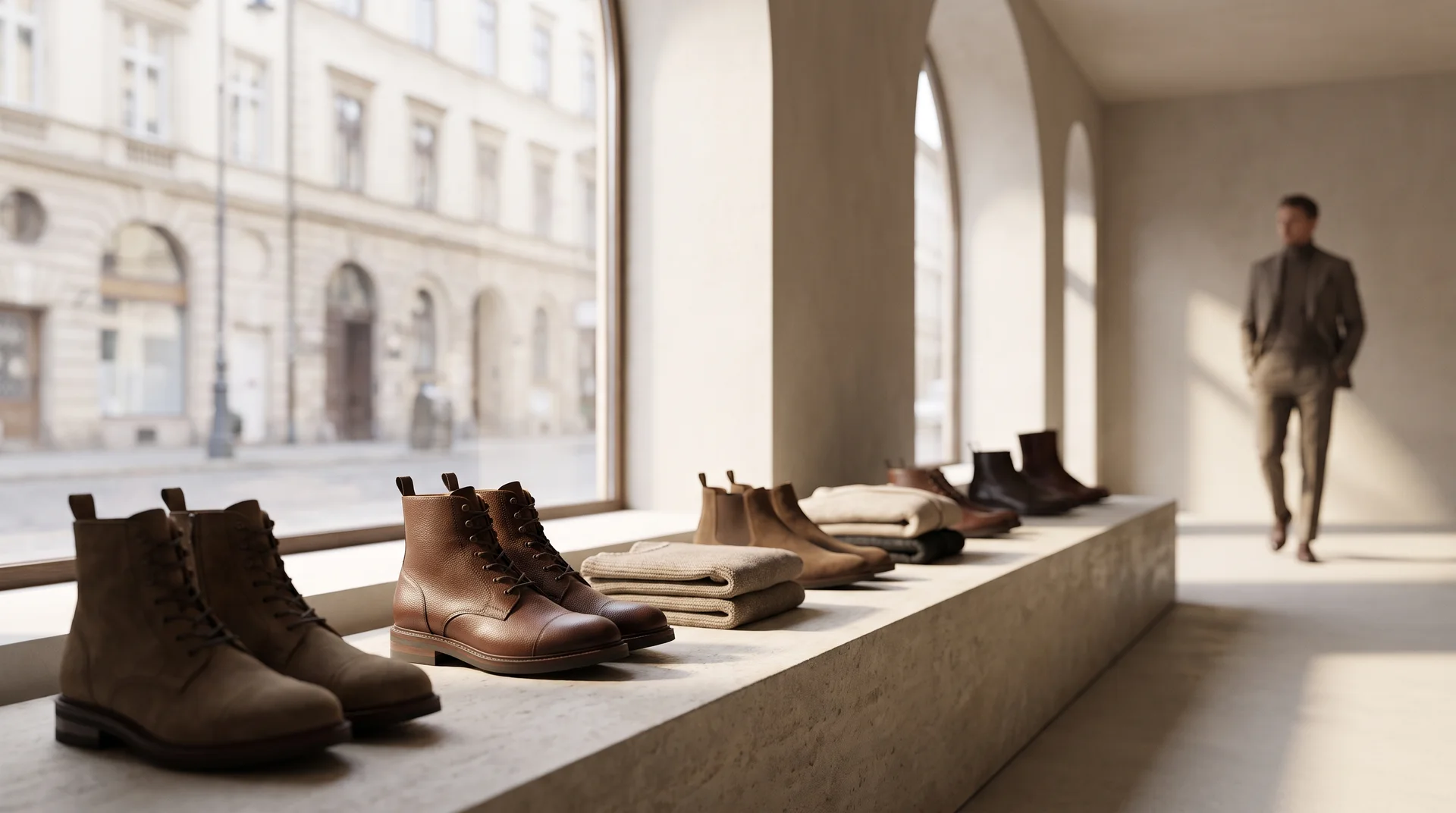
A window display is not just about showcasing the most beautiful footwear; it should tell a story. A themed window (for example, “Summer Vacation,” “Back to School,” or “Holiday Elegance”) attracts much more attention. Using a few carefully selected products allows each model to stand out. For instance, displaying the season’s most striking women’s high heel model under a single spotlight is far more effective than piling dozens of shoes together. Regularly changing your window, at least every two weeks, arouses curiosity even in daily passersby.
Where to Place New Season Products?
New arrivals clearly indicate that your store is fresh and up-to-date. These products should generally be positioned near the front of the store in a high-traffic area. Highlighting this section with a clear sign like “New Arrivals” directs customers straight to it. When displaying these products, it is important to create a dedicated space and visually separate them from other items. Showcasing the latest and trendiest products selected from Bulkoon’s 10,000+ model options in this area adds dynamism to your store.
Placement Tactics That Guide Customer Flow
Successful store placement transforms the customer from a passive observer to an active participant. The goal is to encourage customers to explore the broadest possible area of the store and encounter unplanned products along the way. This technique, often called “pathway design,” relies on the architectural layout of the store and strategic distribution of product categories.
Properly managing customer flow increases the sales potential of products located in the back aisles or less visible corners. This means utilizing every square meter of the store efficiently. A well-planned flow makes the shopping experience more enjoyable and full of discovery for customers.
Strategic Location of Bestsellers
Placing your most popular and bestselling products at the back of the store is a common and highly effective retail tactic. Customers already determined to purchase these items do not hesitate to walk deeper into the store to find them. Along this journey, they are more likely to notice other products, complementary accessories, or promotional items that they might otherwise overlook. This strategy triggers impulse buying, increasing the total basket size.
Category and Concept Groupings
Organizing products into logical groups helps customers quickly find what they want and enhances the shopping experience. The most basic division is a clear separation between Women’s, Men’s, and Kids sections. You can further group these categories internally. For example, in the women’s section, separate areas for sports shoes, casual shoes, and dress shoes make sense. Additionally, by creating concept corners such as “Office Elegance” or “Weekend Comfort,” you can present matching models together and offer styling ideas to customers.
Visual Merchandising and Purchase Psychology
Visual merchandising is the art of using visual elements such as color, light, texture, and composition to appeal to customers' emotions and influence buying behavior. Although customers believe they decide logically, much of their purchasing decisions are shaped by subconscious and emotional responses. Good visual arrangement gives your products an identity, strengthens brand image, and creates positive feelings in customers.
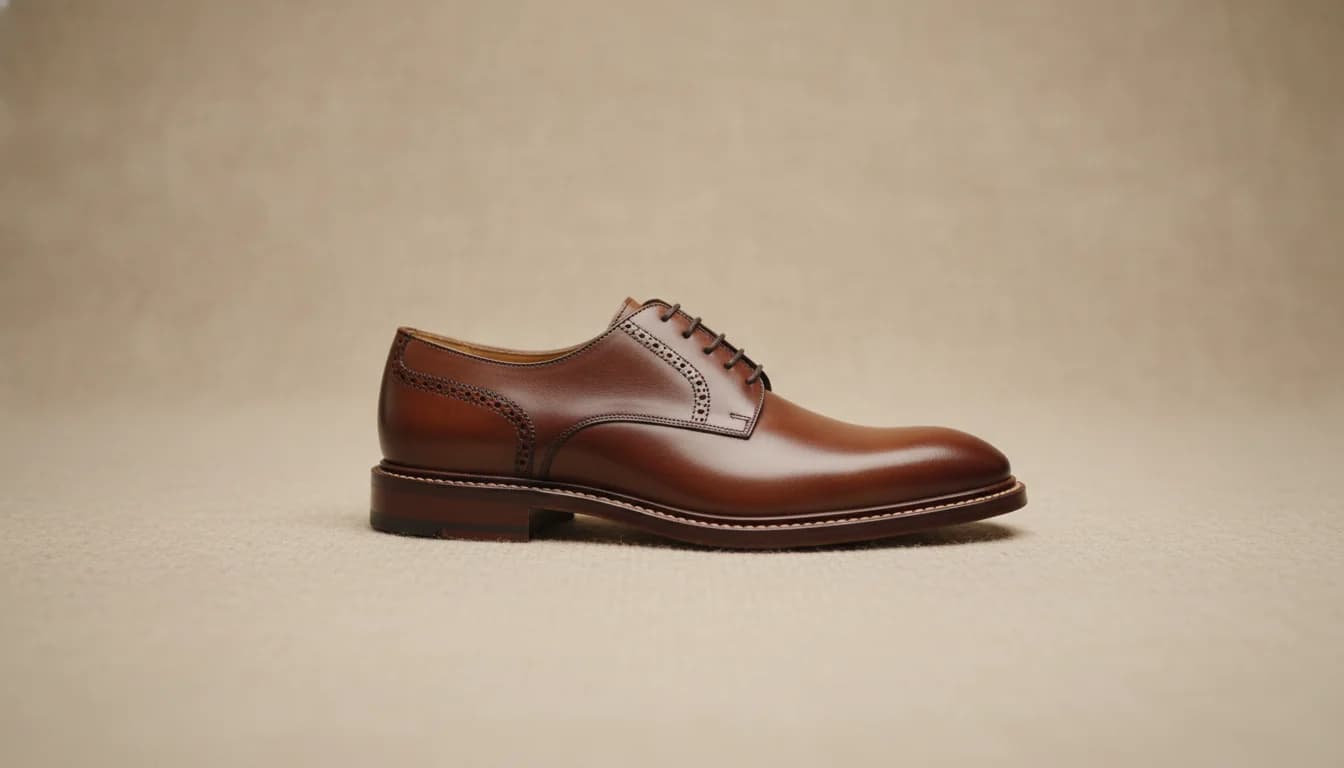
Details in this area directly affect the perceived value of the product. For example, a shoe highlighted with proper lighting looks much higher quality and more desirable than the same shoe placed on a dimly lit shelf. Therefore, viewing visual elements as sales tools and using them strategically is important.
Color Blocking and Emotional Impact
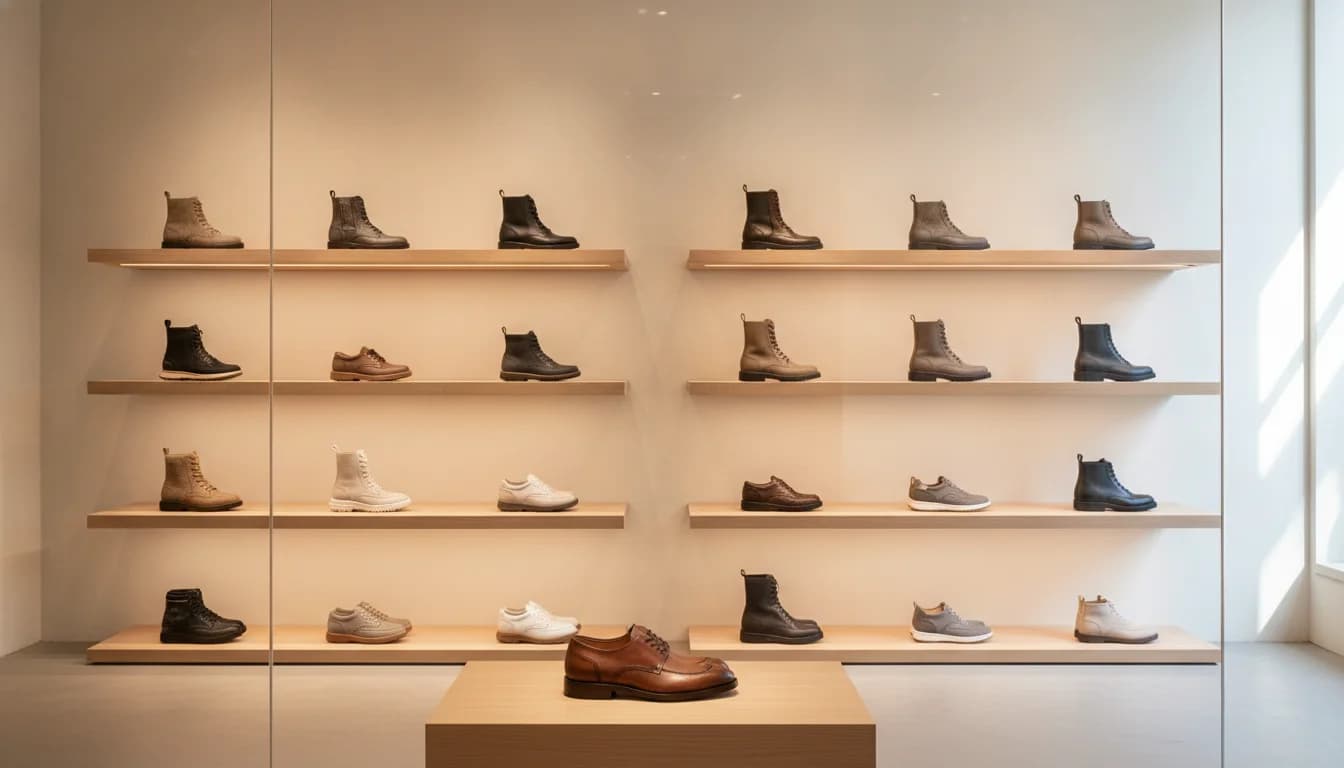
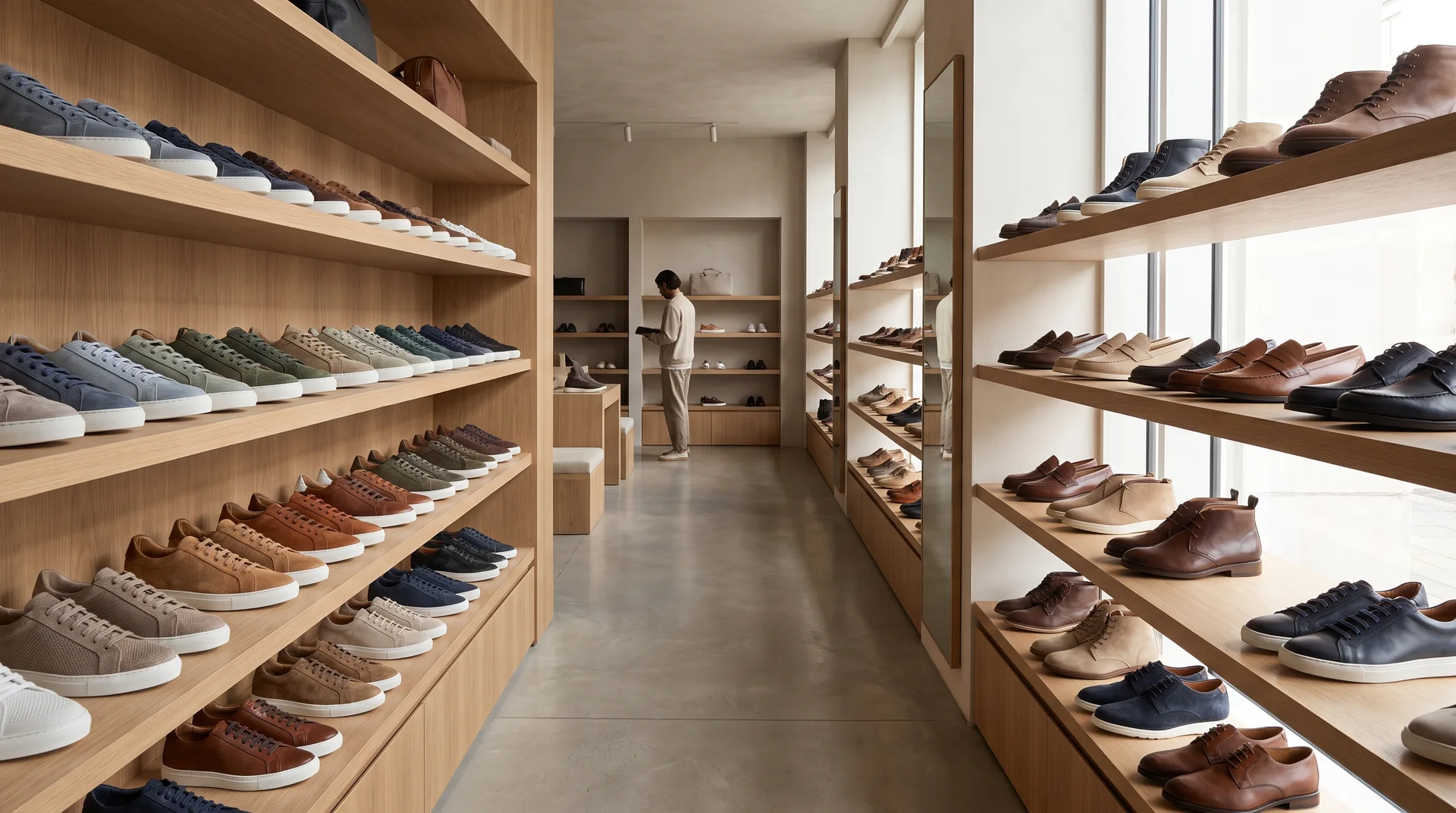
Instead of grouping shoes by model, displaying them by color-known as the color blocking technique-creates a visually strong and organized effect. A footwear collection arranged along a wall from black to white or seasonal trendy colors immediately draws customer attention. This method helps customers easily find alternatives in their preferred color and gives the store a modern and sophisticated atmosphere. By leveraging the psychological effects of colors (for example, the energy of red or the trust evoked by blue), you can also trigger specific emotional responses.
The Role of Lighting: Directing Focus
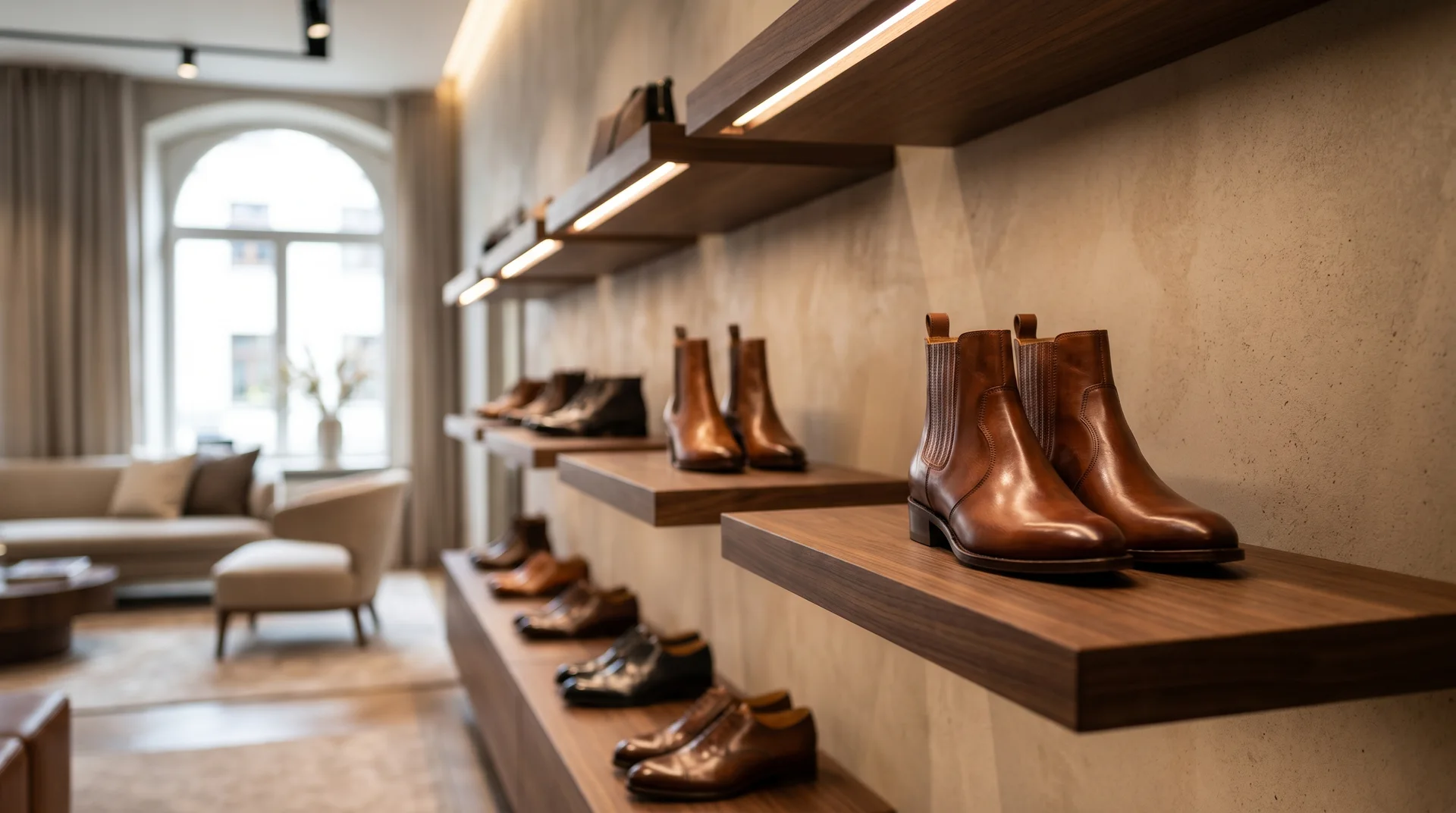
Lighting is one of the most critical components of store atmosphere. Ambient lighting ensures the entire store is comfortably visible, while accent lighting highlights specific products or areas. Using track spotlights or LED strips to illuminate premium items in the window or on special shelves creates a stage spotlight effect that increases their perceived value. Proper lighting ensures the accurate presentation of product colors and details, facilitating customer decision-making.
Operational Details and Space Management
Besides big-picture strategies, daily operational details and efficient management of physical space play a critical role in sales success. A cluttered shelf, an empty display area, or a narrow aisle can undermine even the best-designed store concept. Smart space management solutions are crucial for boutique stores with limited space, improving customer experience and allowing more products to be displayed.
These details send an indirect message to customers about the professionalism of your store management. A clean, tidy, and well-organized store reinforces perceptions of trust and quality. Therefore, every element-from shelf arrangement to storage solutions-must be carefully planned.
Shelf Arrangement and Perceived Value
Overcrowding shelves causes products to appear cramped and less valuable. Allowing breathing space for each shoe model lets the product showcase itself better and creates a sense of uniqueness. This applies the principle of “less is more.” Simple maintenance like regularly dusting shelves, keeping shoes clean and shiny, and promptly organizing clutter makes a significant difference to customers. Remember, a messy environment can create impressions of discounts or low quality.
Smart Solutions for Small Stores
Having a small space does not mean you cannot display effectively. Using vertical space is the most important strategy. Floor-to-ceiling shelves or wall-mounted display units enable presenting more products without taking floor space. Modular and wheeled shelves offer flexibility to rearrange store layout for seasons or campaigns. Strategically placed mirrors make the space appear larger and airier. Using digital wholesale platforms for inventory management helps small stores avoid unnecessary stock costs and storage issues.
Conclusion: Store Layout is a Conscious Investment
In-store product placement is much more than a one-time arrangement; it is a dynamic process requiring continuous observation, analysis, and optimization. Monitoring customer behavior, testing which arrangements yield better results, and presenting your collection accordingly form the basis of retail success. Remember, your store is a physical reflection of your brand and every detail silently communicates with your customers. Managing this dialogue properly is the most effective way to build loyalty and sustainably increase sales.